The North Korea I Remember: School, Family, and Home
By: HyeGyeong Joo
HyeGyeong is a PhD student in the Department of Economics at Korea University, specializing in theoretical economics. Her research looks at developing theoretical models of the North Korean economy. Since 2022, Hye-Gyeong has also participated in LiNK’s English Language Program.
Have you ever wanted to go home even while you were already at home? Because I have. It feels as though I am not longing for a physical house, but for something harder to name: a sense of belonging, of being whole, of belonging not anywhere but somewhere I would truly belong. Instead, I often feel emptiness, as if I do not fully belong. But I am not sure what these feelings mean or where they come from exactly.
I have been living in South Korea for around ten years, but I still miss North Korean food, school life, and above all, the time I spent with my family. There are restaurants in South Korea run by North Korean refugees, and sometimes their dishes bring back memories of home. Foods like injogogi-bap or nongma-guksu remind me not only of North Korean cuisine, but of birthdays, family, and everyday life.
The long strands of nongma-guksu always carry the wish for a long life, while the taste of injogogi-bap brings back the memory of a soybean dish made to resemble the meat we so rarely had.
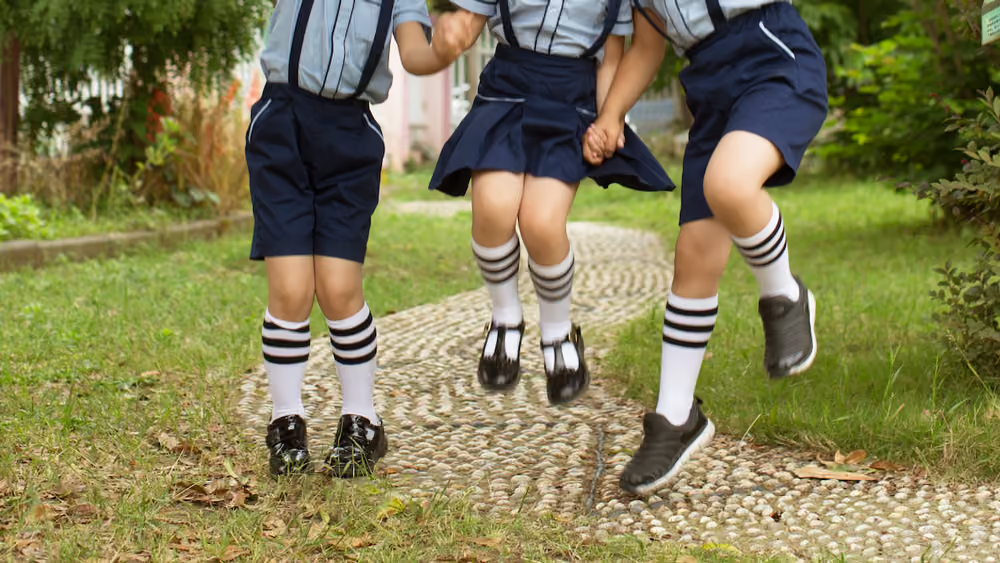
While these foods remind me of home, what I remember most vividly is my school life in North Korea. When I was in fourth grade, the girls in my school would often gather in the schoolyard to play jump rope. I was actually quite good at it. We would start with the rope at ankle height and gradually raise it higher and higher.
One day, when the rope had been raised to about head height, I tried to jump over it. Since I was quite short, I had to lift my leg as high as I could. Unfortunately, I ended up tearing my pants. I was so embarrassed that I almost cried. But what I remember most clearly is my teachers laughing so hard as they watched from the side. Even now, I can still picture that moment vividly.
I also remember winter lunchtime at school. We all brought packed lunches from home. In one corner of the classroom, there was a stove, and before lunch, students would place their lunch boxes on top of it to warm their food.
Sometimes, the lunch box closest to the stove would get burnt. During class, the smell of scorched rice would fill the room and make us so hungry that it was hard to focus. When lunchtime finally came, my friends and I would gather around the stove, sit in a circle, and eat together.
More than anything else, however, I miss the memories of winter. My friends and I would climb the hills near our town, sit on large sacks, and slide all the way down as if we were on sleds. We did it so often that the fabric on the back of our pants would wear thin and eventually tear. When that happened, I would go home only to be scolded by my mother.
Life was not easy in those days. We were often hungry and did not live comfortably. Sometimes we skipped breakfast, and sometimes a thin porridge was all we had for dinner. Yet, despite those hardships, I cannot forget the laughter we shared.
Looking back now, I realize that what I miss is not North Korea as a system. What I miss are the people with whom I laughed and cried, and the memories of my childhood that have stayed with me to this day.
For a long time, however, I could not talk about these feelings to anyone. I kept them to myself, unsure of how others would understand them. That began to change after I met people through Liberty in North Korea (LiNK). For the first time, I found a space where I felt I could speak more honestly about my memories and my life in North Korea.
Through the LiNK English program, I became close to a friend, and together we made a plan to create a book. I would write about real life in North Korea, and she would draw the illustrations for the book. I wanted people to see North Korea not only as a political system, but also as a place where ordinary people live, love, struggle, and create memories.
I shared this plan with someone I trusted deeply in South Korea. But she told me, “No, you can’t!” She said that if I spoke honestly about daily life in North Korea and about how much I miss certain parts of it, despite all the difficulties, people might ask, “Then why are you here? If you miss it so much, why don’t you go back?” Her response hurt me so deeply that I eventually closed my heart to others. After that, I stopped talking about these feelings with anyone. Only later did I finally find a place where I could tell my story freely and without hesitation.
When many people think about North Korea, they often think about politics, missiles, or the regime. But when I think about North Korea, I remember a girl whose pants tore while playing jump rope, students gathering around a stove to eat lunch together, and children laughing as they slid down snowy hills on sacks.
That is why I hope people can see North Korea not only as a political system, but also as a place where ordinary people live their lives. The people living there are not so different from people anywhere else. They laugh, dream, make friends, and create memories. Those are the stories I hope to share.
–
HyeGyeong is a participant of the LiNK English Language Program (LELP), which serves to not only help North Korean defectors build confidence and skills in English, but develop their capacity as advocates for this issue. To that end, we partnered with select LELP “columnists” to write and polish personal essays through multiple rounds of external feedback and revision. Our goal is to have more North Koreans share their stories directly and lead efforts to change the narrative.
We believe the North Korean people can achieve their liberty in our lifetime.
Opportunities like LELP invest in the people building that future now. Help more North Koreans find their voice, reach their goals, and lead change on this issue.
Give Today
Women in North Korea: At the Forefront of Social and Political Change
By Lindsey Miller
Lindsey Miller is a musical director, award-winning composer, author, and photographer originally from Glasgow, Scotland. From 2017-2019, she lived in Pyongyang, North Korea, while accompanying her husband on a diplomatic posting. For Women’s History Month, she shares a rare glimpse into the experiences of North Korean women, who are finding ways to live life on their own terms despite the circumstances.
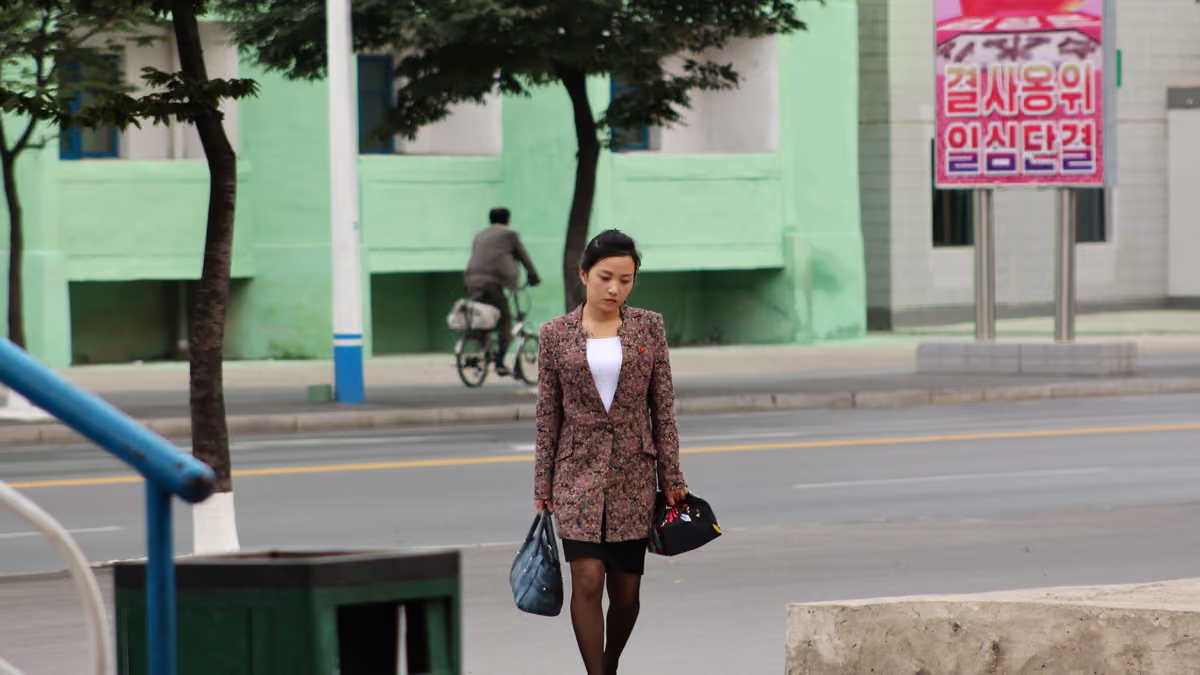
Her name is Min Jeong*.
She’s bright, funny and has a dry and cutting sense of humour that rivals that of any professional stand-up comedian. The kind that makes you worry for the heckler in the front row.
‘Why do you keep singing? You’re terrible at singing!’ she says with a straight face to the regular punters at The Beer House, a bar in Pyongyang, before taking their glass and kindly refilling it. ‘And don’t wear those shoes, they’re ugly.’ The other punters burst out laughing while Min Jeong allows a slight silly smile to make its way across the corner of her mouth. That’s the thing about Min Jeong, she has a magnetic and honest energy about her. It was refreshing in a place where simple honesty and truthfulness felt so packed down.
Min Jeong and I spent a fair bit of time together over the two years I lived in Pyongyang. I would go to the bar mainly to just talk to her and spend time with her. She was interesting. She loved hair accessories and jewellery – an increasingly common way for North Korean women to explore self-expression. I’d show her photographs of me and tell her about my different outfits while she’d rate them. I didn’t fare very well in her opinion. I often gave her my wedding or engagement ring to try on and she’d pose with them, comparing them to other things she’d seen foreigners wear. She’d tell me about the cosmetics that she liked to wear and make herself.
One of her favourite things was a face mask which I remember involving eggs. I never tried it but she swore by it, telling me how important it was to look after my skin and reminding me that there was nothing more important than my health. Min Jeong was very bright and regularly bounced between speaking in Korean, fluent English and often Mandarin. She loved animals and we spent a lot of time looking at photographs of dogs on our phones.
Min Jeong was in her early thirties and unmarried. She’d twirl her half-tied-back beautiful shiny black hair in her fingers while telling me about how much her parents were desperate for her to ‘find a boy’. She wasn’t interested and she didn’t have much time given that she only had one day ‘off’ a week which would have been taken up in part by state-enforced self-criticism sessions among other things. Having gone on many dates, the outcomes of which she summarised with a simple wrinkled nose, she seemed to be quite content being single. It was an attitude which I was surprised to learn was shared by a couple of Pyongyang female urban elite whom I met; women who spoke openly about their lack of desire to have children, who wanted to pursue a career. This directly contradicted my understanding of North Korean women’s experiences.
But I forgot that the experience of women is diverse and North Korea is no exception.

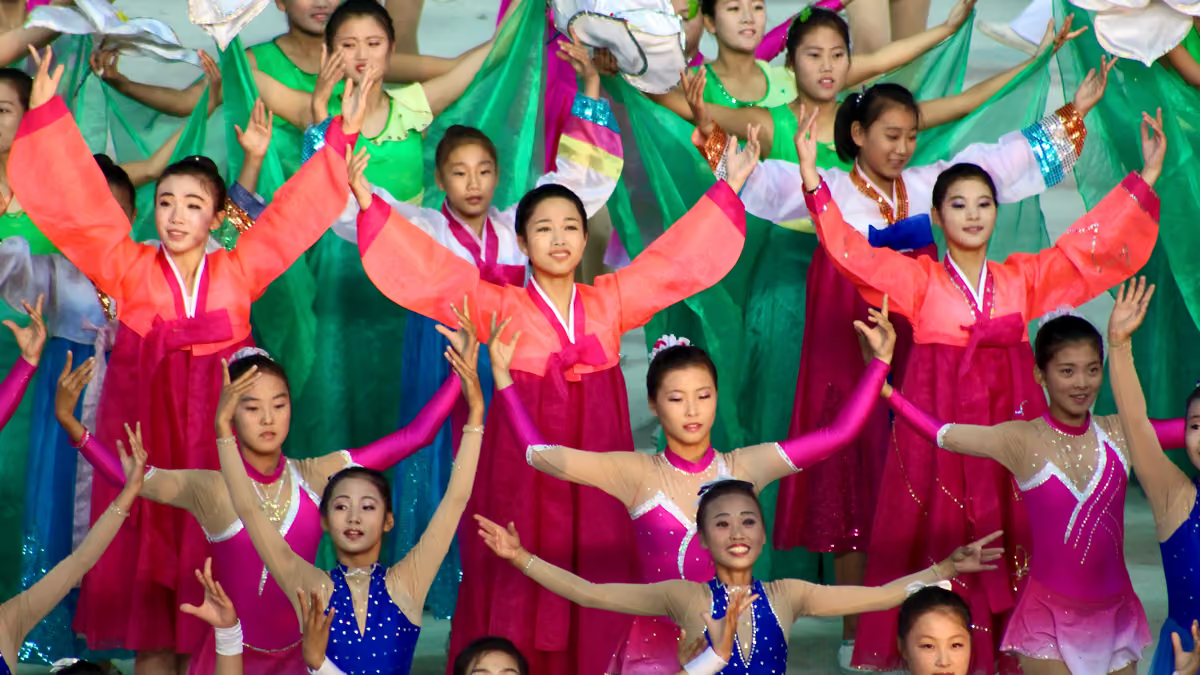
It’s very easy to think that North Korea isn’t changing but that is not the case. To say that there have been no social changes in the country would be insulting to the creativity, tenacity and drive of the North Korean people, particularly women who continue to be a major driving force of change. Driven by necessity following the devastating famine in the 90s, ordinary women had to become more economically independent in order to survive. While North Korean men were chained to jobs in faceless party offices, women had the time to create their own economic opportunities which could feed their families and keep them alive. Even now, in spite of living in a country gripped by widespread and pervasive human rights abuses including the most extreme forms of sexual and gender-based violence, women are often the breadwinners, women are the ones driving the private markets, women are the ones winning back more agency over their own lives and futures.
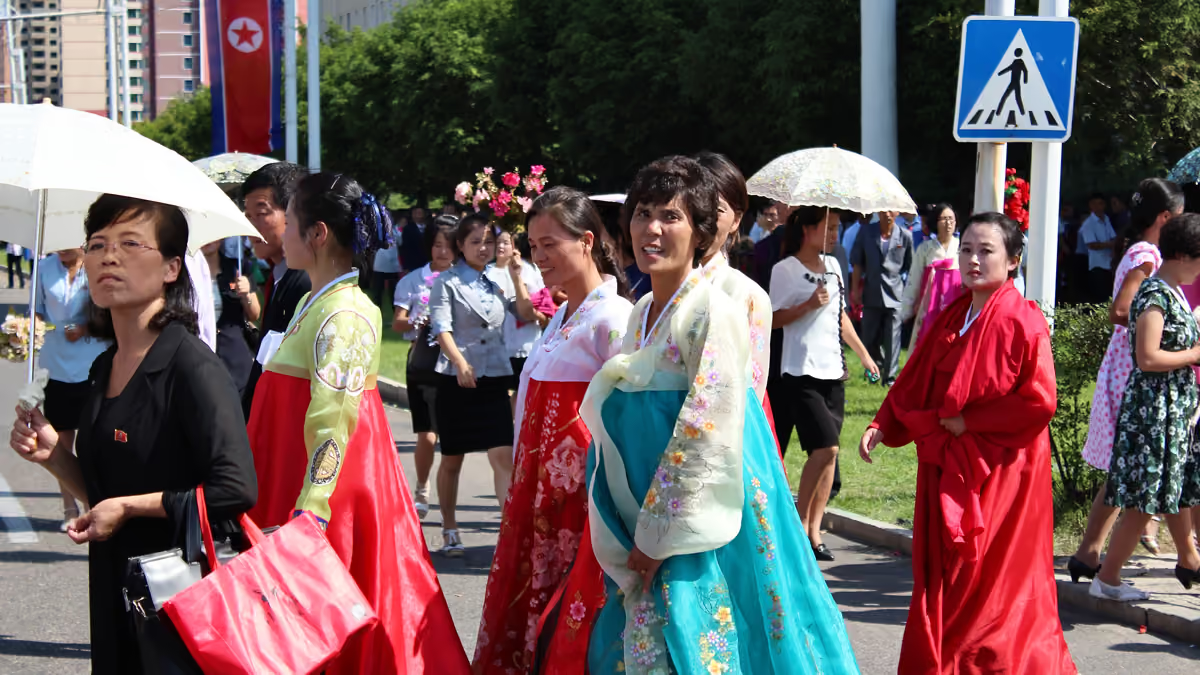
I only had to go to Tongil Market to see it for myself. Every vendor standing behind every one of the stalls laid out in long rows across the indoor market hall was a woman. Every staff member taking payments from the vendors for selling in the venue was a woman. The people counting the money in the cash exchange office were women. The people unloading sacks of vegetables and meat were women. Most of the customers were women.
Through having no choice but to fight to survive, North Korean women have driven changes that few could have predicted would last.
I sit at the bar and Min Jeong passes me a cup of black tea. She starts to scroll through her phone and goes back into her own world. I think about what is going through her mind and all the things she is experiencing but cannot talk about. I think about the millions of other North Korean women with names, voices and stories to tell; who we, on the outside of North Korea, will never get to meet. I think about the world who will never get to meet this generous, kind, extraordinary woman in front of me - my friend.
Min Jeong lifts her head and looks at me,
‘You really shouldn’t wear those shoes, Lindsey. They’re awful.’ She waits a moment and that same slight silly smile starts to creep across the corner of her mouth. ‘I’m kidding. They’re only a little better than yesterday’s.’
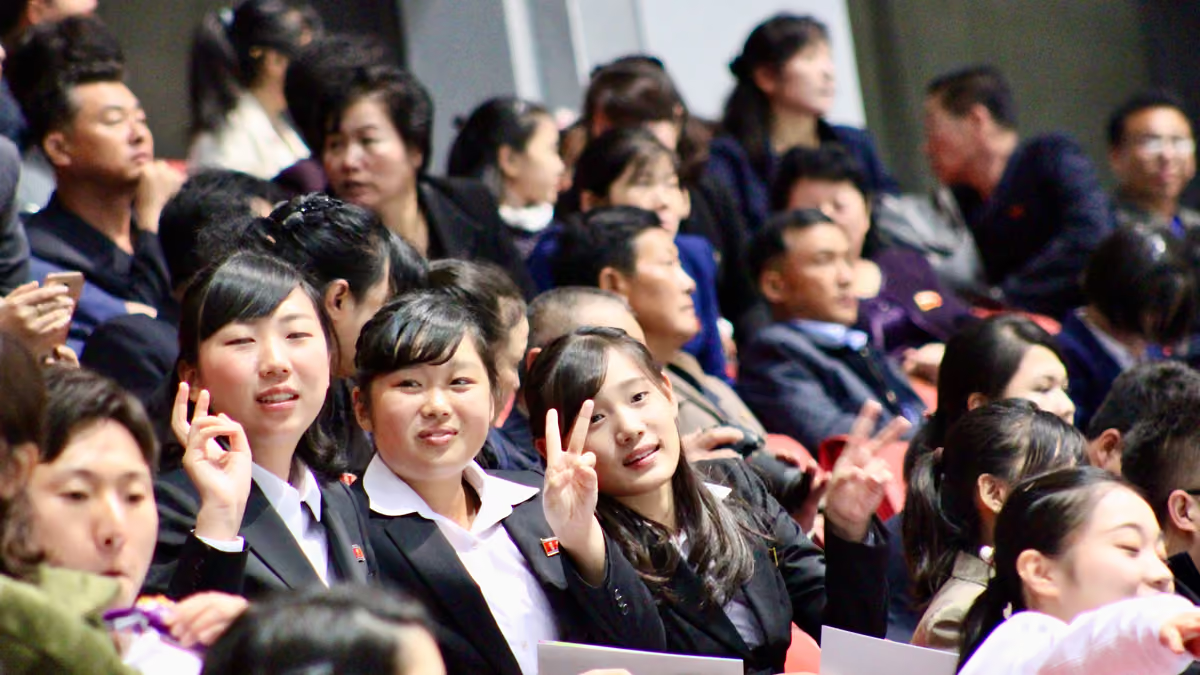
Lindsey Miller shares more extraordinary photos and stories from North Korea in her debut book, “North Korea: Like Nowhere Else," a testament to the hidden humanity and dynamism of the people. She also joined LiNK for a virtual Q&A in 2021 and continues to be a friend and advocate for this issue!
You can stand with the North Korean people as they strive towards freedom and transform their country.
Sign the Allies pledge today!
*Name has been changed to protect the privacy and safety of the individual