
We Call BTS “Bangdan” | Cultural Shifts in North Korea
By: Hannah Oh
Hannah is a North Korea-born intern at Liberty in North Korea’s Seoul office. This article has been reconstructed from her perspective based on DailyNK reports from March 2026.
⏱️ 30-second summary
- K-Pop Power: Young people in North Korea refer to BTS as “BT” to avoid attracting the attention of authorities. They empathize with song lyrics that touch their hearts, in sharp contrast to the ideology prescribed by the state. Even amidst strict crackdowns on South Korean media, people are consuming and sharing K-Pop with their peers.
- Resetting Relationships: It’s now common to see couples in North Korea spending time together in cafes, signaling a change in people’s daily lives. A new culture is emerging where people build relationships by sitting face-to-face over coffee and conversation.
- Expanding Self-Expression: New beauty standards that favor slim bodies and skincare have become popularized. As outside information spreads in North Korea, it’s gradually changing people’s tastes and self-expression.
BTS is a name recognized by people all over the world. This global K-Pop group’s music is even reaching audiences in the most closed country to exist today: North Korea.
The North Korean government severely cracks down on the consumption and spread of foreign media, like South Korean music and dramas. Through foreign media, North Koreans are able to learn things about the outside world that contradict and challenge the regime’s propaganda. In response, the regime passed the “anti-reactionary thought law” in December 2020, which made watching foreign media punishable by 15 years in a political prison camp.
To avoid being caught discussing and sharing about BTS, North Koreans are reportedly shortening the name to “BT.” Even though they cannot directly mention their favorite idol group, they are expressing their fandom by using slang that they understand among themselves.
Changes to daily life in North Korea extend beyond music tastes. From couples quietly conversing in cafes to women experimenting with K-Beauty, this article follows the stories of North Koreans who, despite control and restrictions, are shaping culture and cultivating new standards of leisure, beauty, and expression.
Why North Korean Youth Gravitate Towards K-Pop

It is reported that among young people in North Korea, it is common to refer to BTS, or “Bangtan,” as BT, or “Bangdan,” to avoid the scrutiny of North Korean authorities cracking down on illegal foreign media. Fans in North Korea have cited songs such as “I’m Fine,” “Go,” “Danger,” and “Spring Day” as their favorites, and expressed a desire to dress like the BTS members.
These developments might suggest that instead of foreign media being a taboo topic of discussion, it has become a language of taste shared among peers.
In response to the popularity of South Korean music, North Korean authorities imposed a city-wide lecture series that warned “The only love young people should pursue is revolutionary and comradely love.” However, after the lectures ended, it is reported that the sentiment among young people was that “South Korean song lyrics seem to understand my heart,” and “the emotions they actually feel” over “the emotions permitted by the state.”
Cuppaccinos Over Flowers: Dating Culture in North Korea

In North Korea, there is still a strong perception that cafes are places frequented only by the well-off. However, this year on March 8th for International Women’s Day, reports emerged of husbands visiting coffee shops with their wives, holding hands, and spending time drinking lattes or cappuccinos. Rather than traditional gestures like flowers or doing extra housework, there seems to be a cultural shift of celebrating by spending time together.
After visiting a cafe for the first time, residents reportedly commented that “It’s surprisingly nice because you can talk quietly.” Their perception of this space—previously considered unsuitable for leisure amidst busy lives—changed after actually experiencing it for themselves. The growing popularity of cafes as a space where two people can sit face-to-face and share a private conversation may seem like a minor development, but it is not insignificant.
People’s perceptions and behaviors don’t only change when systems or policies are altered; shifts in how individuals interact and go about their daily lives is also a catalyst for change.
The Far-Reaching Influence of K-Beauty

There have also been reports that interest in beauty treatments and taking care of one’s appearance is growing in North Korea, particularly among affluent women. Younger women have taken to dieting, while middle-aged women are spending money on cosmetic procedures like Botox to reduce wrinkles. North Korean beauty standards have historically favored a fuller figure to look healthy, but now there is an emerging preference to look slimmer. According to one source, this is due to the influence of South Korean culture.
Even in South Korea, there is an ongoing debate as to whether striving for a slim body and youthful appearance is a healthy pursuit. Nevertheless, this shift in North Korean beauty habits is notable.
Individuals are seeking change and acting on their own initiative, influenced by external information, rather than following the standards set out by the regime.
However, it must be noted that these developments seem to be more prominent among wealthy women with financial means, as opposed to the entire population.
Pop Culture as a Catalyst for Change in North Korea
The global influence of K-Pop groups like BTS is usually measured by streaming numbers or chart rankings. But the most significant marker of impact might be found in North Korea, where people risk their lives to listen to their songs. Even in the most closed country in the world, there are people who enjoy heartfelt music, shared conversation over a cup of coffee, and self-care.
If you zoom in past the image of North Korea as a bleak, oppressed country, there are millions of people going about their everyday lives. Small cultural shifts and changing attitudes may seem insignificant. But over time, these compounding changes could bring about transformation in North Korea.
Increasing Information Access for North Korean People
As evidenced by these developments, North Koreans are watching foreign media and have a growing awareness of the outside world. At Liberty in North Korea, we believe that access to uncensored outside information is key to increasing forces of change and opening inside the country. Empowered with information access, North Koreans can imagine a different life for themselves and push the boundaries of the regime’s control.
We work with North Korean partners and engineers to develop and distribute tailored technology and content to help more people inside the country safely access uncensored information.
You can help bring truth to where it’s urgently needed.
Give Today
North Koreans Learning English | Interview with LELP Student & Volunteer
As North Korean refugees resettle in South Korea’s competitive society, conversational English ability has been identified as a top need for personal and professional growth.
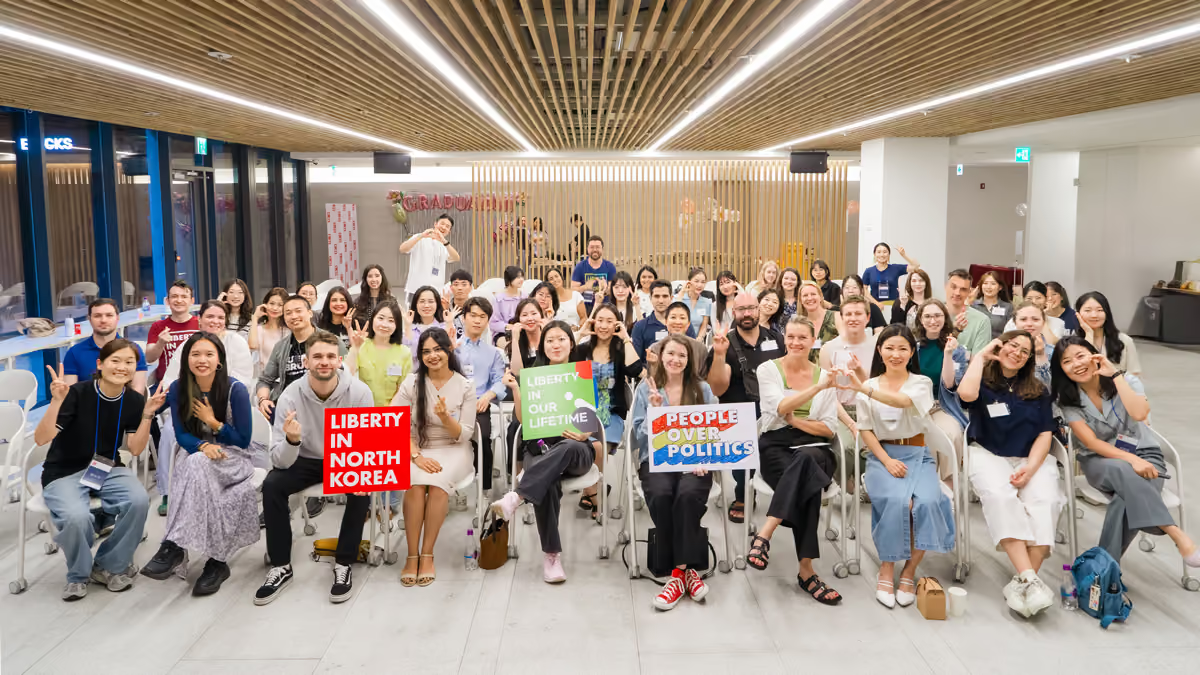
The LiNK English Language program (LELP) has become a mainstay in our efforts to help build the capacity of North Koreans as agents of change. Students are matched 1:1 with volunteer tutors from all around the world, leading to customized practice, conversations that break down barriers, and connections that will last a lifetime. In addition to weekly virtual study sessions, the program includes in-person bonding activities and a semesterly speech contest.
Spring 2024 has been the program’s biggest semester yet with 156 participants, including 78 North Korean students and 78 volunteers! Meet Stella, a North Korean student pursuing her PhD in Economics, and Cydney, a long-time LELP volunteer from the United States.
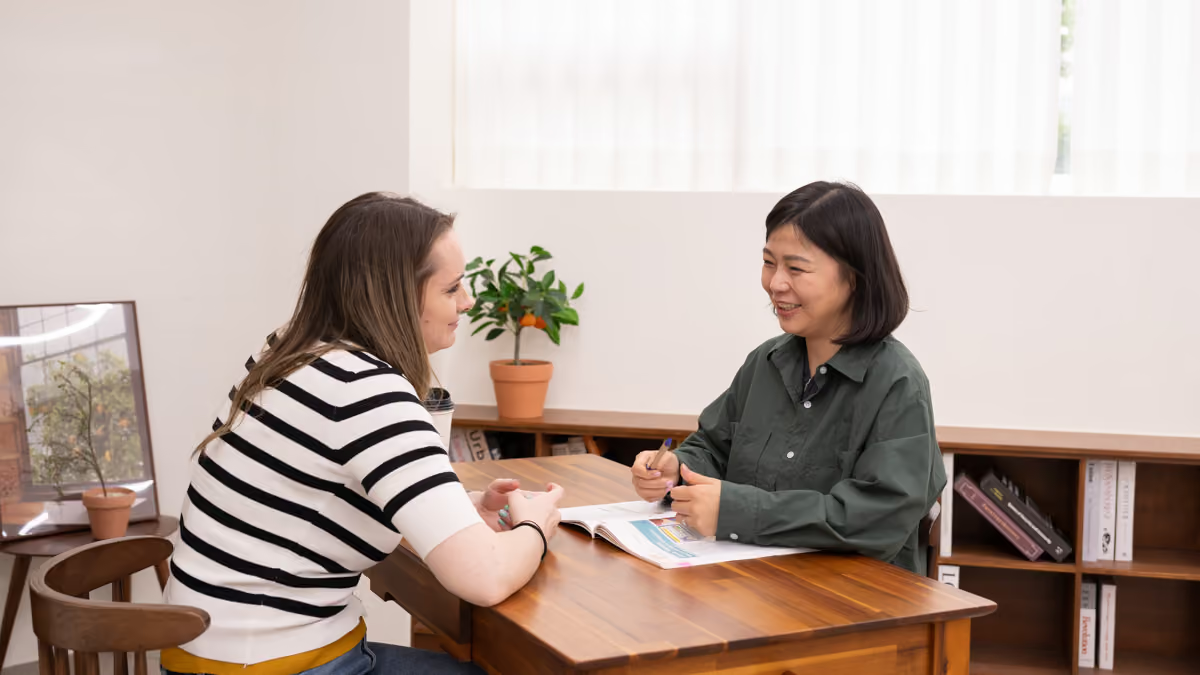
Please briefly introduce yourselves and share how you first met!
Stella - Hi, I’m Stella from North Korea. I’m currently living in South Korea and working towards getting my PhD in Economics.
Cydney - I’m Cydney, I’m from the US. I’ve been in South Korea for four years, teaching English at a hagwon. I’ve been a volunteer with LELP for two years now.
Stella - I don’t exactly remember when we met, it’s been so long!
Cydney - I think it was at the LELP hiking event! That was our first time meeting in-person.
Stella - Right, I was a little nervous then.
Cydney - Now we meet up all the time, going out for drinks and finding new places to check out in Seoul.
What has been your favorite activity during the program?
Stella - I really enjoy the speech contest. I can share my story and everyone is so attentive - the other North Korean students, volunteers, and LiNK staff. At other places, they’ll give you fixed questions that you have to answer. But LiNK gives you complete control over what you want to talk about.
People say North Koreans come from a prison, and sadness is the primary emotion. But in my experience, there is happiness even in the small things. I love to talk about those stories, my childhood memories.
First I’ll write my speech in Korean, and then I’ll write it again in English with Cydney’s help. I say what I want to express and she’ll help me.
Cydney - Sometimes I’ll write five different sentences and explain the nuances to Stella, and then she’ll go ‘okay that one, that’s how I want to say it.’
Stella - The days leading up to the speech content, I have so many feelings and emotions while I’m busy preparing. But afterwards, I feel a sense of relief. I love it because by sharing my story, I’m realizing new things about myself.
Cydney - I’m usually crying when she finishes delivering her speech. I’m just so happy and proud of all her hard work, and she’s so good at it. Hearing the speeches of the other students is also always so inspiring.
Is there a moment or everyday interaction where you felt LELP helped you?
Stella - Yes, there is. This semester I’m taking a microeconomics seminar and the class goes into English all the time. The professor asks us questions, and we have to answer in English. If I wasn’t part of LELP, then I would have never thought about raising my hand and talking with confidence. Even if my grammar isn’t perfect, I can still comfortably share my thoughts.
What are your dreams or goals?
Stella - I have a big dream. I want to be a professor someday, at the undergraduate or graduate level. More than just teaching a certain topic or subject, I hope to instill in my students a love of learning. That’s what my teacher back in my hometown did for me. I’ve been able to come this far because of her, and she continues to inspire me to this day.
In North Korea, education opportunities are limited. But my teacher always tried to help me. She told us that if we had big dreams, then we can grab the chance to make it happen. She taught me a lot of things, about life and to see more than our current circumstances. I think about her all the time, even now, and I want to be like her - a good teacher and a good person.
I consider this my third chance at life. First I just survived in North Korea, and second in China. Now in South Korea, I can finally live freely.
Cydney - I love this story. Since I know Stella wants to be a professor, I also asked why, and she shared her memories from growing up in North Korea. Knowing that she’s wanted to do this for so long, it just makes sense.
As for my future goals, I don’t have anything concrete like teaching, but I want to help people. I want to use all the things I learn and that I’m interested in to help people find themselves. LELP has given me a great opportunity to meet new friends from different backgrounds and be a part of this meaningful cause as a volunteer.
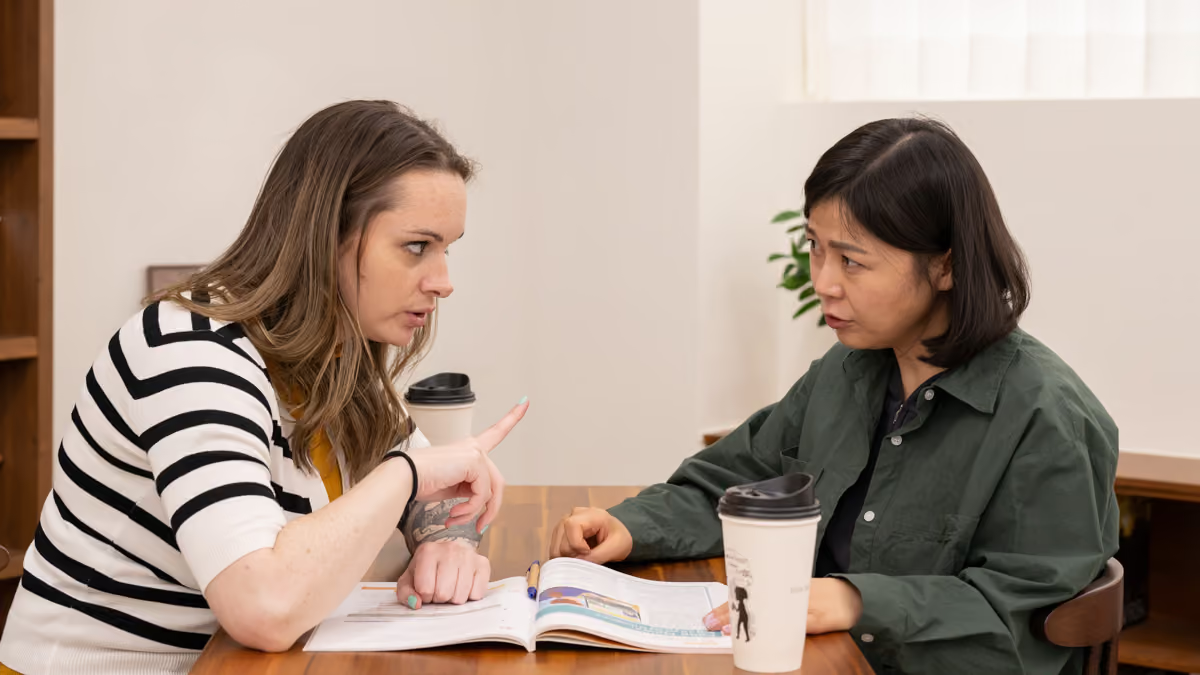
Has being part of this program changed your perspective on North Korea?
Cydney - Yes, definitely. Before LiNK, I had read a lot of books and biographies from North Koreans. With that kind of exposure, you hear a lot of the hard stuff. Very inspirational stories about incredible people, but tough to read. I wanted to get a bigger picture of the issue, and that naturally led me to LiNK. After volunteering with LELP for two years, my perspective has not just changed, but really expanded.
I’ve had a lot of conversations with Stella where the contexts of what we’re talking about could not be more different, but our experiences are very much the same. It’s brought this universal view of people doing their best to live their lives, and connecting over it.
Stella - A lot of times, people want to hear hard stories from North Koreans. If you talk about your happiness, they ask ‘Why are you here then? You can go back there.’ It always surprises me - how can they say something like that? People living anywhere, have both happy times and difficult situations. But they don’t want to hear positive things from North Korea, they just want to hear that you were living in hell.
But LiNK is different. I feel like I can just talk comfortably. It has made me want to continue this program. Other places have a political focus but LiNK doesn’t, just real human stories.
Cydney - It’s one of my favorite things about how LiNK shares stories of North Koreans. They don’t shy away from the hardship, but they’re showing happy, thriving people and smiling faces. It’s not, ‘come to our page to learn about our sadness,’ but ‘learn about these real people whose experiences we want to share.’
Did LiNK’s program further your interest in sharing North Korean stories and experiences?
Stella - Actually we planned it, we talked about her drawing pictures and me writing the stories.
Cydney - It’s still very much in the talking phase, but it’s been my dream to make a webtoon! We’ve thought about creating one together about a little North Korean girl and sharing Stella’s experiences through this format.
My undergraduate degree was in history, so I spent a long time studying situations similar to what happens in North Korea. It’s hard for me to know that I live in a time where people go through such things, especially people close to me, like Stella. I think what LiNK does is so important because it’s trying to change the narrative and what the history of North Korea will be. If I can have any part of it, I want to do what I can.
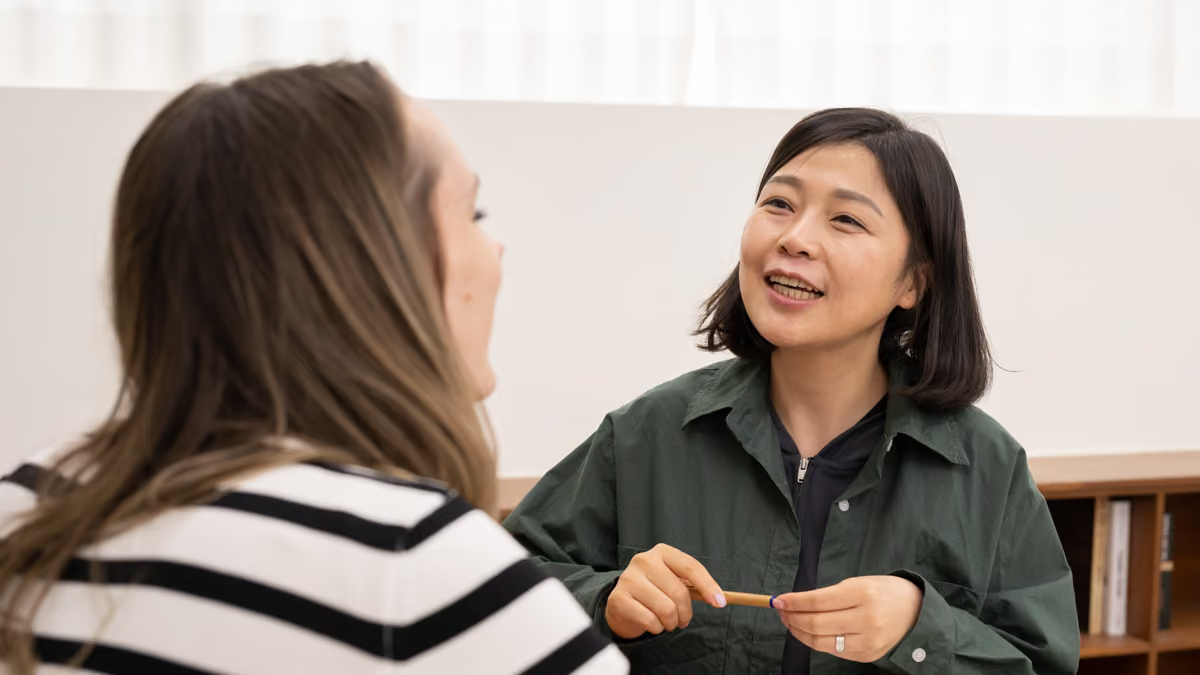
What is something that each of you learned from each other?
Stella - Cyndey is just such a strong person. Before I met her, I thought I was strong, but we shared our stories and I’m so amazed by her determination. She’s alone here in South Korea, with a different language and culture, but she never complains. She always tries to make the best of life and find happiness.
Cydney - I lived in the States, then I lived in China, and then in Korea. So there have been a lot of cultural challenges. The longer I’m here, I realize, ‘Oh, the things that I’m culturally used to are so different here that it’s starting to weigh on me.’ In those times, it’s been so great to talk to Stella.
That’s something we relate closely on, actually, both having to learn to live in South Korea.
She’s become one of my closest friends and we spend 90% of our time together just laughing. She’s so ambitious. I watch her do everything she can to reach her goals, and I think to myself, ‘I can do that too.’
Stella - I’m still reflecting on my experiences, so sometimes I try to find therapy but it hasn’t really helped me. But talking with Cydney has. She listens without judgment, and feels with me. So it’s become not just studying English together, but I feel healed with her.
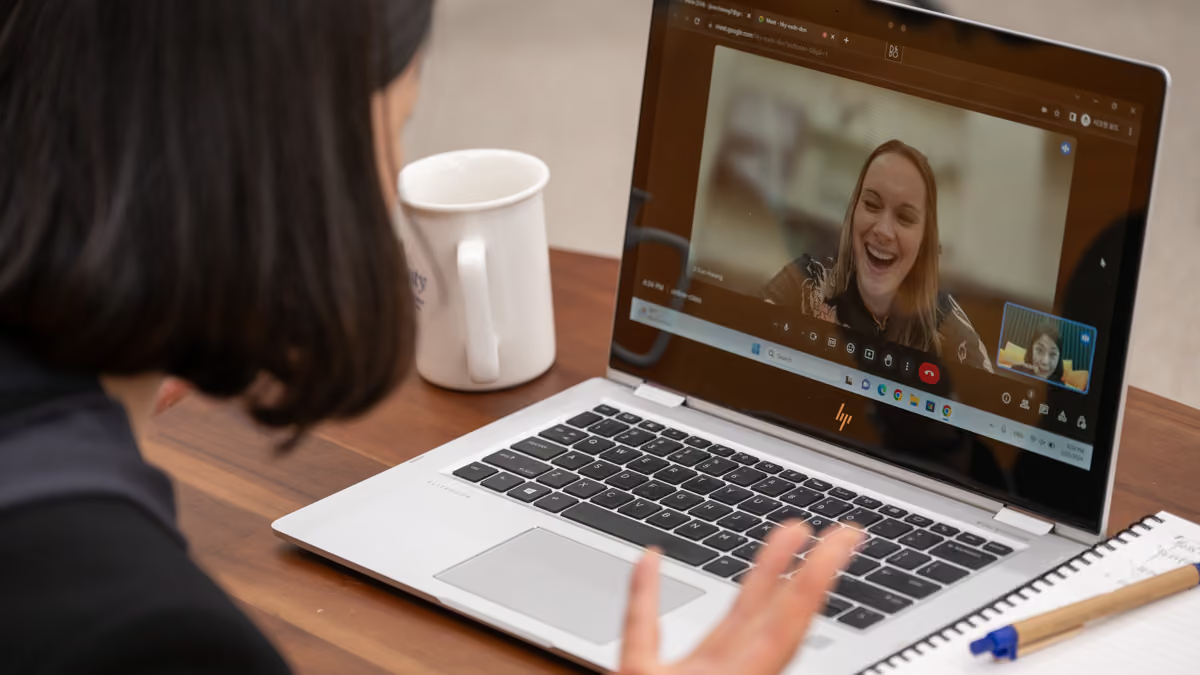
Thank you for making programs like the LiNK English Language program possible. Every day, we see the impact that opportunities like this have in the lives of our North Korean friends, and members of this global movement.
Help us ensure that the LELP can continue, improve, and expand in the years to come.










