We Call BTS “Bangdan” | Cultural Shifts in North Korea
By: Hannah Oh
Hannah is a North Korea-born intern at Liberty in North Korea’s Seoul office. This article has been reconstructed from her perspective based on DailyNK reports from March 2026.
⏱️ 30-second summary
- K-Pop Power: Young people in North Korea refer to BTS as “BT” to avoid attracting the attention of authorities. They empathize with song lyrics that touch their hearts, in sharp contrast to the ideology prescribed by the state. Even amidst strict crackdowns on South Korean media, people are consuming and sharing K-Pop with their peers.
- Resetting Relationships: It’s now common to see couples in North Korea spending time together in cafes, signaling a change in people’s daily lives. A new culture is emerging where people build relationships by sitting face-to-face over coffee and conversation.
- Expanding Self-Expression: New beauty standards that favor slim bodies and skincare have become popularized. As outside information spreads in North Korea, it’s gradually changing people’s tastes and self-expression.
BTS is a name recognized by people all over the world. This global K-Pop group’s music is even reaching audiences in the most closed country to exist today: North Korea.
The North Korean government severely cracks down on the consumption and spread of foreign media, like South Korean music and dramas. Through foreign media, North Koreans are able to learn things about the outside world that contradict and challenge the regime’s propaganda. In response, the regime passed the “anti-reactionary thought law” in December 2020, which made watching foreign media punishable by 15 years in a political prison camp.
To avoid being caught discussing and sharing about BTS, North Koreans are reportedly shortening the name to “BT.” Even though they cannot directly mention their favorite idol group, they are expressing their fandom by using slang that they understand among themselves.
Changes to daily life in North Korea extend beyond music tastes. From couples quietly conversing in cafes to women experimenting with K-Beauty, this article follows the stories of North Koreans who, despite control and restrictions, are shaping culture and cultivating new standards of leisure, beauty, and expression.
Why North Korean Youth Gravitate Towards K-Pop
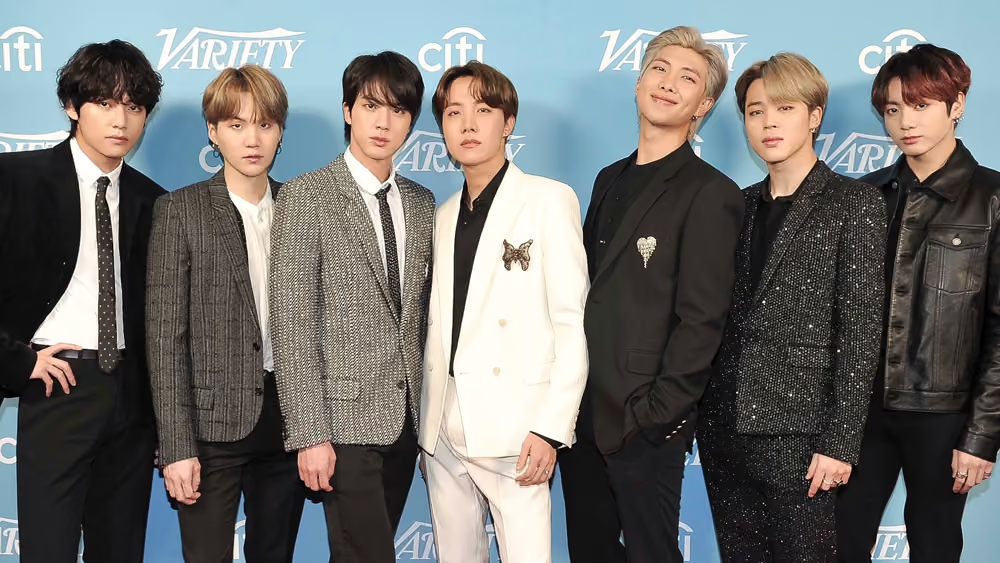
It is reported that among young people in North Korea, it is common to refer to BTS, or “Bangtan,” as BT, or “Bangdan,” to avoid the scrutiny of North Korean authorities cracking down on illegal foreign media. Fans in North Korea have cited songs such as “I’m Fine,” “Go,” “Danger,” and “Spring Day” as their favorites, and expressed a desire to dress like the BTS members.
These developments might suggest that instead of foreign media being a taboo topic of discussion, it has become a language of taste shared among peers.
In response to the popularity of South Korean music, North Korean authorities imposed a city-wide lecture series that warned “The only love young people should pursue is revolutionary and comradely love.” However, after the lectures ended, it is reported that the sentiment among young people was that “South Korean song lyrics seem to understand my heart,” and “the emotions they actually feel” over “the emotions permitted by the state.”
Cuppaccinos Over Flowers: Dating Culture in North Korea

In North Korea, there is still a strong perception that cafes are places frequented only by the well-off. However, this year on March 8th for International Women’s Day, reports emerged of husbands visiting coffee shops with their wives, holding hands, and spending time drinking lattes or cappuccinos. Rather than traditional gestures like flowers or doing extra housework, there seems to be a cultural shift of celebrating by spending time together.
After visiting a cafe for the first time, residents reportedly commented that “It’s surprisingly nice because you can talk quietly.” Their perception of this space—previously considered unsuitable for leisure amidst busy lives—changed after actually experiencing it for themselves. The growing popularity of cafes as a space where two people can sit face-to-face and share a private conversation may seem like a minor development, but it is not insignificant.
People’s perceptions and behaviors don’t only change when systems or policies are altered; shifts in how individuals interact and go about their daily lives is also a catalyst for change.
The Far-Reaching Influence of K-Beauty

There have also been reports that interest in beauty treatments and taking care of one’s appearance is growing in North Korea, particularly among affluent women. Younger women have taken to dieting, while middle-aged women are spending money on cosmetic procedures like Botox to reduce wrinkles. North Korean beauty standards have historically favored a fuller figure to look healthy, but now there is an emerging preference to look slimmer. According to one source, this is due to the influence of South Korean culture.
Even in South Korea, there is an ongoing debate as to whether striving for a slim body and youthful appearance is a healthy pursuit. Nevertheless, this shift in North Korean beauty habits is notable.
Individuals are seeking change and acting on their own initiative, influenced by external information, rather than following the standards set out by the regime.
However, it must be noted that these developments seem to be more prominent among wealthy women with financial means, as opposed to the entire population.
Pop Culture as a Catalyst for Change in North Korea
The global influence of K-Pop groups like BTS is usually measured by streaming numbers or chart rankings. But the most significant marker of impact might be found in North Korea, where people risk their lives to listen to their songs. Even in the most closed country in the world, there are people who enjoy heartfelt music, shared conversation over a cup of coffee, and self-care.
If you zoom in past the image of North Korea as a bleak, oppressed country, there are millions of people going about their everyday lives. Small cultural shifts and changing attitudes may seem insignificant. But over time, these compounding changes could bring about transformation in North Korea.
Increasing Information Access for North Korean People
As evidenced by these developments, North Koreans are watching foreign media and have a growing awareness of the outside world. At Liberty in North Korea, we believe that access to uncensored outside information is key to increasing forces of change and opening inside the country. Empowered with information access, North Koreans can imagine a different life for themselves and push the boundaries of the regime’s control.
We work with North Korean partners and engineers to develop and distribute tailored technology and content to help more people inside the country safely access uncensored information.
You can help bring truth to where it’s urgently needed.
Give Today
One Day with the North Korean People | LiNK Summit 2023
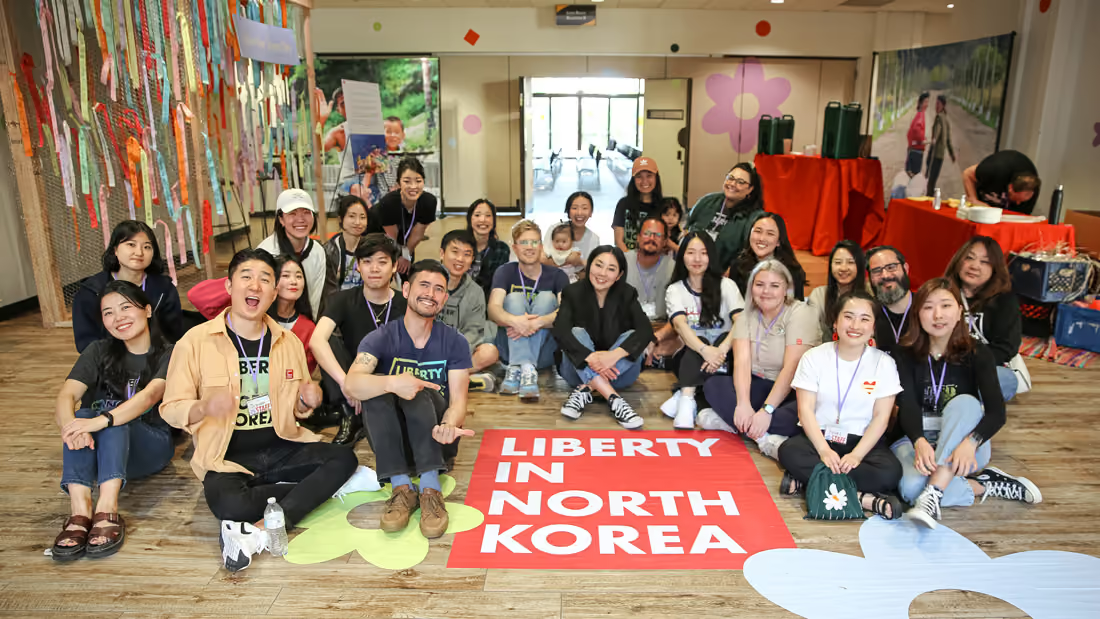
After five years, LiNK Summit made its return on June 3rd, 2023! Over 200 Allies, North Korean advocates, fellow activists, and global LiNK staff gathered to spend One Day with the North Korean People in Long Beach, CA. We had supporters who drove hundreds of miles and flew in from across the US, bringing friends and family to join the movement.
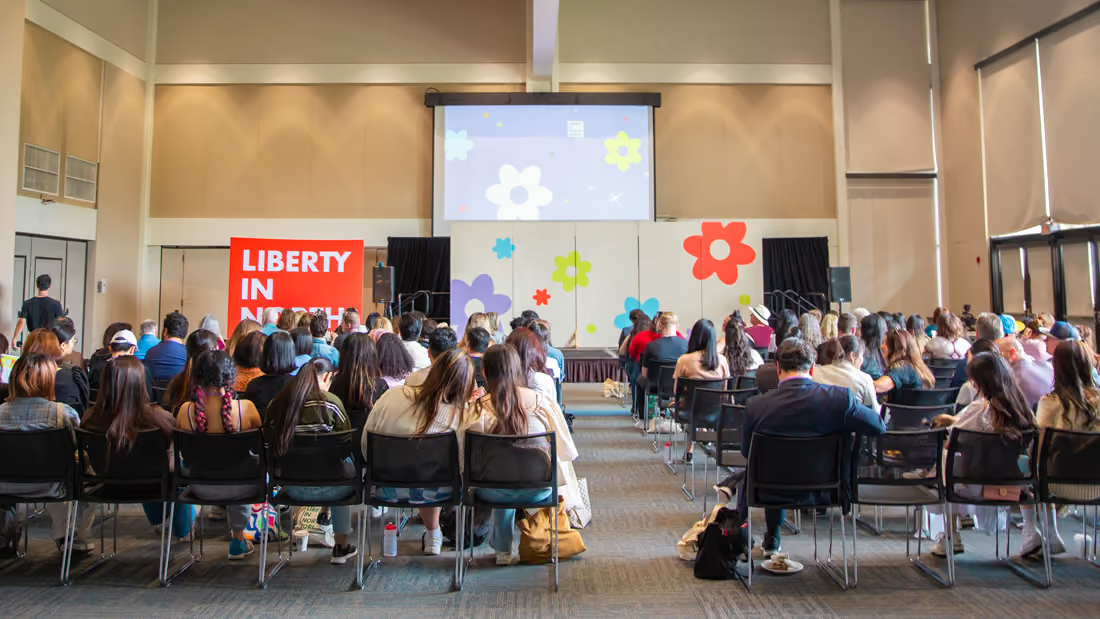
Working on this issue can often feel isolating. Summit was a much-needed, powerful reminder that so many incredible people are committed to seeing a free North Korea in our lifetime. Through the course of a day, attendees had the opportunity to hear directly from and collaborate with North Koreans through different breakout sessions and experiences.
The Jangmadang Experience
Perhaps the highlight of this year’s Summit was The Jangmadang Experience – a collection of interactive booths and installations inspired by North Korea’s grassroots markets. Attendees could see smuggled goods, try North Korean food, pick up swag, and find ways to take action.
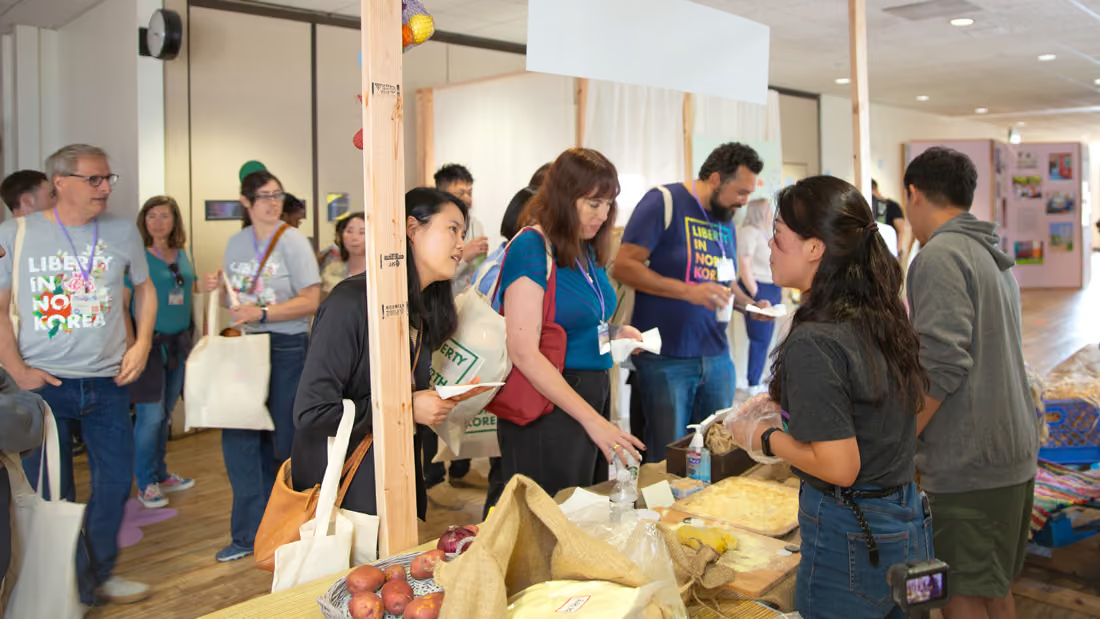
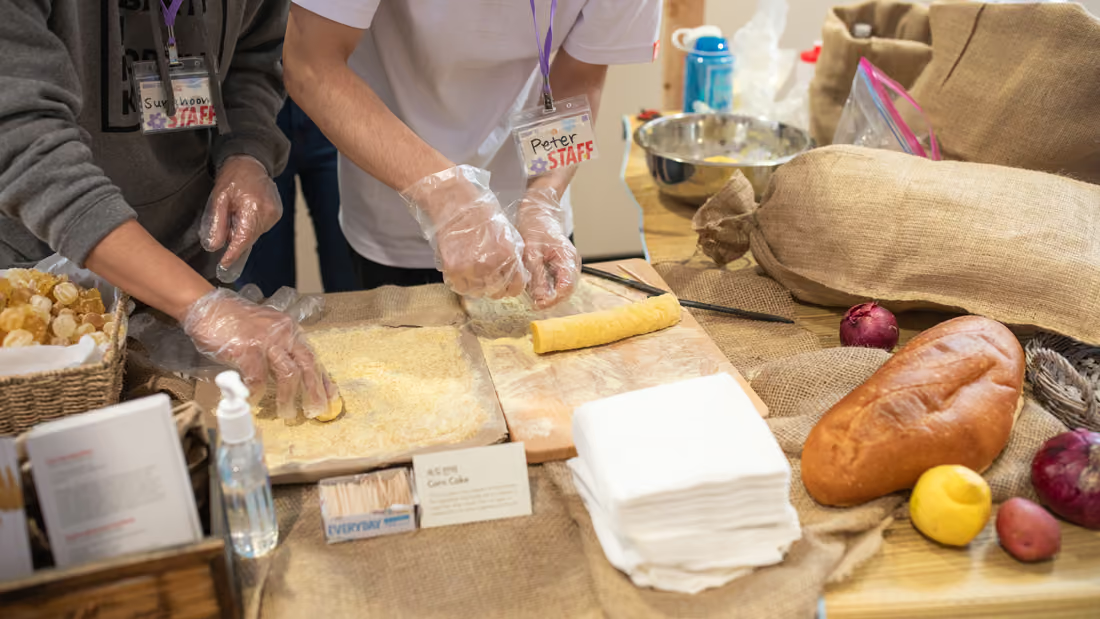
The “Taste of North Korea” food booth was a favorite among guests. Our North Korea-born staff were able to source authentic North Korean cookies and candy, as well as corn flour, which they used to prepare sweet corn rice cakes at the event.
People returned for seconds, then thirds. Our North Korean friends were shocked by the familiar tastes, and reminisced about the last time they had these snacks in North Korea. It was so heartwarming to see how food connected past and present, and created a new experience for everyone.
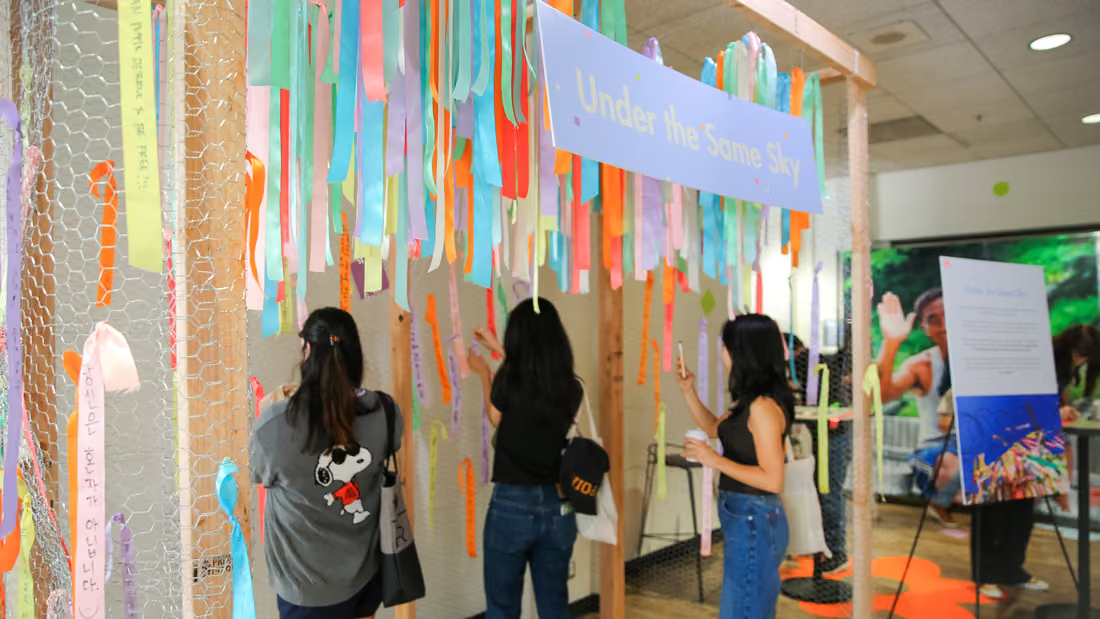
“Under the Same Sky” was a collaborative installation inspired by Joseph Kim’s memoir and the colorful prayer ribbons at Imjingak Park near the border of North & South Korea. When Joseph Kim thinks about his sister, whom he hasn’t seen since his escape, he says:
“Right now, we only share the stars. But I can look up at night and see that you are under the same sky. That will have to be enough until I find you.”
Attendees were asked to share their own messages of hope and tie them to the wall. As the day passed, it was so encouraging to see the number of ribbons grow- a reminder that we’re all under the same sky, and one day every North Korean will be free.
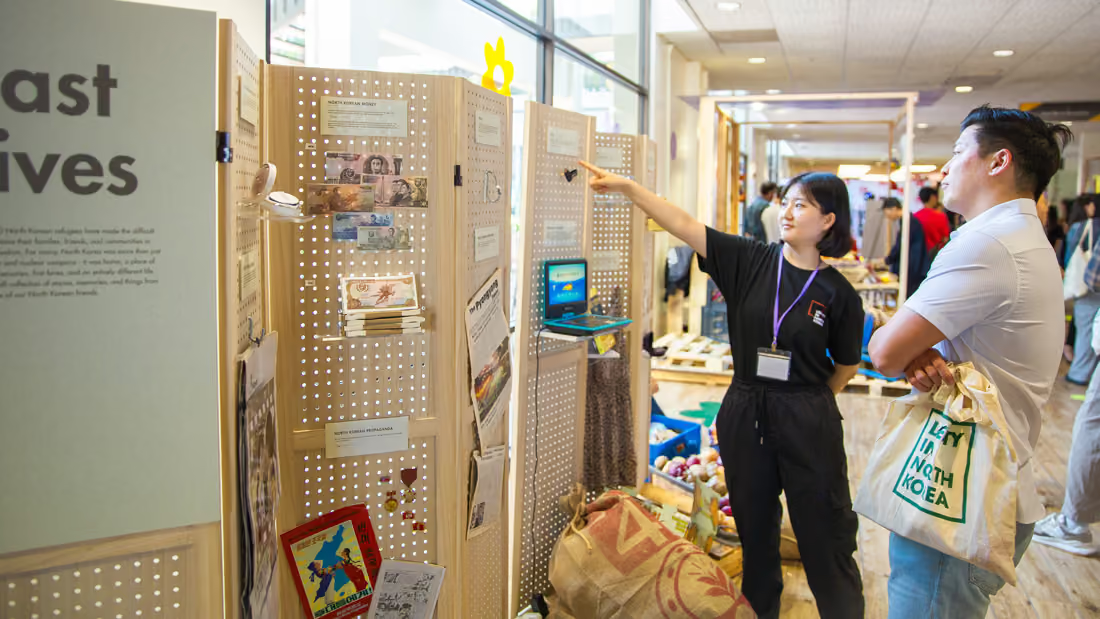
Another popular destination was “Past Lives,” a collection of smuggled goods and mementos from North Korea. Each of the objects- North Korean money, propaganda posters and pins, a razor blade, a floral dress, and more- held powerful stories and memories from the past lives of our North Korean friends.
As guests perused the rest of the booths, they could write postcards inviting people to become Allies, record a message of encouragement to our North Korean friends, marvel at photos from inside North Korea, and more. It was a vibrant and exciting part of the day, emulating the dynamism of the Jangmadangs in North Korea!
The Red Box Live
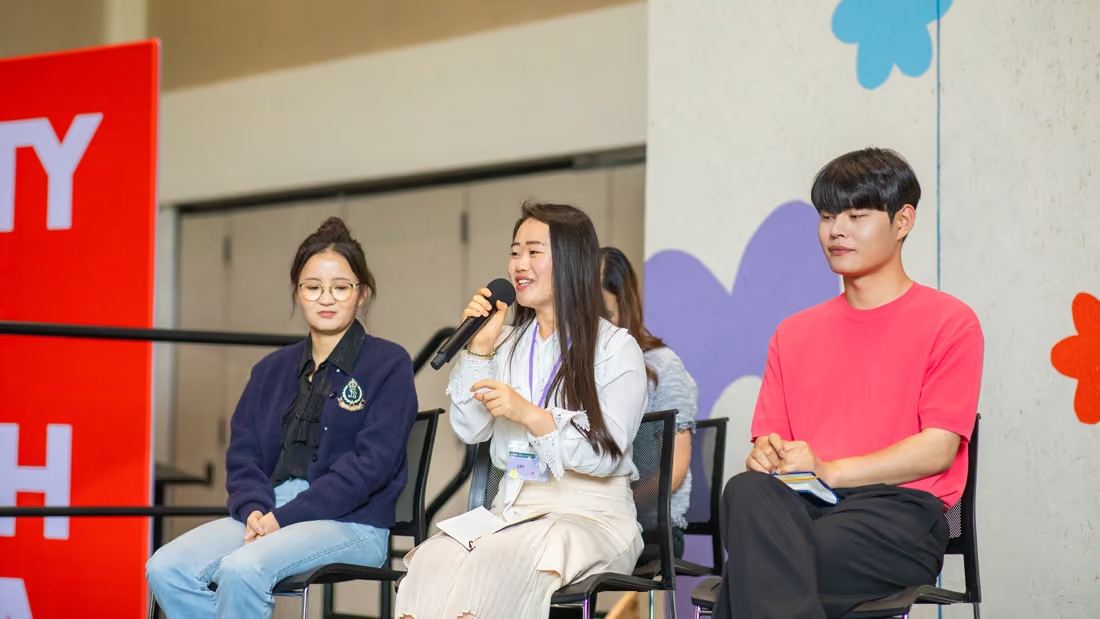
Inspired by our popular YouTube series, The Red Box, we created an offline opportunity to ask our North Korean friends anything about life in the most closed country in the world. Harry, Joy, and Sunghee shared their personal stories while candidly responding to audience questions about everything from dating in North Korea to experiences with discrimination in South Korea.
“I learned that every North Korean refugee has their own unique story, and the freedom they enjoy now is something that all 25 million North Koreans deserve.”
– Summit attendee
Imagining the Future of North Korea
We can’t know what path North Korea will take, but we do know that irreversible change is already happening and it's being driven by the people. In this panel we had North Korean activist, Seohyun Lee; expert on North Korea’s technology and media environment, Nat Kretchun; and LiNK’s South Korea Country Director, Sokeel Park, lead a discussion around imagining the future of North Korea and how we can support change.
Increasing the North Korean people’s access to outside information is one of our biggest opportunities to accelerate change on the ground. This session provided insight into the world’s most closed off country and LiNK’s current work in the area of information dissemination.
Allies Hackathon
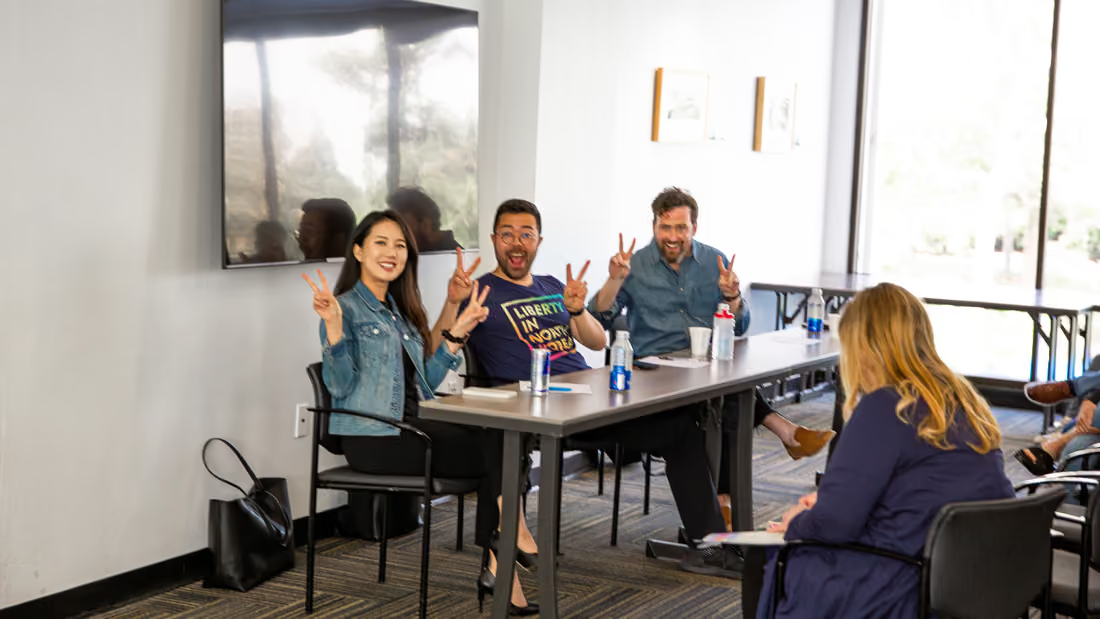
The Allies Hackathon was a nod to the grassroots origins of LiNK, and how supporter-led LiNK Teams continue to be at the forefront of this movement. At this interactive session, participants teamed up to brainstorm how we can bring more attention to this issue, drawing from other parts of the day. The goal was to equip and empower attendees to take the momentum from Summit back to their communities!
“Jihyun and Esther brought the energy for the Allies Hackathon! I thought the prompts and how we broke into different groups was great, and it was fun to hear everyone’s ideas. I plan to stay in touch with my little group and hopefully we can encourage each other to stay active in our support for this issue.”
– Summit attendee
North Korean Agents of Change
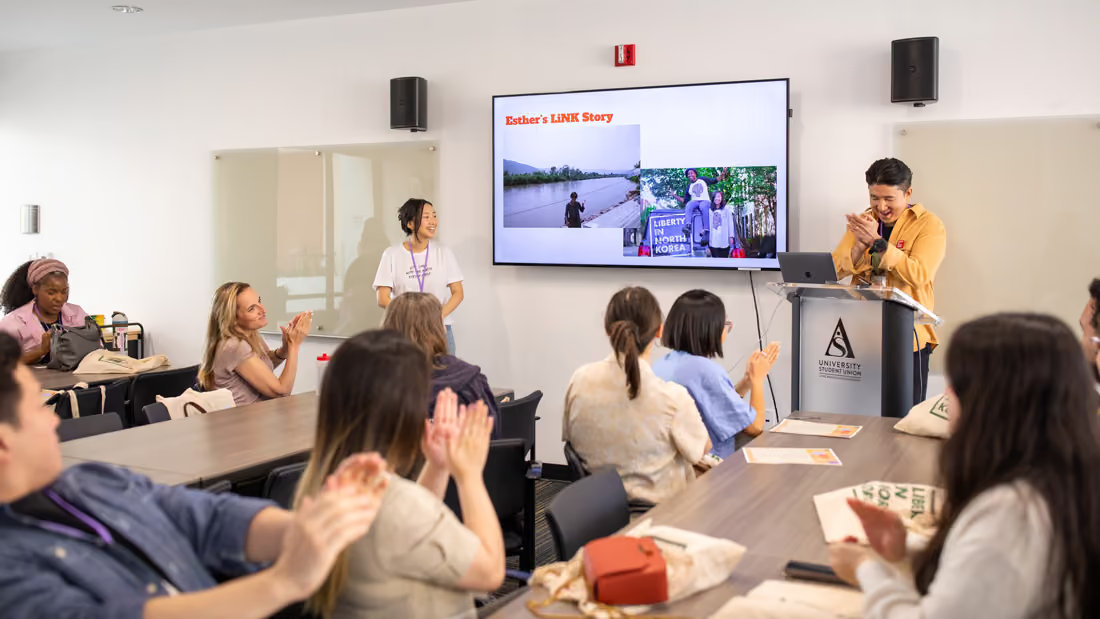
North Korean defectors have incredible potential to impact this issue, from both inside the country and as they resettle in freedom. In this session, LiNK’s CEO, Hannah Song, led a conversation with North Korean advocate, Daehyeon Park, and a visionary North Korean entrepreneur who are supporting their communities, empowering others, and leading this movement as agents of change.
“Daehyeon was asked ‘What would it take for CHANGE - the big change in North Korea, that we all want to see.’ He was very quick to respond that LiNK currently has about 30 employees. What would it take for them to have 300 employees, 1000 employees? I was SO STRUCK at his faith in LiNK, that THIS ORGANIZATION could make this happen! He, who has been through it all, believes that this group of workers and volunteers are enough. They are passionate enough, smart and inventive and creative enough, to open up and free his nation. I was on a high all the way home!”
– Summit attendee
Keynote Speaker: Joseph Kim
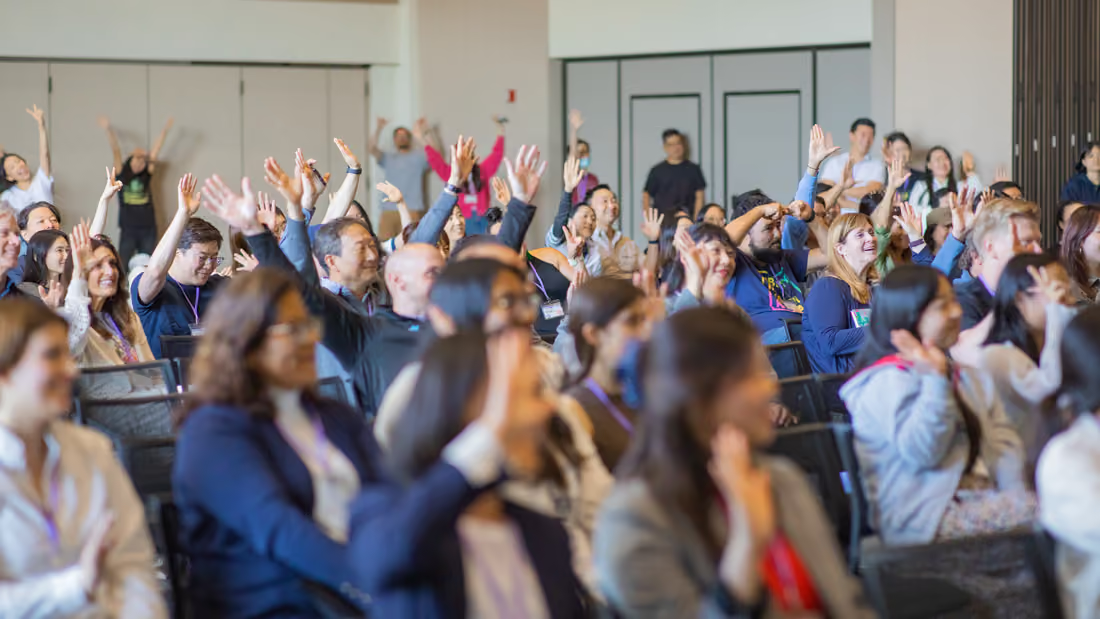
After a day of nonstop inspiration and life-changing conversations, everyone gathered to hear from Joseph Kim, a North Korean defector, advocate, and the Associate & Expert-in-Residence, Freedom and Democracy at the Bush Center.
In 2013, Joseph delivered a TED Talk on the importance of hope and published a memoir, “Under the Same Sky.” At Summit, he revisited the power of choosing to have hope for this issue.
“It’s important to remember that North Korea is a land with darkness, not a land of darkness. There is hope for the future, and I have chosen to live my life believing in that hope.”
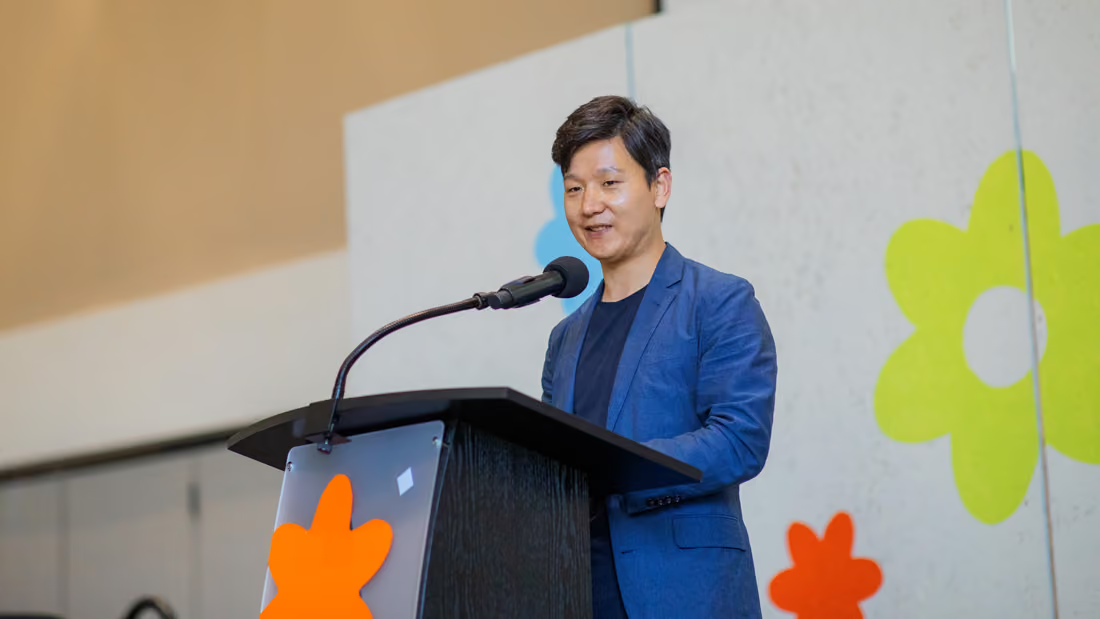
Finally, LiNK’s CEO, Hannah Song, wrapped up the day with a few parting words on what lies ahead.
“I know that North Korea can seem like this unchanging issue, one that definitely feels hopeless at times. In those brief moments of despair, I think about how hard some of our North Korean friends fought for their freedom…. I’m reminded that it is a privilege for us to do this work, because that means there is still something that we can do.”
At the end of the day, our excitement and confidence in the future was renewed. Each and every one of us has the ability to be a force for change. As the North Korean people strive towards their freedom, their hope for the future should galvanize us all.
We’re already looking forward to the next LiNK Summit! From all of us on the LiNK team - thank you to everyone who made this day one to remember.