
Freedom Walk & Run 2026, Seoul
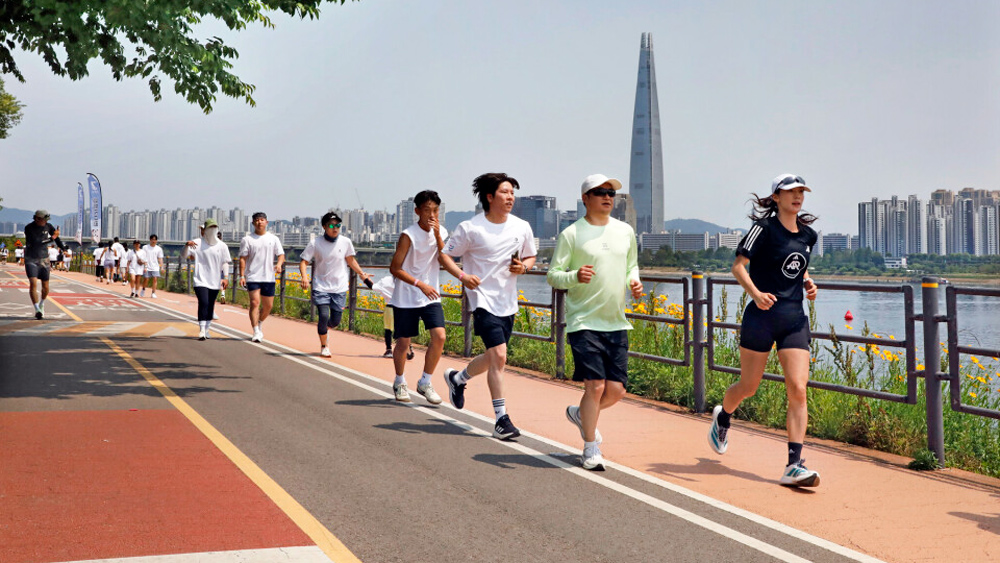
What Does Freedom Mean to You?
This fall, 200 people will gather along the Han River in Seoul to honor the 26 million people living in North Korea by answering one question: What does freedom mean to you?
Before setting out, every participant in Liberty in North Korea’s Freedom Walk & Run will write their own answers on the race bib they’ll wear for the 6 kilometer race.
The course is divided into three sections, each representing a different freedom: the freedom to leave, the freedom to lead, and the freedom to learn.
Each represents a different part of LiNK’s work and a different way North Korean people are pursuing greater freedom and choice in their own lives.
0-2km: Freedom to Leave
The first two kilometers represent the freedom to leave.
For North Koreans who decide to leave their country, reaching safety can mean a long and dangerous journey through multiple countries.
LiNK helps North Korean refugees navigate a secret route to safety. To date, over 1,400 North Korean refugees have reached freedom through LiNK’s networks. Every person who makes that journey has their own reason for leaving, their own hopes for what comes next, and their own idea of what freedom means to them.
Reaching safety opens the door to the next part of their journey.
2km-4km: Freedom to Lead
The next two kilometers represent the freedom to lead.
Starting over in a new country comes with countless possibilities, but just as many challenges. North Korean people resettling in South Korea or the US are learning a new system, while pursuing education, beginning careers, building relationships, or deciding what they want their future to look like.
LiNK’s programs support resettled North Koreans as they pursue education, language learning, and career development, providing mentorship, scholarships, and so much more.
And then comes the final stretch.
4-6km: Freedom to Learn
The last two kilometers represent the freedom to learn.
For people living inside North Korea, access to information from outside of the country is heavily restricted. Official media is centrally controlled, while foreign films, television, music, news, and other outside information are accessed illegally and often at significant personal risk.
Despite the government’s efforts to control information, curiosity about what freedom looks like proves impossible to suppress.
“No matter how much you try to control it, you can’t get rid of curiosity.”
Information gives someone a new point of reference. It introduces possibilities they had never encountered before. It gives them the chance to imagine a future beyond the North Korean regime.
North Korean people are finding ways to access outside media, through USB drives and microSD cards. LiNK’s Information Access Programs build on these existing channels by working with North Korean defectors and engineers to develop tailor-made technology and content that help people inside the country access more information more safely.
This is a growing part of our work, and one we believe has enormous potential to contribute to long-term change.
Get Involved: Support information access in North Korea
This fall, we’re giving supporters a closer look at this work through an upcoming documentary about information access in North Korea.
Make a gift of $30 or more to LiNK’s Information Access Programs by October 24 and you’ll receive an exclusive preview of the documentary this fall.
Your support helps LiNK enable more North Koreans to access more outside information more safely. This builds people’s resilience against regime disinformation, increases their aspirations for social and economic progress, and builds pressure for change and opening.
Donate today & get the documentary preview
Join us in Seoul
If you’re in Seoul, join us along the Han River on Saturday, October 24, for the Freedom Walk & Run. Participation is limited to 200 people, so reserve your spot today.
RSVP for LiNK’s Freedom Walk & Run
A Reason to Live: An Interview with Hae Sun

Hae Sun was rescued while hiding in China in 2013. Now safely resettled in South Korea, she attends a two-year college as a business/Chinese major and she just finished her first semester. Choosing to go to college was not an easy decision for her. She was adjusting to the many differences in South Korean society and dealing with loneliness, low self-esteem, and anxiety issues. But, ultimately her drive to pursue her dreams was stronger than the challenges she faced. Now, she’s excited to achieve the goals she has set out for herself.
“When I got my acceptance letter to a two-year college in South Korea, I thought of my mom who is still in North Korea. I wished she could’ve heard the good news and congratulated me. I haven’t heard from her since I left North Korea a few years ago. I don’t even know whether she is still alive. I know she would be very proud of me for attending college.” - Hae Sun
Our resettlement coordinator Jihyun recently met up with Hae Sun to see how she has been doing since starting college. Read their conversation below:

Jihyun: “How was your first semester?”
Hae Sun: It was not easy at all. In the beginning, I struggled so much. There were so many things my South Korean classmates easily understood that I didn’t because of the different education systems between North Korea and South Korea. I also didn’t study for more than 10 years because I didn’t get a proper middle school/high school education in North Korea and spent a long time hiding in China.
I didn’t do well for my midterms, but did better for my finals. Throughout the semester there were many moments when I really wanted to give up and drop out of school because studying was so hard and things were difficult for me, but I didn’t give up.

Jihyun: “Other than studying what else was difficult during your first semester?”
Hae Sun: Well, making friends in college was not easy. You know, I am at least 10 years older than most other freshmen. I am still afraid that they might not feel comfortable being around me because I am a lot older and culturally different from them. Some students have been so nice to me and I shouldn’t think that way, but I still get self-conscious about my age and background, which I know hinders me from getting close to them. Next semester I will try to be around other students more without worrying about my age and background.

Jihyun: What was the best part of your first semester?
Hae Sun: I was able to clearly understand a lot of Chinese grammatical stuff, which I had struggled with for a while. I was hiding in China for a long time so I learned conversational Chinese through talking with Chinese people, but I never learned it in school, so there were still a lot of grammatical rules I didn’t understand. Since I started studying Chinese as my major, I have learned a lot of those rules. I am so so happy about it and thankful for my education.

Jihyun: “What was one of new things you started doing after coming to South Korea?”
Hae Sun: Volunteer work to help people in need. In North Korea, I never thought of helping other people because I had so many difficulties then. I have been part of a group of volunteers for the past year that gives food to homeless people in train stations in Seoul. The group consists of young resettled North Korean refugees like me and South Korean college students.
Even after I resettled to South Korea, I didn’t think of helping others because I didn’t have a lot and thought I had to resettle successfully first. But while volunteering through the group, I have realized that I don’t need to have a lot of money or time to help other people.
Sharing what I have with others and helping them makes me happy now. In North Korea and China when I was always in need, I thought only receiving could make me happy, but now I know giving also makes me happy. That is why I do the outreach volunteer work for the homeless.

Jihyun: What were some of the difficulties you had when you first came to South Korea?
Hae Sun: Before I came to South Korea, I thought I would be fine communicating with people here because we speak the same language, but I was not aware of a lot of the differences between the South Korean language and the North Korean language because the two countries have been separated for almost 70 years.
At first I struggled a lot. There were many times when I either didn’t understand South Koreans or they didn’t understand me due to our different accents and words. Although there are still words and expressions I don’t completely understand, I am a lot more used to it than when I first came here. I have learned a lot of new words and expressions while working different jobs with South Koreans and through attending college here.
Actually at the beginning of this semester, I didn’t understand a lot of words that other students would use because I am even more unfamiliar with words young people use here. Still, I get confused about some South Korean expressions and words and sometimes I still don’t understand what my professors say. I used to get stressed out about it so much, but now I try to give myself more grace about my language issues. I mean I will keep learning new things and trying to get used to them for the rest of my life here. I will just face them instead of avoiding or getting stressed about them. That is why I am in college so that I can learn, right?
Another difficulty was loneliness…I still feel lonely from time to time. I really miss my family. I actually had depression when I first came to South Korea because of loneliness. Now I don’t have depression anymore because of new friends I have made since I came to South Korea. My church community has especially made me feel loved and encouraged and has been helping me overcome loneliness and depression.

Jihyun: What is freedom to you?
Hae Sun: Freedom enables me to do what I want and visit the places and countries where I want to go as long as I have the willpower and make the effort. None of this was possible back in North Korea.

Jihyun: What do you want to say to people around the world who support you and other North Koreans?
Hae Sun: I really thank them from the bottom of my heart. They have never met me and they don’t know me, but they have supported me so much. Thanks to their support I am now enjoying my freedom and pursuing my college education. What is more moving to me is they have given me all the support without asking anything in return. I am so touched by their unconditional support. I cannot thank the supporters enough.

Jihyun: How do you want people in the world to see North Korea and the North Korean people?
Hae Sun: I want the world to distinguish between its people and its leaders. I know that the regime is bad and has done a lot of evil things, but the ordinary people are innocent.

Jihyun: What is the most important value in life?
Hae Sun: Having goals to achieve. I didn’t have a lot of goals until I came to South Korea. After escaping in my early 20s, I didn’t have any goals other than just surviving and not getting repatriated back to North Korea...I didn’t even want to live a long life. I just wanted to live until I turned 30. But now, I want to live for a long time because I have a lot of goals to achieve.
I would feel so sad if I only lived until I turned 30 now. That is not enough time to do all the things I want to do.

Jihyun: What are your future goals?
Hae Sun: I always wanted to go to college in North Korea and China, but it was not possible due to my social status and other obstacles in those countries. I am living that dream by attending college with a major I really enjoy studying. Now my goal for the future is to successfully finish college and get a job I am passionate about. I don’t know what kind of job I want yet, but I know I will find one if I keep doing my best in college.
You can help other North Korean refugees escape China and resettle successfully by donating to our work. Donate now.










