
Freedom Walk & Run 2026, Seoul
What Does Freedom Mean to You?
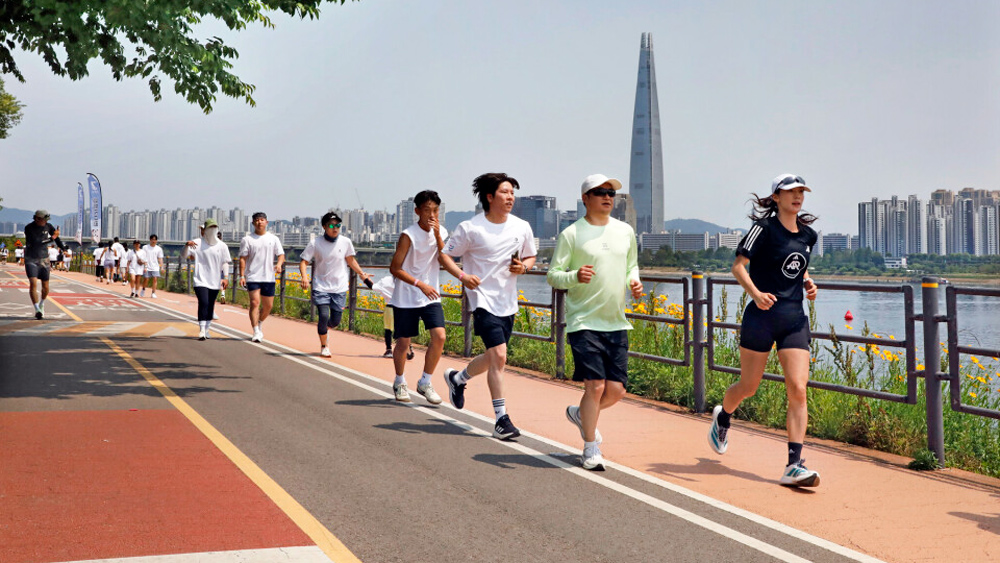
This fall, 200 people will gather along the Han River in Seoul to honor the 26 million people living in North Korea by answering one question: What does freedom mean to you?
Before setting out, every participant in Liberty in North Korea’s Freedom Walk & Run will write their own answers on the race bib they’ll wear for the 6 kilometer race.
The course is divided into three sections, each representing a different freedom: the freedom to leave, the freedom to lead, and the freedom to learn.
Each represents a different part of LiNK’s work and a different way North Korean people are pursuing greater freedom and choice in their own lives.
0-2km: Freedom to Leave
The first two kilometers represent the freedom to leave.
For North Koreans who decide to leave their country, reaching safety can mean a long and dangerous journey through multiple countries.
LiNK helps North Korean refugees navigate a secret route to safety. To date, over 1,400 North Korean refugees have reached freedom through LiNK’s networks. Every person who makes that journey has their own reason for leaving, their own hopes for what comes next, and their own idea of what freedom means to them.
Reaching safety opens the door to the next part of their journey.
2km-4km: Freedom to Lead
The next two kilometers represent the freedom to lead.
Starting over in a new country comes with countless possibilities, but just as many challenges. North Korean people resettling in South Korea or the US are learning a new system, while pursuing education, beginning careers, building relationships, or deciding what they want their future to look like.
LiNK’s programs support resettled North Koreans as they pursue education, language learning, and career development, providing mentorship, scholarships, and so much more.
And then comes the final stretch.
4-6km: Freedom to Learn
The last two kilometers represent the freedom to learn.
For people living inside North Korea, access to information from outside of the country is heavily restricted. Official media is centrally controlled, while foreign films, television, music, news, and other outside information are accessed illegally and often at significant personal risk.
Despite the government’s efforts to control information, curiosity about what freedom looks like proves impossible to suppress.
“No matter how much you try to control it, you can’t get rid of curiosity.”
Information gives someone a new point of reference. It introduces possibilities they had never encountered before. It gives them the chance to imagine a future beyond the North Korean regime.
North Korean people are finding ways to access outside media, through USB drives and microSD cards. LiNK’s Information Access Programs build on these existing channels by working with North Korean defectors and engineers to develop tailor-made technology and content that help people inside the country access more information more safely.
This is a growing part of our work, and one we believe has enormous potential to contribute to long-term change.
Get Involved: Support information access in North Korea
This fall, we’re giving supporters a closer look at this work through an upcoming documentary about information access in North Korea.
Make a gift of $30 or more to LiNK’s Information Access Programs by October 24 and you’ll receive an exclusive preview of the documentary this fall.
Your support helps LiNK enable more North Koreans to access more outside information more safely. This builds people’s resilience against regime disinformation, increases their aspirations for social and economic progress, and builds pressure for change and opening.
Donate today & get the documentary preview
Join us in Seoul
If you’re in Seoul, join us along the Han River on Saturday, October 24, for the Freedom Walk & Run. Participation is limited to 200 people, so reserve your spot today.
RSVP for LiNK’s Freedom Walk & Run
Humans of North Korea: YuSung

The North Korean government made my entire senior class work in the fields during the planting season.
For 40 days straight, we didn’t go to school. We just planted rice in the countryside from dawn to dusk. Even though I hated the work, some of my fondest memories are from that time. I hung out with my friends a lot because we all lived and worked together. We’d sing songs and sneak out to steal corn and potatoes when we were hungry. Then we’d roast them and share them with each other. I loved the feeling of disobeying the rules together.
We’d also hang out with the girls. I had the biggest crush on this one classmate. She had the palest skin and long black hair. In school, it was her job to clean the portraits of the leaders. Every morning she’d take her shoes off and stand on the desk while she wiped the frame with a special cloth. She looked like this beautiful statue standing over the class. It was the highlight of my day watching her do that and I looked forward to seeing her every morning.
She was my first love and while working in the fields I told her how much I liked her. After that, I started stealing corn just for her and we would laugh and talk together. 40 days seemed to go on forever. But the planting season ended and I stopped going to school soon after that because there were rumors my father had defected. I never got to say goodbye and I still think about her and wonder how she’s doing.
"If I saw her today I would walk up to her with a piece of roasted and corn and just say “remember me?”

After my father left for South Korea, the police came to question me and mom nearly everyday. We had to pretend that we had no idea where my dad was even though we knew exactly where he was. The police would sometimes interrogate us for hours waiting for us to slip up. I was still a teenager but I knew that I had to fake my emotions. I would beg the police to find my father and tell them how worried I was that he was missing.
"If I had told them the truth, they would have arrested us immediately.
”We left North Korea a year after my dad made it to South Korea. The police wouldn’t leave us alone so we first went to stay with my grandma. One of our neighbors agreed to let us know when it was safe enough to leave for good. The police bugged our phone so she had to speak in code. One day she called and said “The price of beans has been steadily going down” which meant it was time. When we got that message we left North Korea a few days later. All we had was a small bag and some money with us.
My father is a great photographer and he took a lot of photos in North Korea. We couldn’t bring even a single one with us.
It saddens me to think about all the family photos that are probably gone forever. I wish we just had one.

The first time I saw my father again was in Hanawon (South Korean resettlement center for newly arrived North Koreans). I couldn’t say anything and just started crying because he was crying. He brought me strawberries and the first thing he said to me was “eat this strawberry”.
I had never seen a strawberry that big and my first words to him in years were “Are these real strawberries?!”.
— Yusung Park, escaped North Korea in 2008










