North Korean Defector Economist: How We Analyze North Korea Needs to Change
By: HyeGyeong Joo
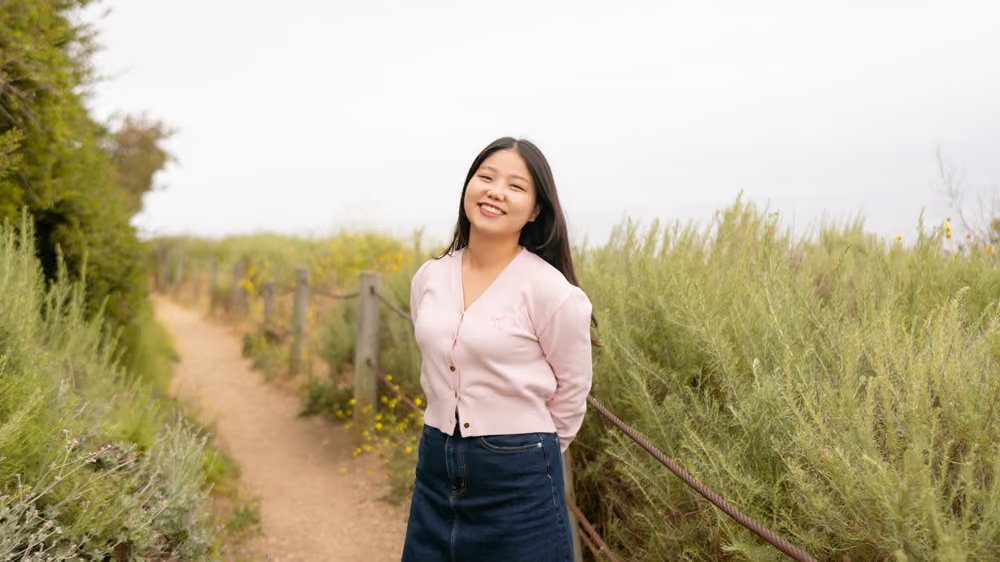
HyeGyeong is a PhD student in the Department of Economics at Korea University, specializing in theoretical economics. Her research looks at developing theoretical models of the North Korean economy. Since 2022, HyeGyeong has also participated in LiNK’s English Language Program.
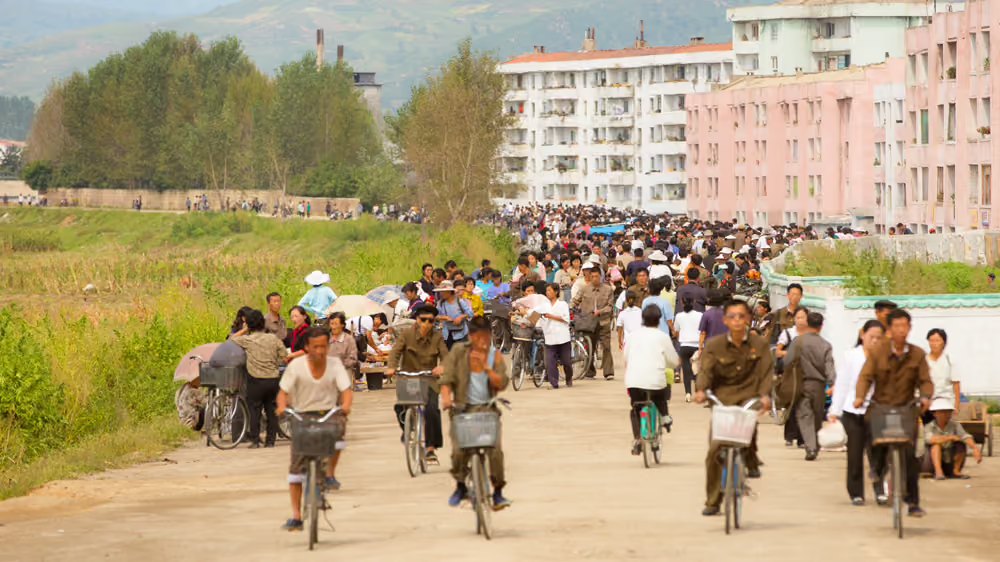
When I think about my past, I often feel a great sense of loss and sorrow for the people I left behind in North Korea. As a PhD student studying North Korean economics here in South Korea, I feel a strong desire to use my research to help improve the lives of North Korean people. In many ways, helping those I left behind also gives meaning to my own journey.
Whenever I watch the news or read academic papers on North Korea, I feel saddened by the way North Korean people are discussed and represented. Over time, I have come to believe that the way we analyze North Korea needs to change.
I believe there is a fundamental limitation in existing research on the North Korean economy, as much of it has traditional socialist planned economy analysis. Earlier studies have suggested that North Korea would either collapse or undergo a system transition as other socialist countries have done. However, after the breakdown of the Public Distribution System (PDS) in the mid-1990s and the emergence of the shadow economy (including through the Jangmadang—illegal markets), these approaches began to reveal their limitations.
As a result, the North Korean economy came to be understood not as a simple planned economy, but as a mixed economy in which state control and market activities coexist. However, these studies do not sufficiently explain why the North Korean regime allows marketization to persist at a certain level instead of completely suppressing it.
In order to explain the interaction between the government and ordinary North Korean citizens, who are the primary actors in Jangmadang activities, I divide the North Korean system into three groups: the regime, the elites, and ordinary citizens.
In particular, elites are important economic actors because they function as intermediaries between the regime and the people. My argument is that this phenomenon can be better understood by analyzing how these three groups strategically interact with one another.
These three groups pursue their interests in different ways, and their goals also differ significantly. The leadership wants to continue dynastic rule and ensure stable succession, the elite seek to secure their positions and avoid political risks such as purges, and ordinary citizens primarily seek survival and improved living conditions.
The interests of these three groups sometimes conflict with one another and sometimes align. In my opinion, these three groups in North Korea are currently remaining in a state of equilibrium.
This equilibrium means that these three groups can achieve their maximum interests under the current conditions in North Korea. Precisely because of this equilibrium, North Korea has been able to maintain both regime stability and limited marketization simultaneously.
That is why I believe we must identify what kind of shocks could cause this equilibrium to collapse. If such a change were to occur, it could become a new turning point for North Korea.
A new turning point for North Korea could lead the country toward a new political and economic order. The important thing is that we must identify what kinds of shocks could trigger such a transformation.
I hope for a North Korea that has changed—a place where its people can live freely. For me, North Korea is not just a state; it is my hometown, where I was born and raised, and where my family still lives. This is precisely why I am committed to a different approach to the North Korean issue—because my only goal is to see genuine change in North Korea, and I truly want to help bring about that change.
I want my article to inspire you to see something different the next time you watch the news or media coverage about North Korea. The next time you come across a piece of media about North Korea, I hope you take a moment to think about the real North Korean people. And perhaps you may also reflect on this article and consider what kinds of shocks could transform the current equilibrium of North Korea.
I hope you will join me on this journey.
–
HyeGyeong is a participant of the LiNK English Language Program (LELP), which serves to not only help North Korean defectors build confidence and skills in English, but develop their capacity as advocates for this issue. To that end, we partnered with select LELP “columnists” to write and polish personal essays through multiple rounds of external feedback and revision. Our goal is to have more North Koreans share their stories directly and lead efforts to change the narrative.
We believe the North Korean people can achieve their liberty in our lifetime.
Opportunities like LELP invest in the people building that future now. Help more North Koreans find their voice, reach their goals, and lead change on this issue.
Give Today
Chuseok for North Koreans | No Way Home for the Holidays
Autumn is a significant season for many people and cultures around the world. It’s a period of transition and reflection, gratitude for the days gone by, and celebration of the harvest.
In both North and South Korea, this time of year is celebrated with Chuseok, or the mid-autumn festival. Also known as “Korean Thanksgiving,” it’s a major holiday that predates the division of the peninsula. Chuseok is observed on the 15th day of the 8th month of the lunar calendar, when the harvest moon shines brightest. Traditionally, people return to their ancestral hometowns to gather with family, share a variety of delicious foods, and pay respects to their ancestors.
But for North Korean refugees, there is no going back. Holidays like Chuseok can be a bittersweet time, one of both gratitude for a life in freedom and grief over being unable to celebrate with family still inside North Korea.
“The first Chuseok in the US felt very empty and lonely. It was just me and my two-year-old daughter, Mia, back then. It didn’t feel like a holiday. I had multiple emotions at the same time. Loneliness, emptiness… there were so many feelings that I couldn’t even put into words.“
– Holly, escaped North Korea in 2013
Chuseok celebrations have evolved to look a little different in North versus South Korea, and even in countries like the US where the Korean diaspora have resettled.
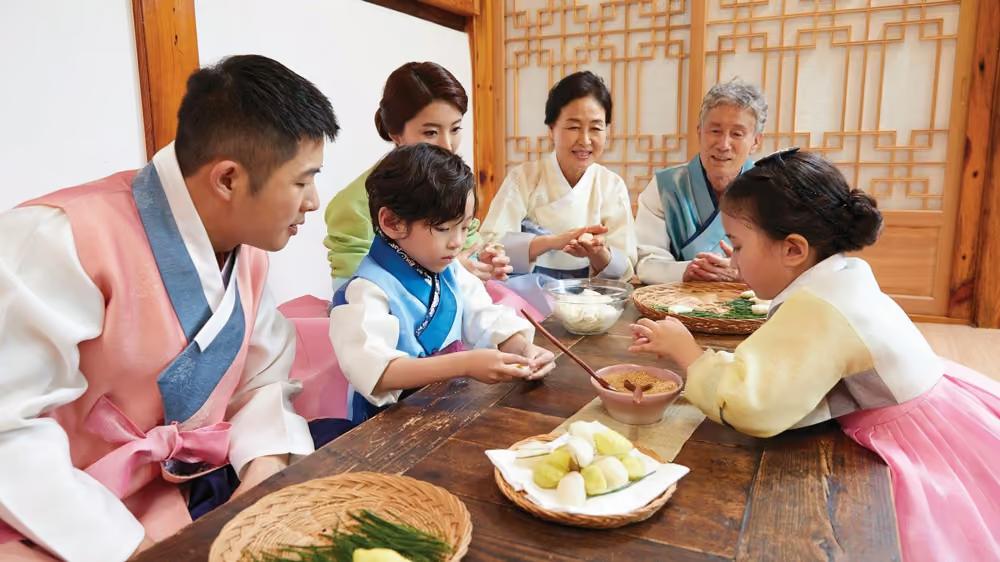
Chuseok Traditions in South Korea
In South Korea, Chuseok is considered the largest and most important holiday of the year. It’s celebrated over three days, during which a “national migration” takes place as people all over the country travel to their hometowns or to go sightseeing. Tickets for planes, trains, and buses are sold out months in advance, and freeways are packed with bumper-to-bumper traffic during the holiday period.
On the morning of Chuseok, families hold a memorial service for their ancestors at home, known as charye (차례). A table of food is prepared as an offering, typically featuring rice cakes, fresh fruits and vegetables, meat dishes, and the favorite meals of deceased loved ones. Families will also visit ancestral gravesites, a custom known as seongmyo (성묘), to pay their respects and tend to the graves.

From the ancestral table to large family meals, food is a central part of Chuseok celebrations. The defining dish of this holiday is seongpyeon (송편), a chewy, sweet, and nutty half-moon shaped rice cake steamed in fresh pine needles. It’s traditionally made with rice from the year’s harvest, finely milled into flour. Preparing seongpyon becomes a family activity as each piece is shaped by hand and filled with red bean paste, toasted sesame seeds, or chestnuts.
Other holiday foods include pajeon(파전), a crispy, savory pancake made with green onions; galbijjim (갈비찜), sweet and savory braised short ribs; and japchae(잡채), glass noodles stir-fried with meat and vegetables.
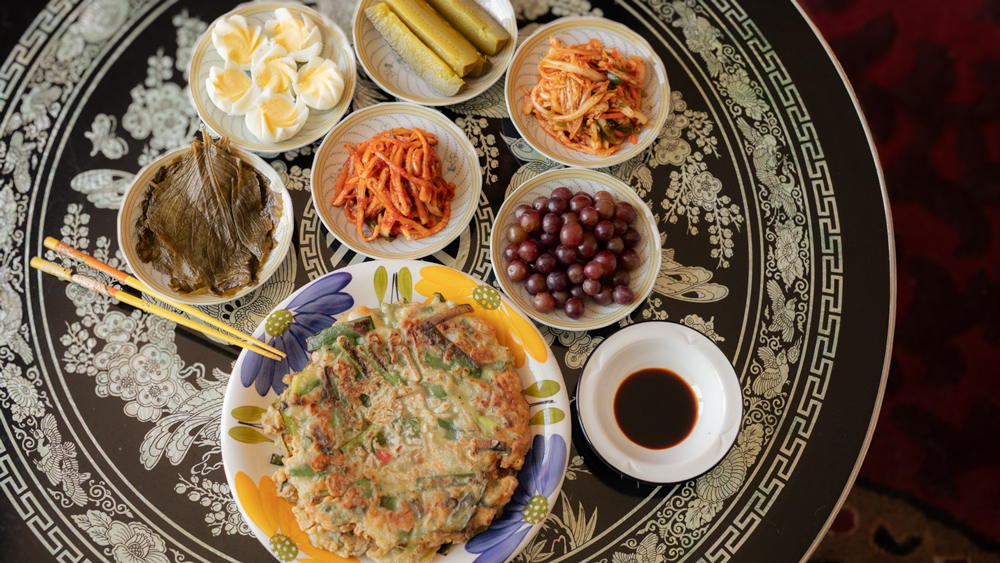
How Chuseok is Celebrated in North Korea
In North Korea, Chuseok is just a one-day celebration. While it is considered a key traditional holiday, its importance has been minimized relative to national holidays like the birthdays of Kim Il-sung and Kim Jong-il, and the anniversary of the founding of the Worker’s Party.
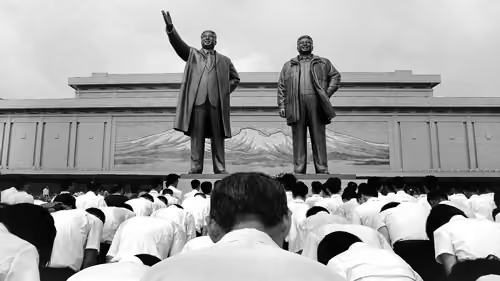
On both traditional and national holidays, North Koreans are urged to visit the statues of Kim family leaders or the Kumsan Palace of the Sun in Pyongyang, where the bodies of Kim Il-sung and Kim Jong-il lie.
It is much less common for widespread travel to take place during Chuseok due to severe travel restrictions and poor transportation infrastructure. However, these constraints have also made it so that generations of North Koreans remain in close proximity to their hometowns and relatives. For Chuseok, people gather with their nearby family members. Just like in South Korea, they’ll prepare special foods as offerings for charye, and then visit ancestral grave sites to pay respects.
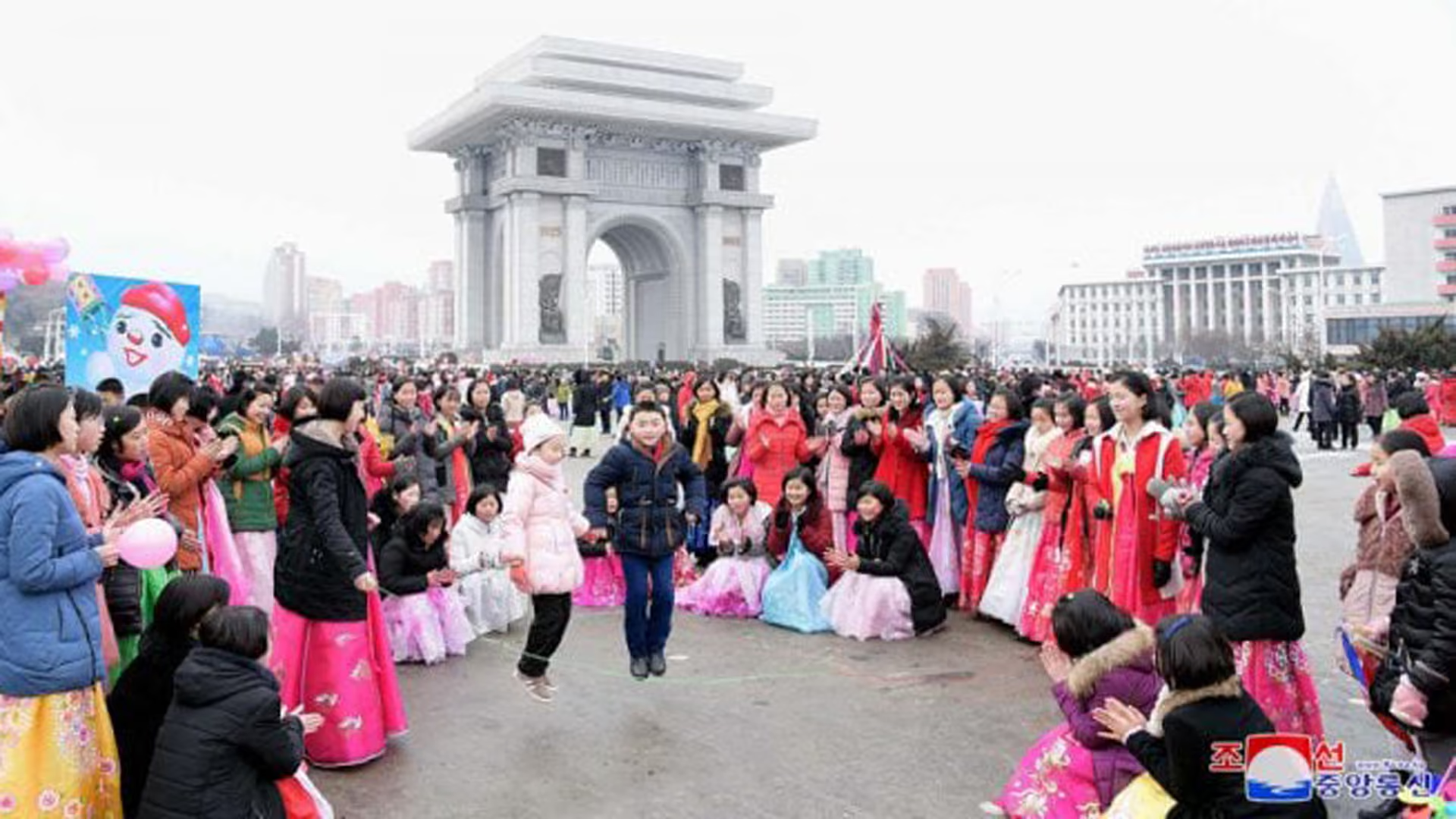
After ancestral rites, festivities become a community affair with traditional food and folk games shared amongst family, friends, and neighbors. Songpyeon is also a holiday staple, but the North Korean version is made with a minced meat and vegetable filling, and are twice as big as South Korean ones. Common folk games are yutnori (윷놀이), a board game, and ssireum (씨름), or Korean wrestling.
Holly & Mia: A Legacy of Freedom
It’s been over a decade since Holly left her hometown in North Korea. But whenever she makes pajeon (파전), it takes her right back to her childhood—sitting by the frying pan and watching her mom cook, eagerly awaiting a taste. “Pa”(파) means green onion and “jeon”(전) refers to foods that have been pan-fried or battered. There are many varieties of “jeon,” made with everything from potatoes to zucchini, seafood, kimchi, and more.
Holly saw her mom cook this dish countless times in North Korea. It was an inexpensive, everyday staple, but also an essential part of the holidays. Every year for Chuseok, the mouthwatering aroma of oil and batter would draw everyone to the kitchen, where a colorful assortment of jeon was being prepared.
Holly now lives halfway across the world from North Korea, but every year during Chuseok, she sets out an offering table for charye. For hours, she prepares foods like pajeon with great care, remembering and honoring her parents and loved ones, who she can’t be with for the holidays.

In 2016, Holly reached freedom through LiNK’s rescue networks with one-year-old Mia in her arms.
Mia is now at an age where she’s able to understand some of the things her mother went through. Holly has begun to open up more about her life in North Korea, and does her best to keep their small family connected to their Korean heritage. She takes Mia to Korean language school on Sundays, and makes an effort to celebrate cultural holidays, like Chuseok. What can’t be put into words, Holly communicates through food—their dinner table is always full of delicious Korean cooking.
In 2024, Holly received her US citizenship, nine years after her resettlement!
"When I obtained my US citizenship, it felt like my escape journey was finally complete. I cried and felt so grateful to the US for giving me a new life. My greatest happiness is seeing Mia have a childhood free of the painful hardships that defined mine.”
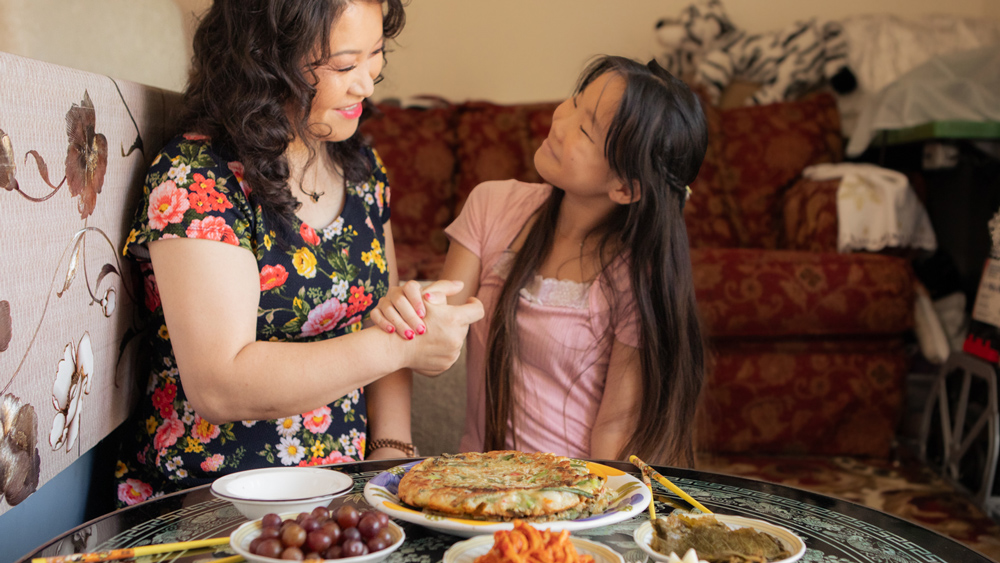
These days, Chuseok has become a lively gathering with the many friends and neighbors they’ve met over the years! Holly gathers with other Koreans in the community, and they go all-out preparing delicious seongpyeon and pajeon. She takes great pride in wearing traditional hanboks with Mia, and explaining each dish when guests arrive. The festivities always continue long after dinner, with Korean games like jegichagi, a version of hacky sack, and yutnori, a board game.
Living in the US, Holly and Mia have been introduced to new traditions too. Just a month after Chuseok, their community gathers again to celebrate Thanksgiving with turkey and pumpkin pie, in true American fashion.
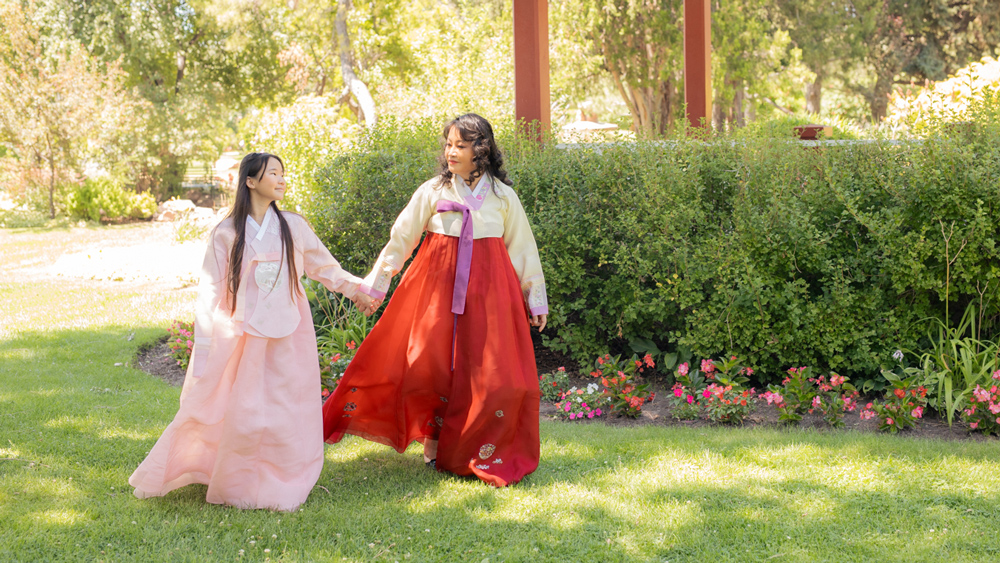
Holly still has hope that in her lifetime, she’ll be able to celebrate Chuseok with all her family and bring Mia to visit her hometown in North Korea.
We’re working towards the day when families don’t have to be separated. To date, LiNK has rescued almost 1400 North Korean refugees and their children, reuniting over 500 people with their families in freedom. As we’re helping North Koreans, like Holly, build new lives, we’re also leading initiatives to increase change inside North Korea, through advocacy, information access, and more.
Become a monthly donor and create a long-lasting legacy of freedom. Your support will rescue North Korean refugees waiting for their chance to escape right now, and fuel work that is increasing change and opening inside North Korea.