
Trafficking and Exploitation of North Korean Refugees
For North Koreans hiding in China, repatriation is synonymous with death. Resolved to avoid such a fate, but with few options or protections, North Korean refugees are left vulnerable to a second wave of human rights abuses.
Among North Korean women and girls who escape to China, an estimated 60% have fallen victim to human trafficking.
Here are the stories of three women who have survived the unimaginable and are now advocating for this issue in freedom.
The Fear of Forced Repatriation
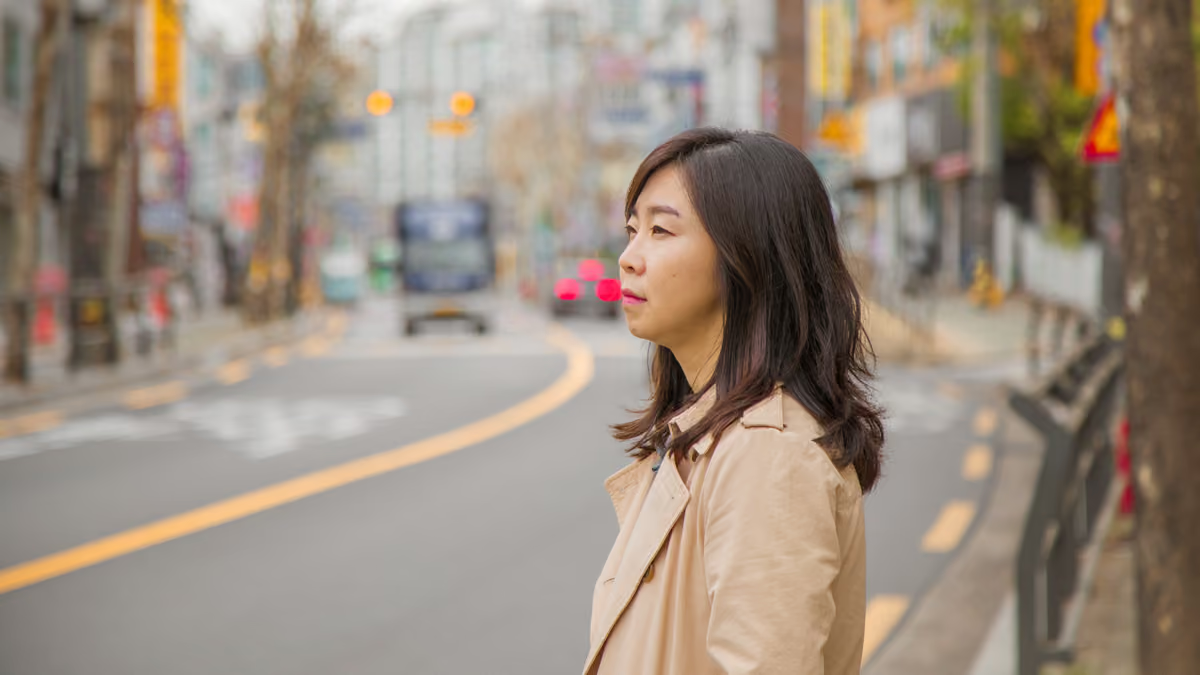
After Eunju fled from North Korea in 1999, she ended up spending years in China before finally reaching freedom.
“In China, North Korean defectors are exposed to various crimes, including sexual assault, human trafficking, forced prostitution, and labor exploitation. Those who seemed kind and willing to help were either traffickers or rapists. Promises of wages to be paid in the fall were replaced with threats—’You're from North Korea, aren't you?’
There is only one reason why the victims—North Korean defectors—remain silent: the fear of forced repatriation. This fear-driven silence perpetuates a vicious cycle of human rights violations against North Koreans in China.
On our first night in China, we were confronted with a trauma that would haunt us for a lifetime. As we walked along the road, not knowing where to go, a car slowed down and pulled up beside us. The door swung open, and someone grabbed my sister. My mother and I clung to her, desperate not to let go, but we couldn’t withstand the force of the accelerating car and were thrown aside. At the time, my sister was still just a young girl who had not even gone through puberty, yet she could not escape sexual violence. My mother couldn’t even bring herself to think about reporting the incident. She knew that if she went to the authorities, the Chinese police would capture us and send us back to North Korea before they ever caught the perpetrator.”
Soon after, Eunju’s mother was trafficked into a forced marriage together with Eunju and her sister, and they were sold for 2000 RMB (~$240 at the time).
Sold on the Way to Freedom
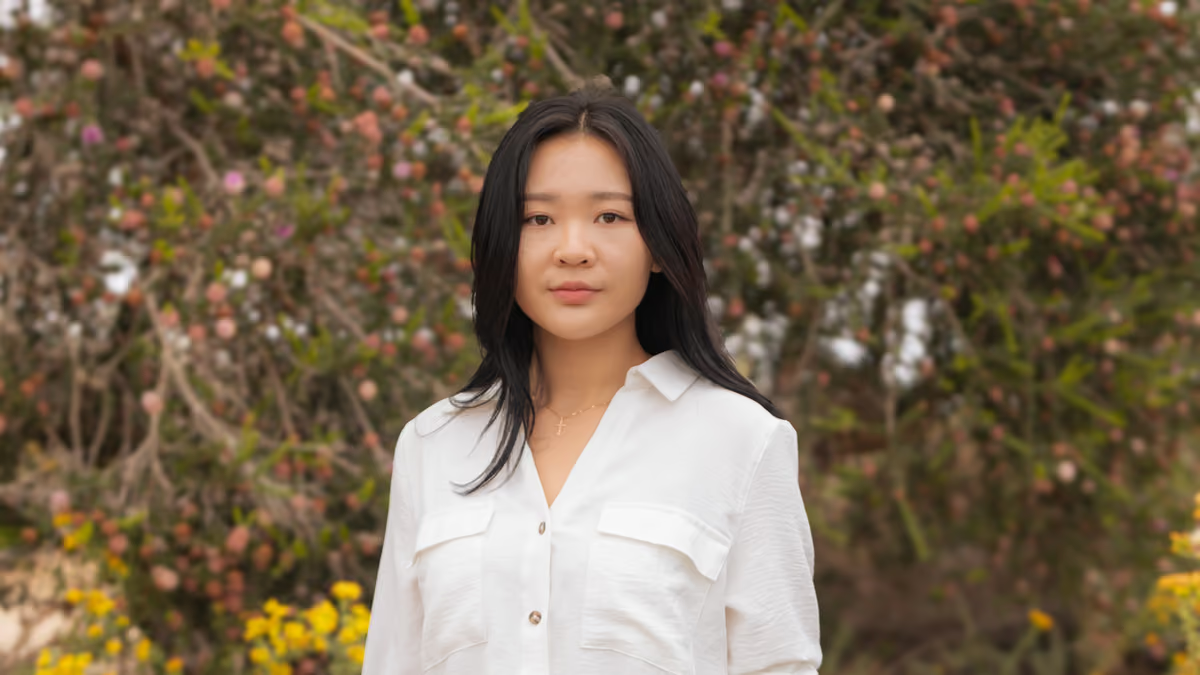
Hannah fondly remembers growing up with a large family in North Korea. But widespread food shortages forced her to leave her beloved hometown at 15 years old. When she finally managed to cross into China, she was trafficked and sold into a forced marriage.
“Do you remember what life was like when you were 15 years old? Maybe you were stressed about highschool, or getting your driver’s license. When I was 15 years old, I was sold to a man in China who was twice my age. For the first 6 months of captivity, I stayed away from him as much as I could. But in the end, there was nothing I could do to protect myself.”
“When I became pregnant, I couldn’t accept it because it wasn’t my choice. But then my baby arrived, and it all hit me. I wanted to give my daughter the same love I had grown up with. But I couldn’t do that without legal status or freedom. So with my one-month-old baby in my arms, I escaped once again.
Even though it was a very hard and dangerous journey, we ran together towards freedom, towards a future that guarantees our safety and hope.”
A Mother’s Impossible Choice
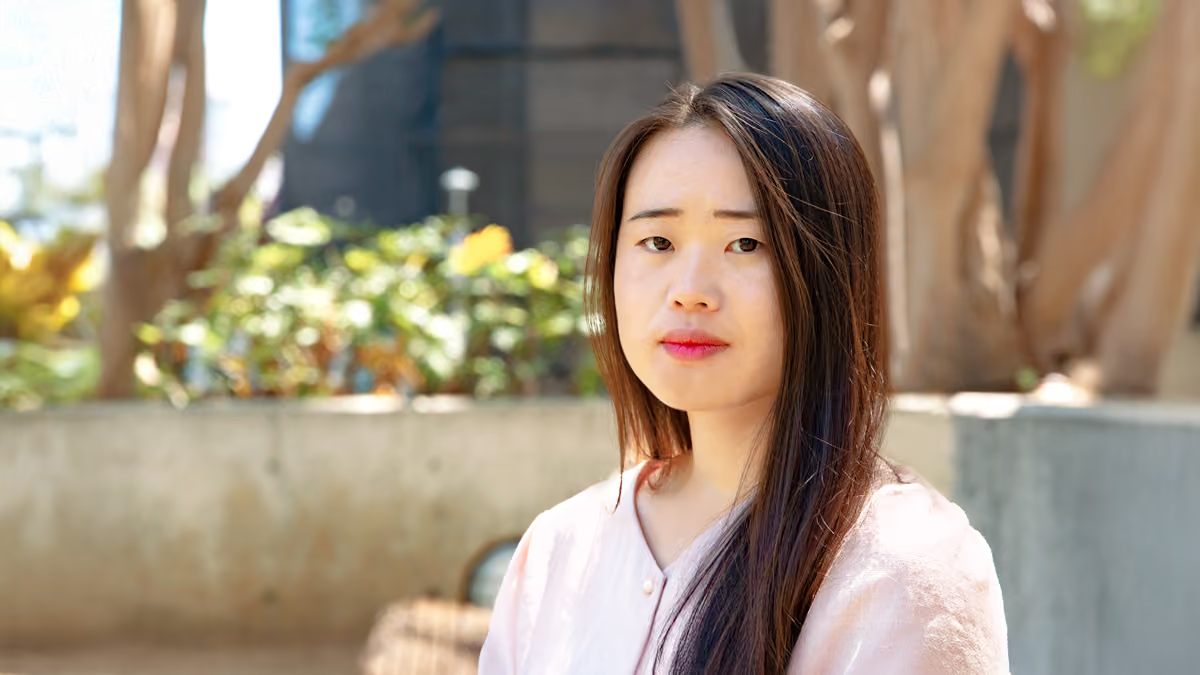
Joy fled from North Korea when she was 18 years old. When she reached China, the broker who arranged her escape went back on their word and immediately demanded to be repaid.
“She told me my only option was to be sold into marriage to a Chinese man so the brokers could take my bridal cost as payment. I couldn't even think of refusing because I was afraid they would do something bad to me or drop me off somewhere alone to get caught by the Chinese police and sent back to North Korea. At that point, I realized that I was trapped.”
Joy was sold to an older Chinese man for $3,000. She searched for any way to escape, but soon became pregnant and gave birth to her daughter. For two years, she raised her child and began to lose hope of ever reaching freedom.
Then in 2013, Joy was connected to LiNK’s network. She felt it was her last chance to take back control of her life. But she faced an impossible decision. Her daughter was still very young, and it would be incredibly risky to escape together. Ultimately, Joy decided to leave her behind.
“I cried every day thinking of my daughter. Before we started moving to get out of China I stayed with some other defectors…I didn't want to cry in front of [them], so I cried behind a curtain. I found another North Korean woman crying there because she also left her child. We ended up hugging each other and crying together.”
Stories of Hope
Eunju, Hannah, and Joy’s stories echo that of thousands of North Korean women who were sold on the way to freedom. But they’ve refused to let their painful experiences prevent them from living full lives, instead turning them into sources of strength, fueling their work on this issue.
Eunju is now living in South Korea with her mom and sister. She co-authored a book about her journey, A Thousand Miles to Freedom, with journalist Sebastein Falletti to make sure stories like hers are not forgotten.
Hannah is also in South Korea raising her daughter, who will never know a life without freedom. In 2022, Hannah joined LiNK’s Advocacy Fellows program to develop her capacity as a leader and advocate for this issue. She traveled across the US alongside other young activists, sharing her story at universities, churches, Fortune 500 companies, and with key stakeholders on Capitol Hill.
Joy was also a LiNK Advocacy Fellow in 2019. Today, her advocacy continues in the classroom, as an educator at an alternative school for the children of North Korean mothers. Some of her students were born in China while the mothers were in forced marriages—a circumstance that is deeply personal. Joy is beloved by the children, and strives to help them navigate their complex identities and relationships with their parents.
All the while, Joy has kept in touch with her daughter through video calls and messages. Last year, she was finally able to bring her daughter to South Korea!
What You Can Do to Help
The trafficking of thousands of North Korean women and girls is one of the most rampant and egregious human rights violations happening today. Yet it often does not get enough dedicated attention amidst all the dangers and abuses that North Koreans face—an alarming reminder of the gravity of this issue.
LiNK rescues North Korean refugees without cost or condition, and provides crucial resettlement support during this period of transition. We’re one of the only organizations still doing this work since the COVID-19 pandemic. To date, we've helped almost 1,400 North Korean refugees and their children reach freedom.
It is more urgent and important than ever that we carry on this work. Right now, our field team is actively in communication with North Korean refugees hiding in China, many of them women who were trafficked or sold into forced marriages, and coordinating their escape. Help bring them to safety and freedom.
Give Today
Lunar New Year in North Korea | What is Seollal (설날)?
North Korea has several major holidays, the most prominent being centered around the birthdays of Kim Il-Sung and Kim Jong-il. But there are some holidays that predate the regime, and continue to be celebrated in both North Korea and South Korea.
Seollal (설날) is one of these traditionally significant days. Known more broadly as Lunar New Year, it marks the first day of the lunar calendar and is observed in many Asian cultures. While January 1st marks New Year’s Day on the Gregorian calendar used by many western countries, the exact date of Lunar New Year differs every year. It typically falls at the end of January or beginning of February, and is celebrated over a period of three days.
Seollal in South Korea
In South Korea, Seollal is a time for families to gather and honor their ancestors. With people across the nation traveling back home, roads are packed and train, bus, and plane tickets are all booked months in advance.
Long hours are spent preparing traditional foods like tteokguk (떡국), or rice cake soup, and jeon (전), a savory pancake-like dish usually made with green onions. The act of eating tteokguk symbolizes turning one year older in Korean, and is believed to bring good luck and health for the year ahead.
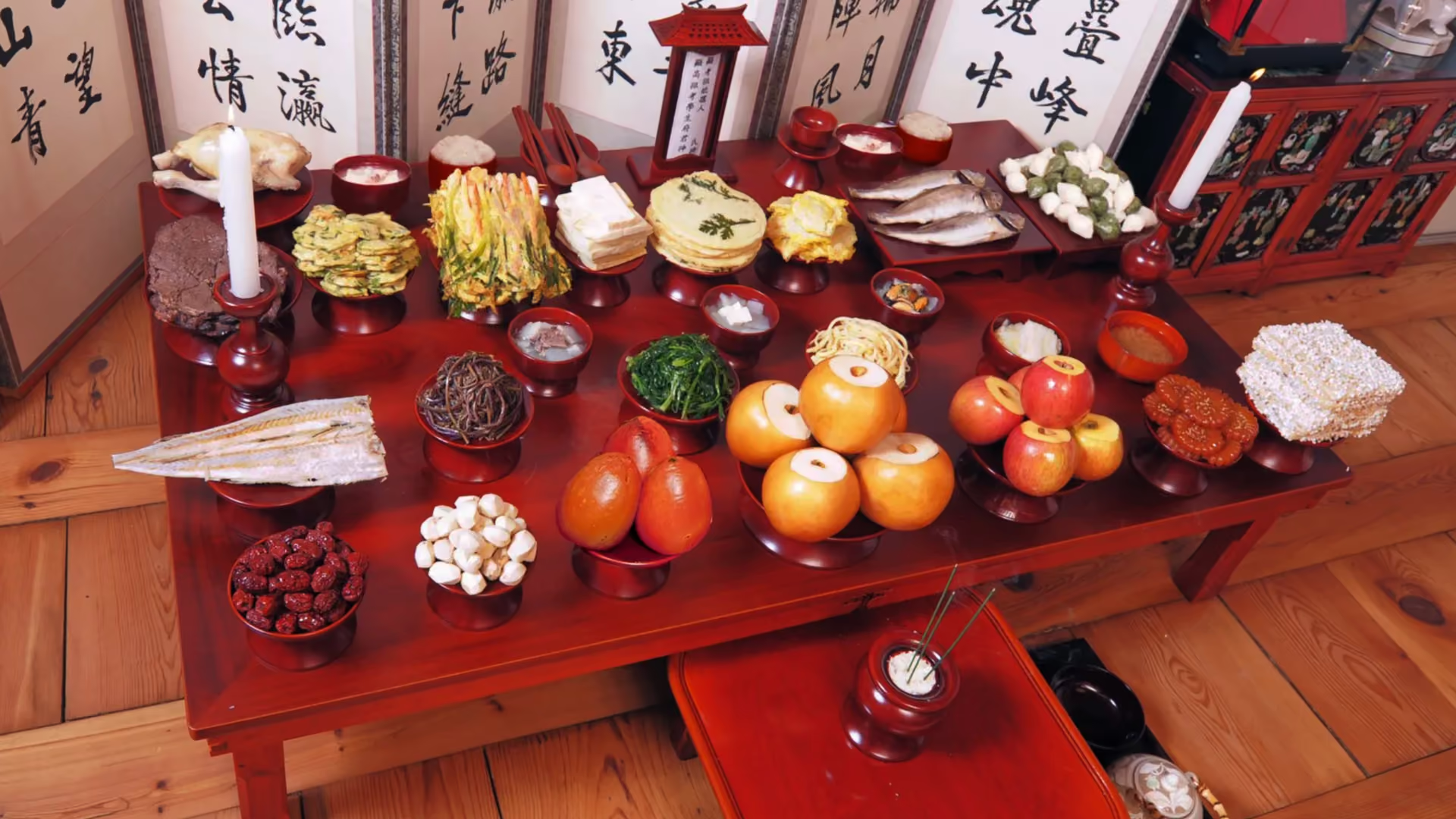
Food is also an important component of Charye (차례), a memorial service to honor one’s ancestors. Led by the family’s eldest son, an assortment of dishes are set out on a table as an expression of gratitude, and rites are performed for the last four generations of one’s ancestors.
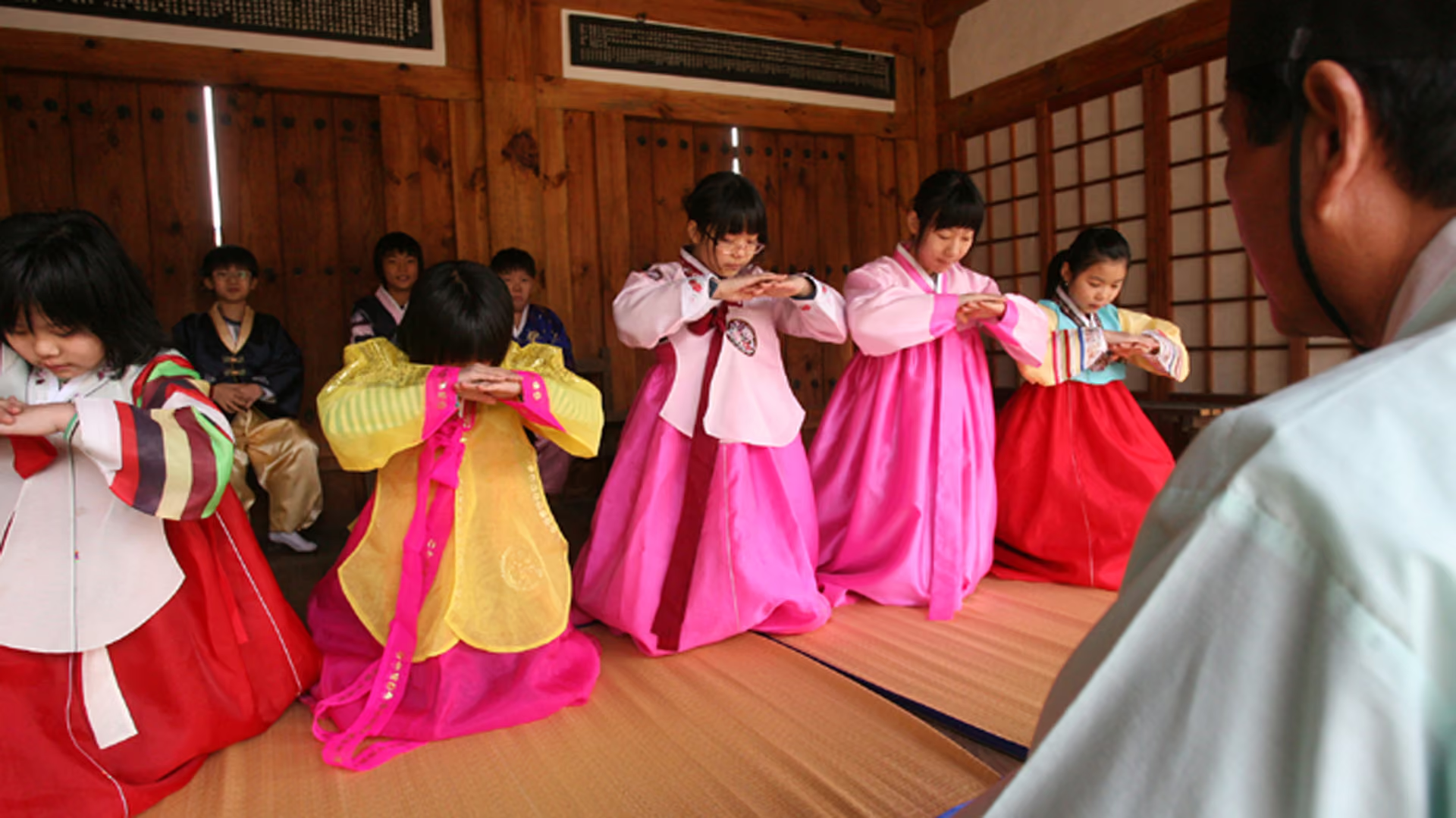
Another well known Seollal tradition is Sebae (세배). Younger members of the family, often while wearing traditional hanboks (한복), do a deep bow to their elders with the greeting “새해 복 많이 받으세요,” which translates to “May you receive good fortune and blessings in the new year.” In return, elders share words of wisdom and sebaetdon (세뱃돈), new year’s money in a colorful envelope.
The rest of the holiday is usually spent exchanging stories, reflecting on the past year, and playing Korean traditional games like Yutnori (윷놀이), which involves four wooden sticks that are tossed like dice to move tokens around a board.
Seollal in North Korea
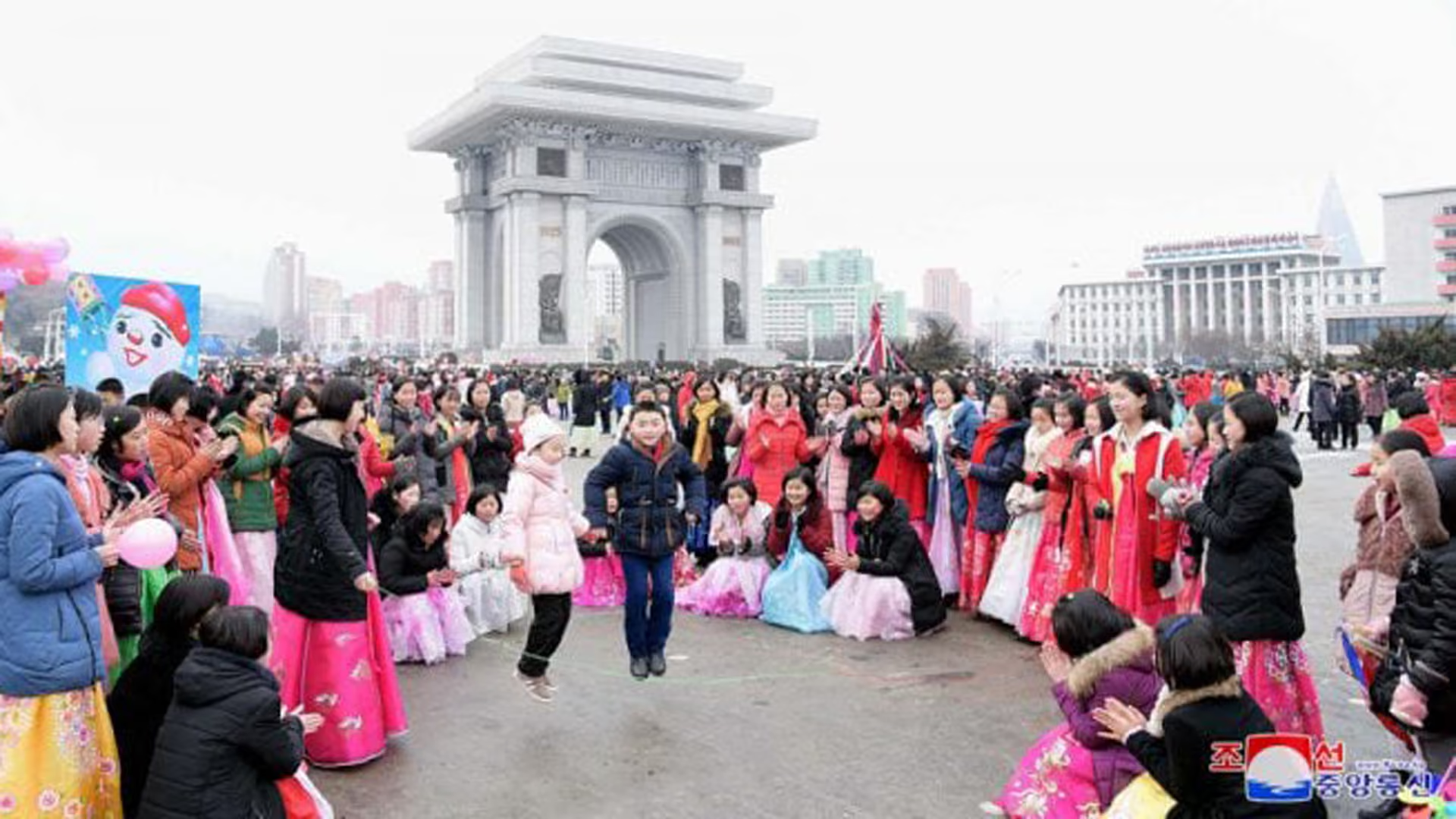
In North Korea, the celebration of Seollal is encouraged by the state to emphasize Korean folk traditions. Historical programs are broadcast on TV, and local authorities organize mandatory activities such as kite flying and spinning tops. North Koreans gather with loved ones over the highly anticipated three day rest from work.
But unlike in South Korea, January 1st is actually considered the more important holiday to celebrate the New Year. This is when North Koreans do Sebae. Instead of the South Korean greeting, it’s customary to say “새해를 축하합니다,” or “Congratulations on the new year.”
On New Year’s morning, it is compulsory for all North Koreans to visit statues or portraits of Kim Il-sung and Kim Jong-il. After that, respects must be paid to town leaders, particularly the person in charge of one’s unit, such as the company president or homeroom teacher. Finally, greetings are exchanged between in-laws and neighbors, and families gather for ancestral rites, sharing food, and other traditional festivities.
Another key difference between New Year’s celebrations in North and South Korea is that there is no widespread travel. The lack of freedom of movement inside the country means it is extremely difficult for North Koreans to go from one city to another for any reason. Any requested travel requires a specific stated purpose, proper identification, and documentation that must go through several levels of approval, including from the head of the neighborhood watch (inminban), local People’s Committee, local district office, and a relevant police officer. Permits for restricted areas, such as Pyongyang and the border regions, require more complex issuing processes.
Yet both New Year’s Day and Seollal in North Korea are still celebrations of life and community. Many North Korean refugees fondly remember the holiday, recalling not the state enforced displays of propaganda, but precious time spent with loved ones.
“I grew up with a lot of aunts and uncles and they all lived in the same area, so on Seollal…everyone would get together to make rice cakes, noodles, and dumplings. After making a lot of food, we’d play Yutnori and everyone would start squabbling. Then we’d find out everyone’s fortune. I miss it now.”
- Hannah, escaped from North Korea in 2015
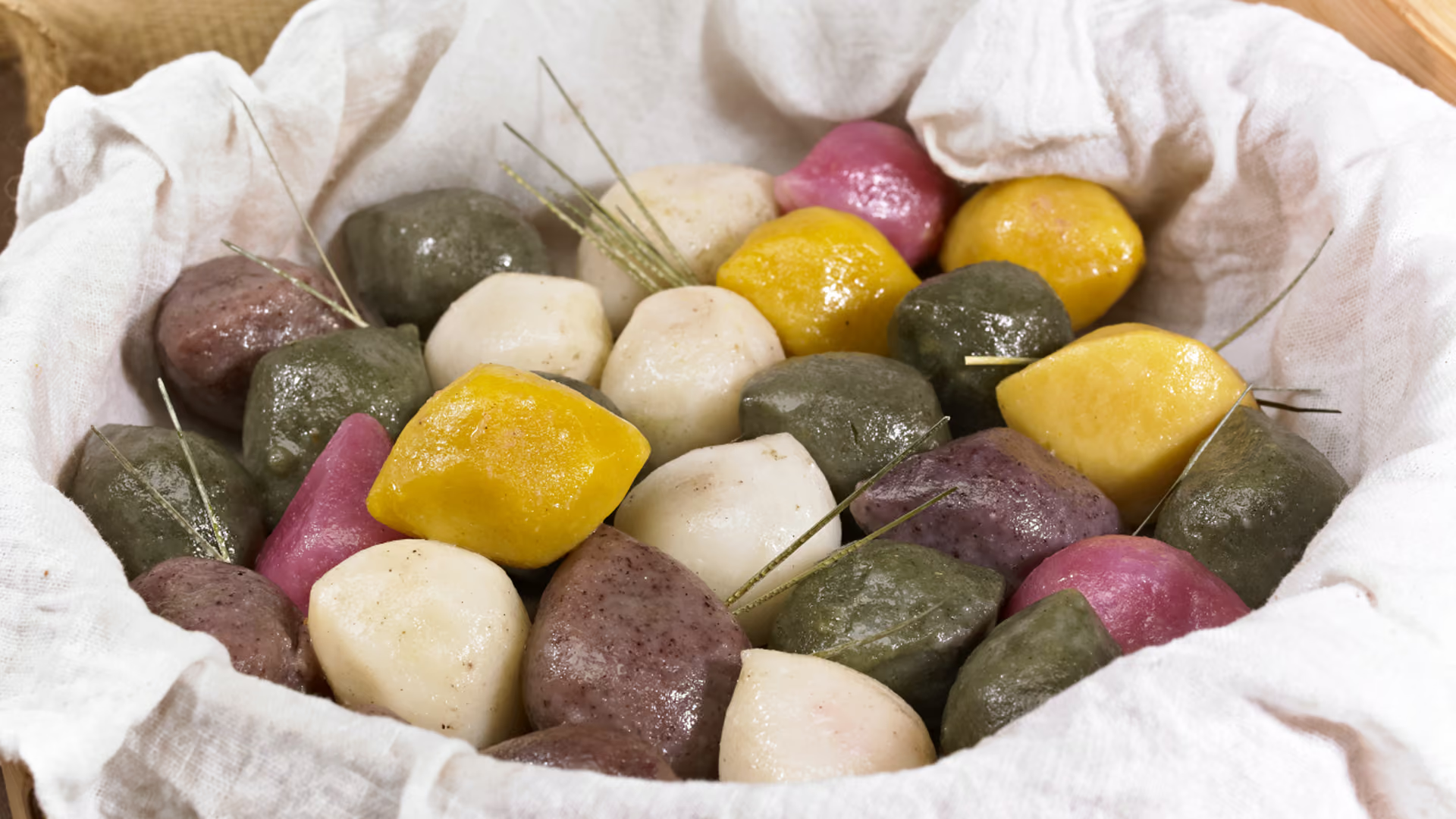
On Seollal, North Koreans don’t do a separate bow because they have already greeted the New Year. Depending on the region, North Koreans enjoy a variety of dishes like tteokguk (떡국), manduguk (만두국), dwejigukbap (돼지국밥), songpyeon (송편), nokdujijim (녹두지짐), and noodles.
“North Korea is a very communal society, so everyone gets together on Lunar New Year. The adults would play card games and Yutnori, we’d eat delicious food, and spend time together until the sun went down. I would wake up especially early to visit the homes of the neighborhood elders and they’d share the food they made with me… Later in the afternoon, I’d go to my homeroom teacher’s house with all my friends, and we’d play there until late in the evening.”
- Yulseong, escaped from North Korea in 2017
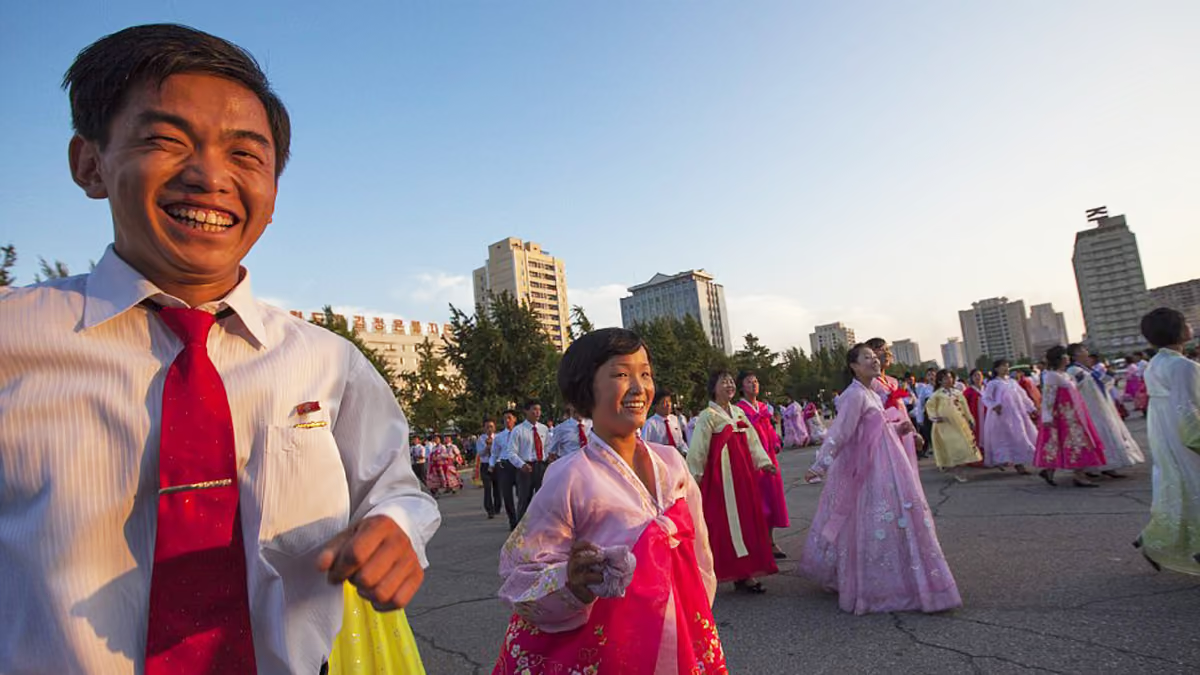
All around the world, the New Year is a highly anticipated time of reflection, gratitude, and turning the page. It’s a universal experience, one that is shared with the North Korean people as well!










