
How Has the Kim Family Held on to Power So Long?
The following content is adapted from North Korea 101, LiNK’s FREE online course that explains what's happening in North Korea beyond the headlines. Start learning today.
Sign up for NK 101
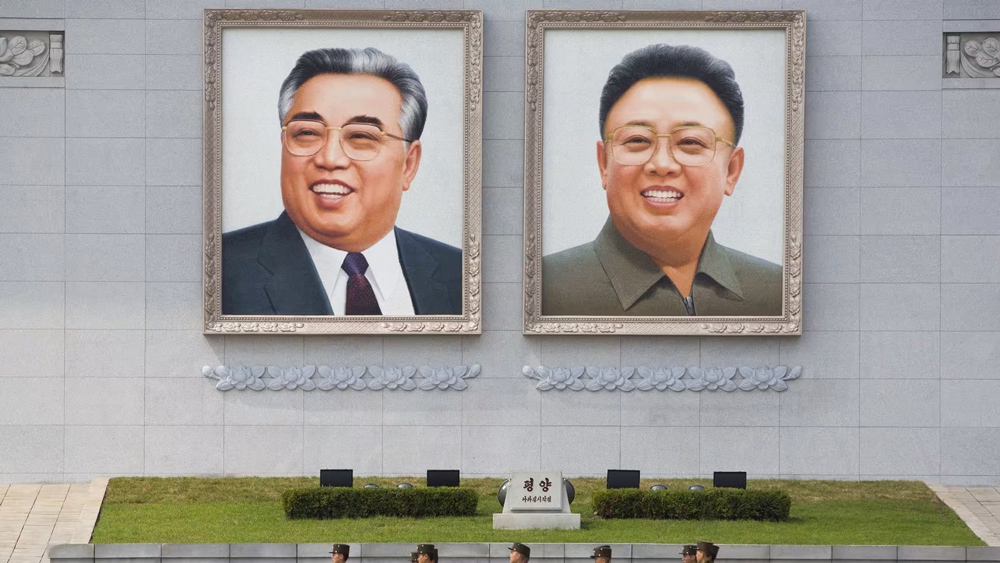
“This question is fundamental. To understand where we are and where we might be heading, we have to understand where we’ve come from.” – Sokeel Park, LiNK CSO
The North Korean regime is the world’s worst dictatorship, an extreme remnant of 20th century authoritarianism that has stretched across eight decades and three generations of the ruling Kim family. The regime’s all-encompassing system of control constrains the North Korean people’s agency and potential, resulting in an enforced poverty which includes physiological, material, social, informational, and cultural deprivations.
It is not easy for dictators to maintain power for long. During the Kim family’s rule, the world has seen the rise and fall of dozens of other dictatorships. Through many periods of global change and internal instability, they’ve managed to maintain power not by sheer force or luck, but through an array of adaptive strategies. But when the media portrays Kim Jong Un as crazy or irrational, it undermines our understanding and approaches to try to undermine that dictatorship.
There is a formula to their approach, and if we can understand it, then we can counteract it.
The Four Ways Dictators Lose Power
Historically, the fall of dictators can be attributed to four factors. By looking at each of them, we can see how the ruling Kim family has strategically avoided these fates.
1. Military Defeat/International Intervention
An external country or force intervening and overthrowing a dictator through military defeat.
2. Elite Challenges
An internal challenge emerging from within the country’s top political or military circles, forcibly removing the current dictator by assasination or a coup d'état,
3. Popular Uprising
An internal challenge from below, where a mass movement forces a change in leadership. In some cases, parts of the elite may join the side of the masses.
4. Death in Office
The death of the current leader, opening up an opportunity for someone else to assume control and end the dictatorship or make significant changes.
Threat #1: Preventing Military Overthrow
To prevent an external power from overthrowing their dictatorship, the Kim family first needs a strong deterrent against military force. The vast majority of mainstream news coverage of North Korea focuses on one thing: nuclear weapons. Having nuclear weapons and being seen as potentially willing and able to use them is arguably the most effective way to deter a military intervention from the outside.
Second, the Kim family has strategically managed their relations with countries like the Soviet Union / Russia, China, the United States, and South Korea. They go back and forth between periods of warmer and colder relations, effectively balancing opportunities and risks to gain support while preventing too much external influence. It’s unlikely that the Kim family has ever really trusted any of these external powers, even those that are sometimes labelled as “allies”.
Threat #2: Preventing Elite Challenges
Historically, the position of dictator can be very tempting to others within the leadership’s orbit, from competing family members to senior politicians or military leaders. To prevent anyone from building too much power and becoming a threat, the ruling Kim family carefully manages elite politics, alternating between demoting, promoting, and purging top officials.
On top of that, cross-layered surveillance between different institutions also keeps potential challengers under surveillance and in check, and prevents any one person or group of people from launching a challenge for power.
Threat #3: Preventing Popular Uprisings
The next scenario that the regime must prevent is a popular uprising.
A common conception of North Korea is that if the people wanted to rise up and revolt, they would have, and so they must be brainwashed or bought into the regime’s ideologies. While the latter may be true to some degree, it's difficult to fully grasp the extent to which the government’s system of control deprives people of their agency and potential and prevents them from challenging dictatorial rule.
North Korea is the most closed country in the world. The regime has forcibly cut off North Koreans from the rest of humanity, which serves as the baseline for their control. This centers everything—social structure, daily life, resources, information—around the regime, and eliminates sources that could undermine or threaten their authoritarian rule.
Laying the Foundation: Kim Il Sung’s Half-Century in Power
Kim Il Sung was 33 years old when he was installed into power by the Soviet Union—very young in global politics at the time, when most leaders were in their 50s and 60s. This historical happenstance has ended up being a key factor in the longevity of the Kim family’s control.
From his rise to power in 1945 to his death in 1994 at the age of 82, Kim Il Sung had 49 years to mold North Korea’s politics and systems in his image. During this time, he laid the foundation for hereditary succession by:
- Centralizing power around this dictatorship.
- Building a cult of personality around himself and his direct lineage: propaganda and myth-making that legitimized the Kim family as the only North Koreans worthy to lead the country.
- Purging anyone who could have been an alternative leader.
When it came time for Kim Jong Il to assume power, and the Kim Jong Un after that, decades of preparation smoothened the transition.
Now, after three generations of the Kim family, it would be very difficult for anyone else, even among the upper elite, to try and take power. Even if someone did manage to depose the current dictator, they would have to contend with not just managing the power vacuum, but the ideological void left by decades of propaganda and mythmaking that surrounded the Kim family.
Without the legitimacy that had been set up by the Kims, a new leader would likely find it difficult to maintain power for long. This is something that North Korean elites understand, which further discourages any rival officials from challenging the current regime.
Keep Learning with NK 101: Understanding the Country Through Its People
Through in-depth interviews with North Koreans who have escaped and insight from issue experts, this course will expand your understanding of the current state of North Korea. We’ll dive deeper into what’s happening in North Korea beyond the headlines, hone your ability to discern these key trends, and help you impress your friends with your expertise on the issue.
Access hours of exclusive, free content. Sign up for NK 101.
A North Korean Refugee’s Journey - Pursuit of the Freedom to Learn
By Yukyung Lim
Yukyung is a participant of LiNK’s Intensive English Program (LIEP), designed to build the capacity of North Korean English speakers at the intermediate level. In partnership with the British Council, LIEP aims to cultivate participants’ communication and critical thinking skills in English. LIEP is complementary to our broader LiNK English Language Program (LELP), which supports speakers of all proficiency levels.
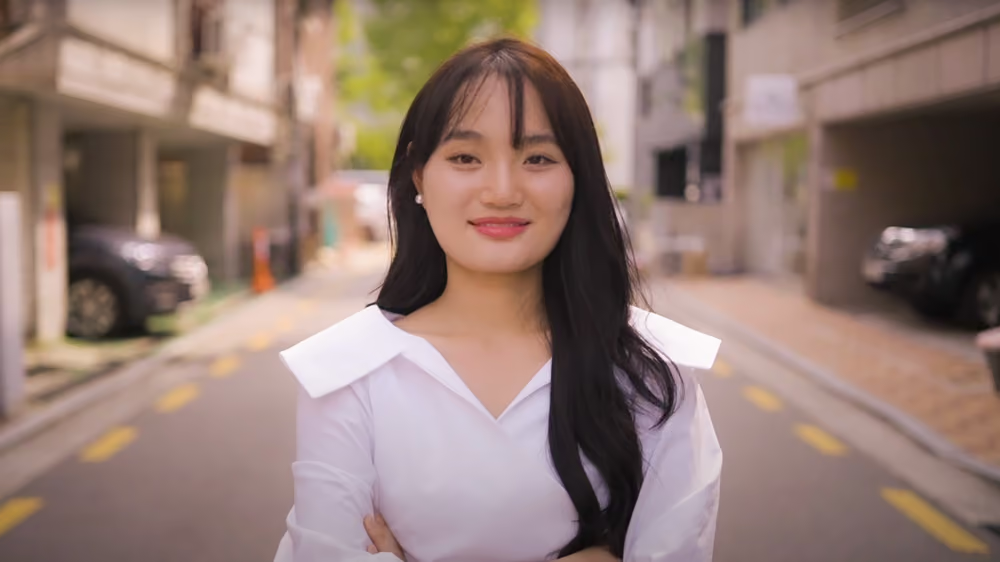
I was born in North Korea—a place where identities are imposed, voices are silenced, and dreams are tightly confined. There, schooling is not a pathway to opportunity but a means of indoctrination, designed to enforce obedience and suppress individuality. But thanks to my mother’s courage, I never had to undergo that system. She made the bold decision to keep me out of school in North Korea. At age eight, I escaped to China to reunite with her, beginning a journey that would define not only my identity but also my deep, lifelong yearning to learn.
In China, my mother obtained a false identity for me so I could enroll in school. That first day in a rural classroom marked the beginning of a different kind of life. I was behind, anxious, and constantly aware of our fragile situation.
For the first time, however, I was learning not to obey—but to think.
A year later, we moved to Beijing. There, I stepped into a world I had never imagined—one of academic rigor, intellectual freedom, and cultural diversity. It was in that environment that I first witnessed how learning can transform a person. Each lesson, each classroom conversation, opened doors not only to knowledge but also to self expression, confidence, and hope.
One winter afternoon in 2010, I was on my way to the bookstore, backpack heavy on my shoulders. Beijing was bleak and cold that year. Snowflakes fell softly, only to be crushed by cars and vanish into the grime of the streets. That scene reflected my life: I bore a name I couldn’t speak aloud, fears I couldn’t share, and a fragile existence that felt quietly lonely.
Inside the bookstore, warmth greeted me. I wandered through the aisles, searching for a quiet corner to rest. Then, I saw it—a book with a black-and-white cover, its portrait etched in solemn ink. The man’s composed expression exuded a power I longed for. I picked it up, almost unconsciously.
“I Have a Dream.”
“I have a dream that one day... people will not be judged by the color of their skin but by the content of their character.”
“This is the time to make real the promises of democracy.”
“We will not be satisfied until justice rolls down like waters and righteousness like a mighty stream.”
These weren’t just words. They were light, seeping through a crack I hadn’t known existed. In a world that had taught me to stay small and silent, they spoke to a part of me I had hidden away. For the first time, I felt truly seen—not for where I was from or what I looked like, but for my thoughts, my voice, and the quiet strength I carried within.
Later, after arriving in South Korea, I faced new challenges. Though I had returned to my cultural roots, I felt out of place. I was older than my classmates, unfamiliar with many social norms, and unsure of how to fit in. But with time, I began to build friendships and navigate this new society. Again, learning was central—it provided not just academic skills but also the social space to grow and belong.
During university, I studied abroad in Texas. It was my first experience in a Western classroom. I was struck by the openness, the individuality, and the value placed on diverse opinions. Being among students from different backgrounds showed me how perspectives can differ—and how that difference enriches everyone.
Wherever I was—in China, Korea, or the United States—the classroom was where I grew the most. It was where I stepped outside my comfort zone, gained confidence, and slowly came to understand who I was becoming.
Across all these countries, I’ve developed not just a global perspective but a deep appreciation for the transformative power of learning. In each setting, the classroom became both a battlefield and a sanctuary. I struggled, but I also discovered. I learned new languages, absorbed new worldviews, and came to realize that I was more than a refugee or survivor. I was a thinker, a student, and a human being with agency.
And then I understood something deeper: My story is rare—but it shouldn’t be. There are still millions of children in North Korea growing up without the right to question, to dream, or to imagine a world beyond their borders. They deserve more than silence or sympathy. They deserve the same chance I had—to envision a different future and be equipped to pursue it.
That’s why I’m sharing my story through Liberty in North Korea. Because stories hold power. They build bridges, shatter stereotypes, and create connections.
North Korean people are not just victims. They are potential scholars, leaders, creators, and changemakers—if only they are given the freedom to grow.
My dream is to one day build a global school for children who, like me, come from hardship but brim with promise. I want to help others discover the same sense of identity and possibility that learning gave me. Until then, I will continue to advocate, teach, and connect.
If you’re reading this, I hope you’ll join me. Learn more. Speak up. Share stories. Support organizations like LiNK that are fighting to empower North Korean people with freedom, dignity, and opportunity.
Because when you invest in a child’s education, you’re not only changing one life—you’re challenging an entire system and planting seeds for a freer world.
Opportunities like LiNK’s Intensive English Program (LIEP) are helping North Koreans succeed in resettlement, reach their goals, and lead change on this issue. Your support can help us continue to make an impact in the lives of North Korean refugees.










