
My Name Is Loh Kiwan | Fictional Story, Real Lives
From a crumpled piece of paper, he copies his name onto the Application for Recognition of Refugee status. The letters flow together in neat, sloping script to spell–Loh Kiwan.
This seemingly mundane declaration of identity serves as the focal point of Netflix’s recently released movie, My Name is Loh Kiwan. Showcasing the titular character’s past and present struggles as a North Korean defector seeking asylum in Belgium, the film follows Kiwan’s journey through both hope and heartbreak while he fights for a new life in freedom. He shows unimaginable resilience in the face of tragedy, betrayal, and bureaucratic apathy, carving out a place where he can live as himself, for himself.
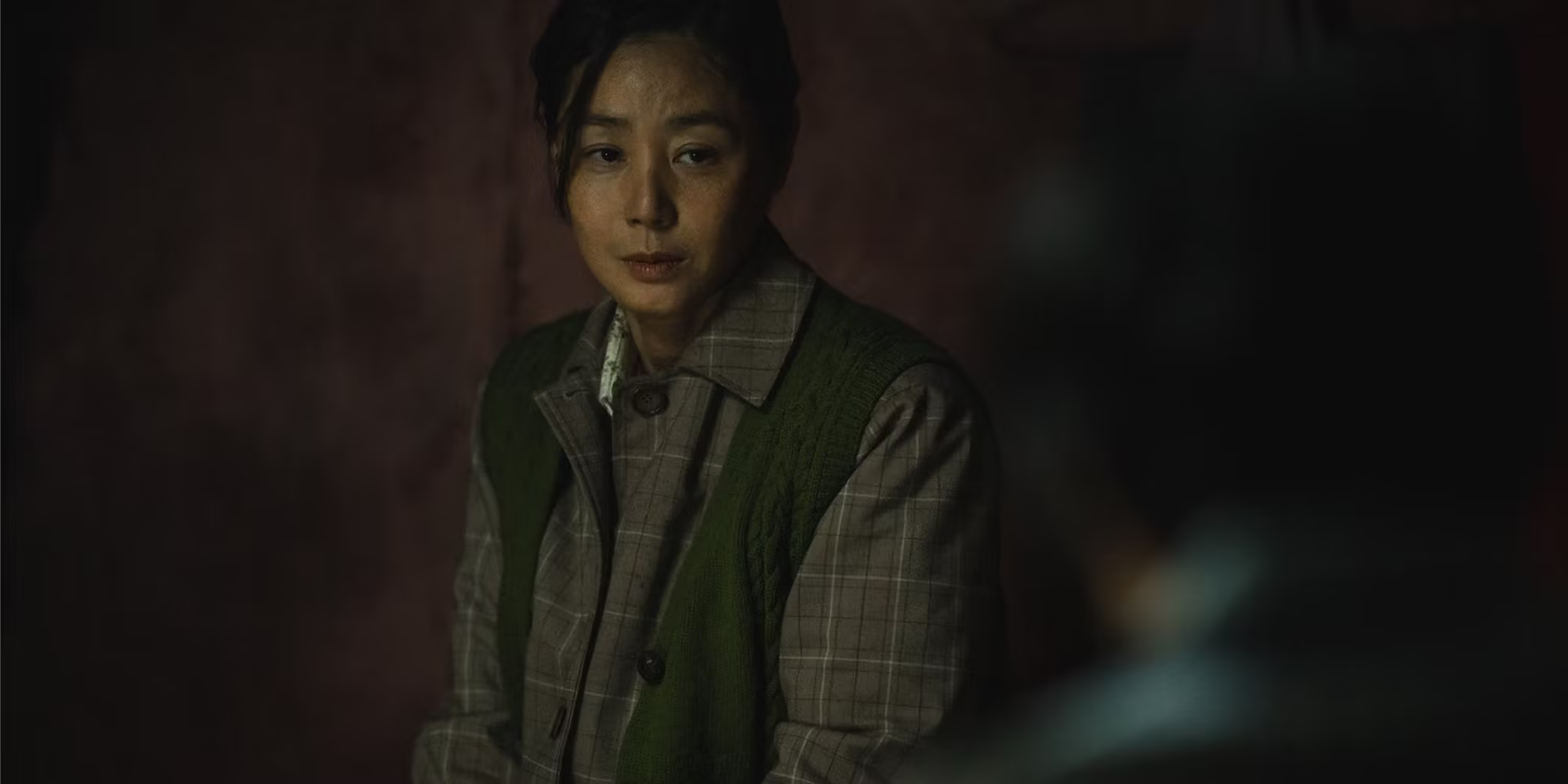
Though based on a fictional novel, Loh Kiwan’s story captures the real life experiences of many North Korean refugees. Whether it be the harrowing circumstances of his escape, the subsequent challenges Kiwan faces while applying for asylum, or even the emotional turmoil of contending with his trauma, My Name is Loh Kiwan derives its drama from reality when depicting the struggles of North Korean defectors.
Uprooted by an act of defiance that saves his friend’s life, Kiwan and his mother escape across the border to China and live there under constant threat of arrest and forced repatriation. With no legal status as refugees and no legal options for leaving the country without government approval, North Korean defectors in China are exceptionally vulnerable to trafficking and exploitation. They live in the shadows, concealing their identities as best they can, despite cultural and language barriers. If captured and returned to their home country, they are subject to brutal torture, imprisonment, and execution. Rather than face such inhumanity, many see suicide as a final escape and carry poison or razor blades with them, much like Kiwan and his mother.
It is ultimately his mother’s sacrifice that saves Kiwan from such a fate. Her death forces him into a position nearly every North Korean refugee recognizes–having to leave behind friends, family, and loved ones with aborted goodbyes for the sake of everyone’s safety and survival. Kiwan’s only material connection to his mother is a photo and a wallet full of blood. In reality, most leave with even less than that.
Not wanting to incriminate the people close to them if they are caught trying to escape, most North Korean refugees forgo any identifying documents or proof of their existence. They take only the bare essentials for survival, not knowing that their arrival in a new country is only the beginning of their journey, or even if they'll make it.
But this is not the narrative Liberty in North Korea believes in. No North Korean person should have to endure the struggles or celebrate the successes of resettlement alone. Much like the assistance Kiwan later receives from an advocacy group that offers legal support and a community of other North Koreans, LiNK walks with our North Korean friends on their journey to freedom. And when they begin new lives, we support their success, amplify their voices, cultivate more leaders and changemakers working on this issue together.
In this, Kiwan’s story reflects yet another reality of the North Korean people. Not only do they encounter extraordinary hardships, but also, they face them with extraordinary strength. Throughout the film, Kiwan persists in his pursuit of an earnest, honest life. Despite setbacks and situations where he’s forced into hurt or hiding, he stays true to his mother’s wish for him to live well, and in doing so, inspires the people around him to do the same.
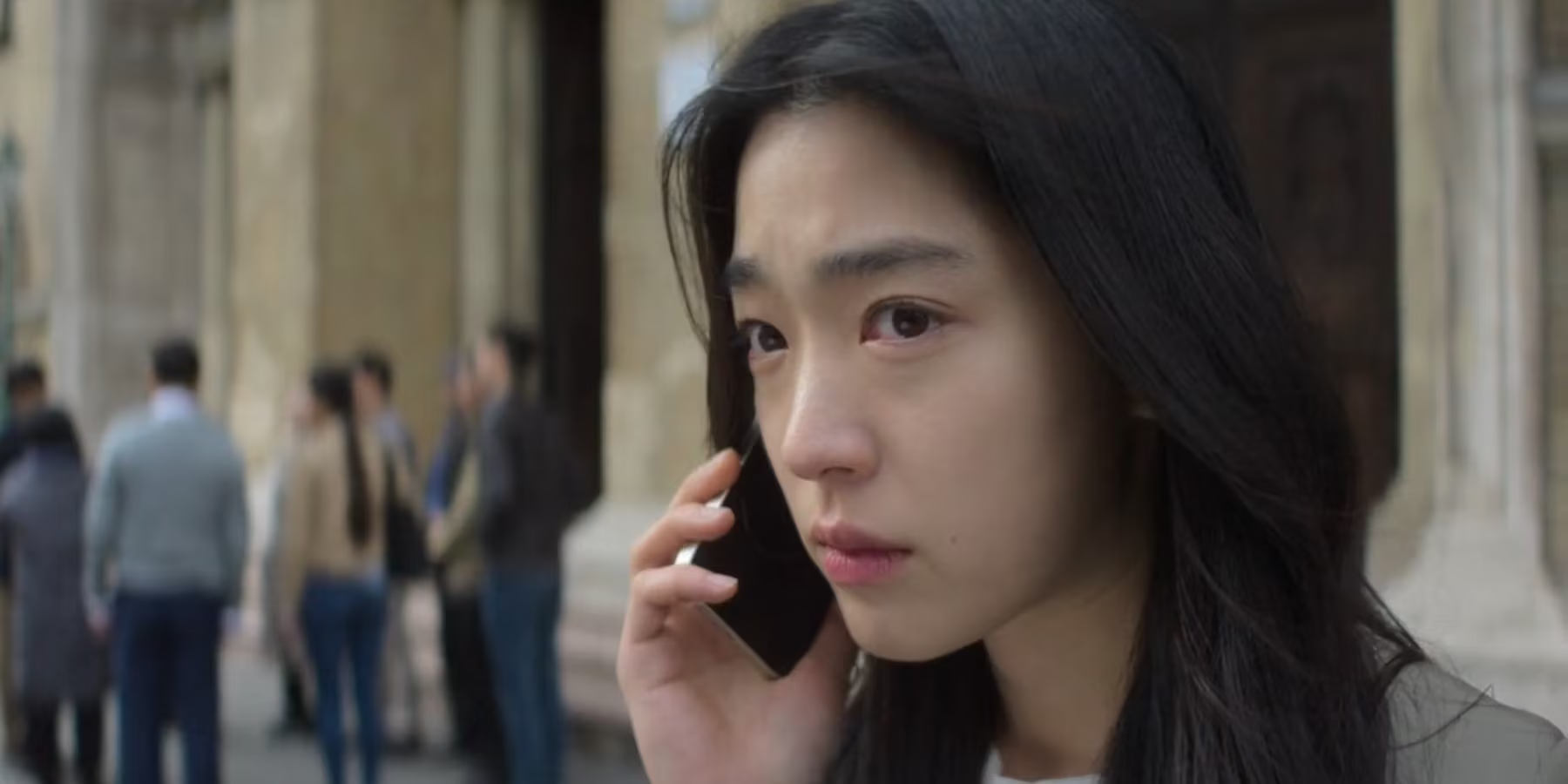
He finds hope, love, and freedom in others, but most importantly, in himself. When placed on trial to prove his identity before the court, Loh Kiwan proclaims the name his mother gave him.
Owning one’s identity as a North Korean person is not always easy. From the start of their escape, they are forced to hide. Once they reach freedom, the stigma and prejudice people hold towards their homeland pressures many to erase their accent or change their name–sometimes as a form of self-protection, other times as a way to fit in.
What Kiwan’s story shows, however, is that there is hope at the end of hiding. There is beauty in the simple, everyday life he longs for–a life where he can work for himself and share meals with friends, have a home, have a future, and have the choice to stay or go.

This is the life the North Korean people deserve, and every day, both within the country and without, they fight towards a better future. Their courage and indomitable spirit are not just figments of fiction. With your help, their freedom will become a reality.
Sign up below to learn how YOU can help support North Korean refugees today.
Freedom Walk & Run 2026, Seoul

What Does Freedom Mean to You?
This fall, 200 people will gather along the Han River in Seoul to honor the 26 million people living in North Korea by answering one question: What does freedom mean to you?
Before setting out, every participant in Liberty in North Korea’s Freedom Walk & Run will write their own answers on the race bib they’ll wear for the 6 kilometer race.
The course is divided into three sections, each representing a different freedom: the freedom to leave, the freedom to lead, and the freedom to learn.
Each represents a different part of LiNK’s work and a different way North Korean people are pursuing greater freedom and choice in their own lives.
0-2km: Freedom to Leave
The first two kilometers represent the freedom to leave.
For North Koreans who decide to leave their country, reaching safety can mean a long and dangerous journey through multiple countries.
LiNK helps North Korean refugees navigate a secret route to safety. To date, over 1,400 North Korean refugees have reached freedom through LiNK’s networks. Every person who makes that journey has their own reason for leaving, their own hopes for what comes next, and their own idea of what freedom means to them.
Reaching safety opens the door to the next part of their journey.
2km-4km: Freedom to Lead
The next two kilometers represent the freedom to lead.
Starting over in a new country comes with countless possibilities, but just as many challenges. North Korean people resettling in South Korea or the US are learning a new system, while pursuing education, beginning careers, building relationships, or deciding what they want their future to look like.
LiNK’s programs support resettled North Koreans as they pursue education, language learning, and career development, providing mentorship, scholarships, and so much more.
And then comes the final stretch.
4-6km: Freedom to Learn
The last two kilometers represent the freedom to learn.
For people living inside North Korea, access to information from outside of the country is heavily restricted. Official media is centrally controlled, while foreign films, television, music, news, and other outside information are accessed illegally and often at significant personal risk.
Despite the government’s efforts to control information, curiosity about what freedom looks like proves impossible to suppress.
“No matter how much you try to control it, you can’t get rid of curiosity.”
Information gives someone a new point of reference. It introduces possibilities they had never encountered before. It gives them the chance to imagine a future beyond the North Korean regime.
North Korean people are finding ways to access outside media, through USB drives and microSD cards. LiNK’s Information Access Programs build on these existing channels by working with North Korean defectors and engineers to develop tailor-made technology and content that help people inside the country access more information more safely.
This is a growing part of our work, and one we believe has enormous potential to contribute to long-term change.
Get Involved: Support information access in North Korea
This fall, we’re giving supporters a closer look at this work through an upcoming documentary about information access in North Korea.
Make a gift of $30 or more to LiNK’s Information Access Programs by October 24 and you’ll receive an exclusive preview of the documentary this fall.
Your support helps LiNK enable more North Koreans to access more outside information more safely. This builds people’s resilience against regime disinformation, increases their aspirations for social and economic progress, and builds pressure for change and opening.
Donate today & get the documentary preview
Join us in Seoul
If you’re in Seoul, join us along the Han River on Saturday, October 24, for the Freedom Walk & Run. Participation is limited to 200 people, so reserve your spot today.










