
My Name Is Loh Kiwan | Fictional Story, Real Lives
From a crumpled piece of paper, he copies his name onto the Application for Recognition of Refugee status. The letters flow together in neat, sloping script to spell–Loh Kiwan.
This seemingly mundane declaration of identity serves as the focal point of Netflix’s recently released movie, My Name is Loh Kiwan. Showcasing the titular character’s past and present struggles as a North Korean defector seeking asylum in Belgium, the film follows Kiwan’s journey through both hope and heartbreak while he fights for a new life in freedom. He shows unimaginable resilience in the face of tragedy, betrayal, and bureaucratic apathy, carving out a place where he can live as himself, for himself.
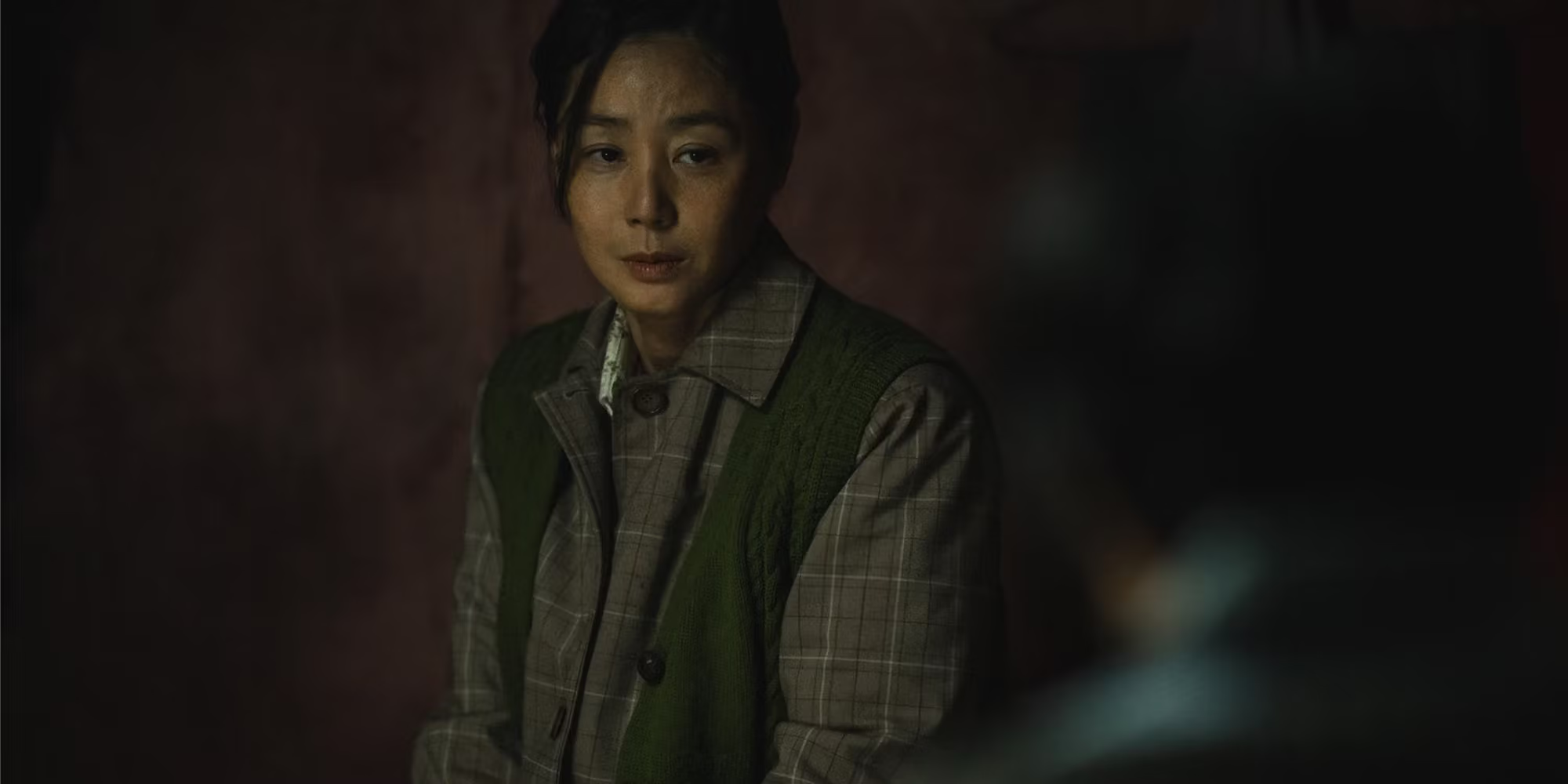
Though based on a fictional novel, Loh Kiwan’s story captures the real life experiences of many North Korean refugees. Whether it be the harrowing circumstances of his escape, the subsequent challenges Kiwan faces while applying for asylum, or even the emotional turmoil of contending with his trauma, My Name is Loh Kiwan derives its drama from reality when depicting the struggles of North Korean defectors.
Uprooted by an act of defiance that saves his friend’s life, Kiwan and his mother escape across the border to China and live there under constant threat of arrest and forced repatriation. With no legal status as refugees and no legal options for leaving the country without government approval, North Korean defectors in China are exceptionally vulnerable to trafficking and exploitation. They live in the shadows, concealing their identities as best they can, despite cultural and language barriers. If captured and returned to their home country, they are subject to brutal torture, imprisonment, and execution. Rather than face such inhumanity, many see suicide as a final escape and carry poison or razor blades with them, much like Kiwan and his mother.
It is ultimately his mother’s sacrifice that saves Kiwan from such a fate. Her death forces him into a position nearly every North Korean refugee recognizes–having to leave behind friends, family, and loved ones with aborted goodbyes for the sake of everyone’s safety and survival. Kiwan’s only material connection to his mother is a photo and a wallet full of blood. In reality, most leave with even less than that.
Not wanting to incriminate the people close to them if they are caught trying to escape, most North Korean refugees forgo any identifying documents or proof of their existence. They take only the bare essentials for survival, not knowing that their arrival in a new country is only the beginning of their journey, or even if they'll make it.
But this is not the narrative Liberty in North Korea believes in. No North Korean person should have to endure the struggles or celebrate the successes of resettlement alone. Much like the assistance Kiwan later receives from an advocacy group that offers legal support and a community of other North Koreans, LiNK walks with our North Korean friends on their journey to freedom. And when they begin new lives, we support their success, amplify their voices, cultivate more leaders and changemakers working on this issue together.
In this, Kiwan’s story reflects yet another reality of the North Korean people. Not only do they encounter extraordinary hardships, but also, they face them with extraordinary strength. Throughout the film, Kiwan persists in his pursuit of an earnest, honest life. Despite setbacks and situations where he’s forced into hurt or hiding, he stays true to his mother’s wish for him to live well, and in doing so, inspires the people around him to do the same.
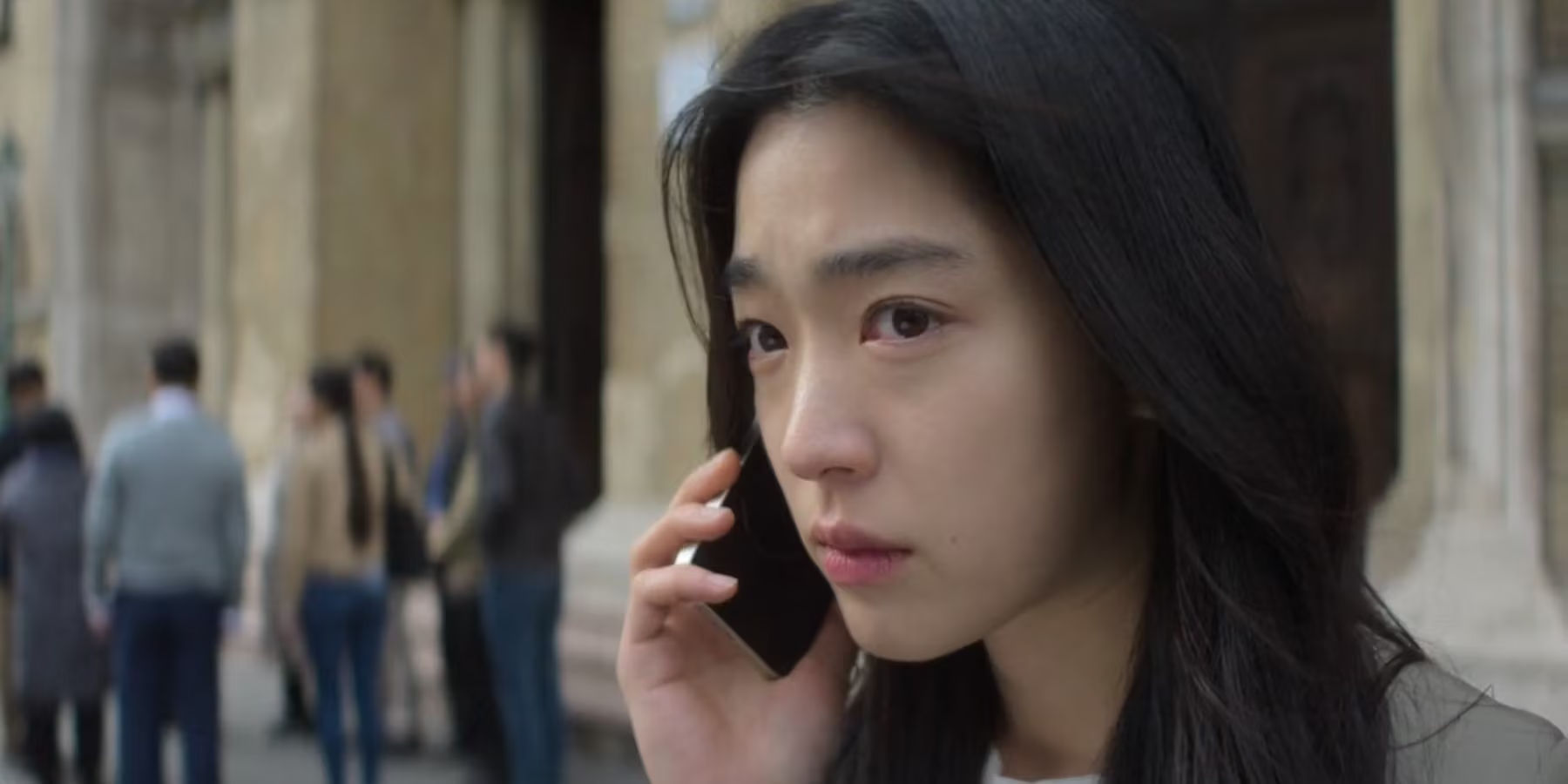
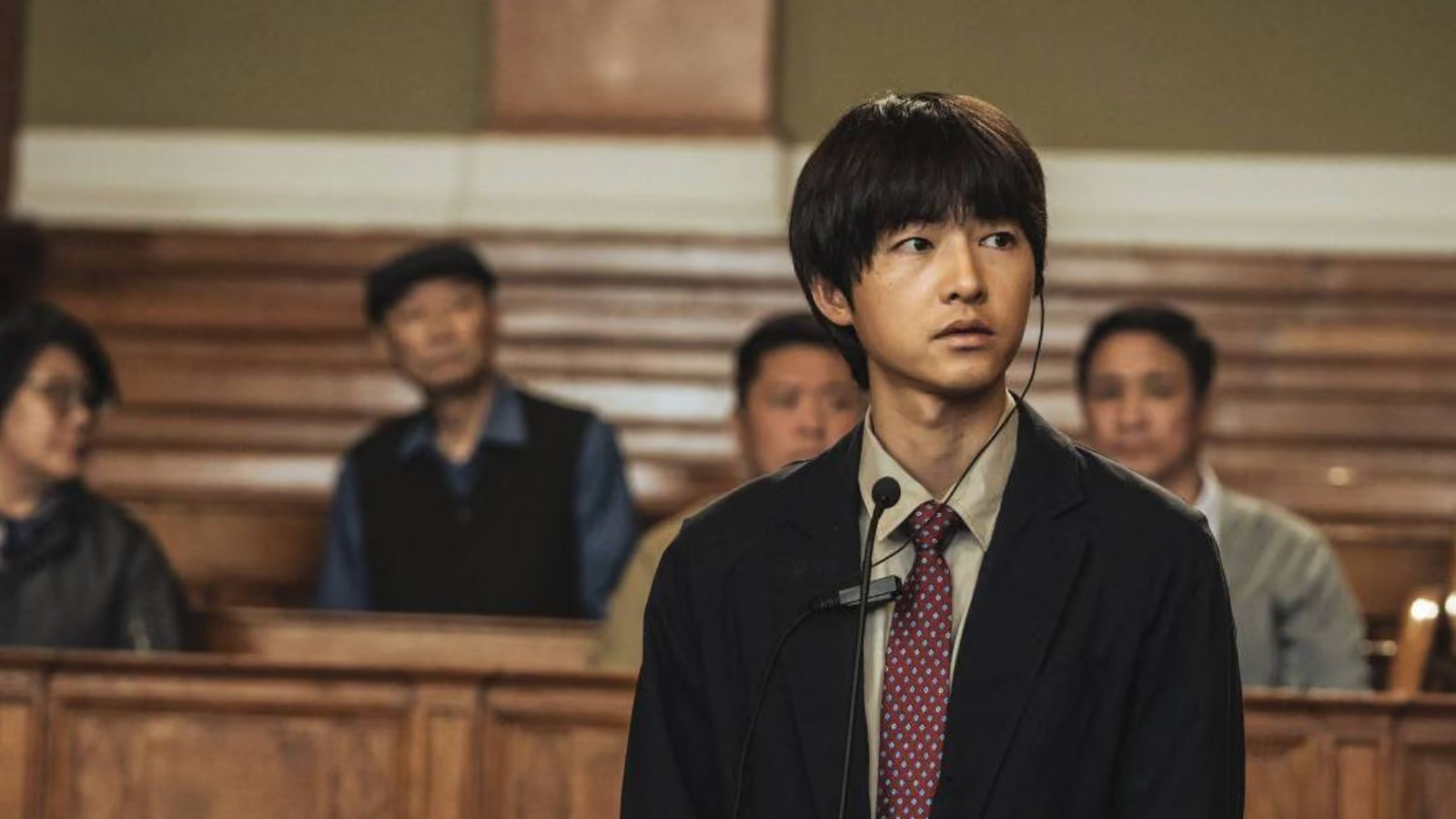
He finds hope, love, and freedom in others, but most importantly, in himself. When placed on trial to prove his identity before the court, Loh Kiwan proclaims the name his mother gave him.
Owning one’s identity as a North Korean person is not always easy. From the start of their escape, they are forced to hide. Once they reach freedom, the stigma and prejudice people hold towards their homeland pressures many to erase their accent or change their name–sometimes as a form of self-protection, other times as a way to fit in.
What Kiwan’s story shows, however, is that there is hope at the end of hiding. There is beauty in the simple, everyday life he longs for–a life where he can work for himself and share meals with friends, have a home, have a future, and have the choice to stay or go.
This is the life the North Korean people deserve, and every day, both within the country and without, they fight towards a better future. Their courage and indomitable spirit are not just figments of fiction. With your help, their freedom will become a reality.
Sign up below to learn how YOU can help support North Korean refugees today.
Spring in My Homeland, North Korea: A Glimpse of Reunification in 2045
By: Eunsook Jang
Eunsook Jang holds a bachelor’s degree in Political Science from Korea University and a master’s degree in International Development from Brandeis University. A Fulbright Scholar and LiNK US Scholarship grantee, she is currently a research intern at the Hudson Institute, where her work focuses on post-conflict recovery, economic development, and human development. Her recent publications include “Slipping through the Cracks in South Korea: The Uncertain Futures for the Children of North Korean Defectors” with the Migration Policy Institute, and “Why Strengthening RFA Is a Strategic Imperative for US Policy on North Korea” in The Diplomat.

In the spring of 2045, on a flight from Incheon to Pyongyang, Emma's hands tremble. Her husband Sam reaches over and, steadily, holds them without a word. She turns to the window and stares into the pale clouds below the wing.
“I’ve waited 30 years for this day,” she whispers. “But now that I’m here… it doesn’t feel real. I hope this isn’t a dream.”
“Maybe it’s both,” Sam replies. “The dream became real.”
She closes her eyes. In 2015, at just fifteen years old, she crossed the frozen Yalu River in a dark March morning, leaving without saying a proper goodbye to her mother. That guilt, its intensity, has never faded, not even after thirty years. It simply learns to live quietly beside her.
“Will Mom recognize me?” she asks. “We parted when I was fifteen. I’m forty-five now.”
“She will,” Sam answers. “How could a mother not recognize her daughter?”
Emma says nothing. Will I... be able to recognize her? She does not say it aloud this time.
An announcement comes through the cabin speakers: "This is the first return flight for North Korean defectors to their hometowns. We know how much you have endured. We will carry you safely home."
It is a rare moment of comfort from a South Korean voice. Moments later, the plane lifts into the sky.
An hour later, the plane lands in Pyongyang. Emma weeps quietly, overwhelmed by the thought that across so short a distance, lives in the South and the North had been so utterly, irreconcilably different. For thirty years, she had not been able to cross it, that gap, so small.
From Pyongyang, the journey to Hyesan continues by bus. As the skyline of Pyongyang passes past the window, its taller buildings, its broad avenues, Emma allows herself the fragile hope: perhaps Hyesan has developed too.
After five hours on the road, the bus arrives at Hyesan Station. The apartments and the lay of the land are almost entirely unchanged from when she had left thirty years earlier, as if time had refused to move, as if it had been waiting for her. Emma found herself hoping the same might be true of her mother.
A thirty minutes' walk from the station: that is where her mother's house is.
As if drawn by a magnet, her feet start moving on their own.
Sam asks if they are going the right way. Without hesitation, "Yes," Emma replies. "I used to walk this road every day as a child. It’s still in my body."
He points to a bus queue down the street. "There's a bus queue over there. Want to take it part of the way?" She shakes her head gently. "If you don't mind, I'd like to walk." "Then we’ll walk," he replies without hesitation. Emma feels another surge of gratitude, grips on his arm and follows her memory home.
Since Emma left her hometown in 2015, the North Korean regime has conducted ten more nuclear tests as of 2045. And yet the face of this neighborhood has not changed by a single detail. The freedom and human rights that should have been the people's return on those tests have been vaporized into the air.
They arrive at a fork in the road. To the left, an alley leads toward the house. A familiar-looking house comes into view, enclosed by a wooden fence. She stops and stands motionless. It is the house, it is her house.
Several minutes pass. Then the door opens. Emma feels her breath catch. For a second, she forgets how to move.
After thirty years, she is here.
This is what the micropolitics of reunification looks like. Grand narratives, speeches, and legal texts may provide its official language, but its lived realities lie in moments, in feelings, like this: a mother and daughter recognizing each other after thirty years apart.
Author’s note: I dedicate this piece to my father in South Korea, who has never once wavered in encouraging my studies, as if realizing through me the freedom to pursue the dreams that were taken from him. And to my mother, who remains in North Korea: This piece is my proof that your daughter has not turned away from your suffering, but is working, in her own small way, to fight against it. I hope to see you, even if only in my dreams tonight. I love and miss you beyond my expression.
–
Eunsook is a participant of the LiNK English Language Program (LELP), which serves to not only help North Korean defectors build confidence and skills in English, but develop their capacity as advocates for this issue. To that end, we partnered with select LELP “columnists” to write and polish personal essays through multiple rounds of external feedback and revision. Our goal is to have more North Koreans share their stories directly and lead efforts to change the narrative.
We believe the North Korean people can achieve their liberty in our lifetime.
Opportunities like LELP invest in the people building that future now. Help more North Koreans find their voice, reach their goals, and lead change on this issue.










