
The Most Dangerous Contraband in North Korea Isn’t a Weapon. It’s a Wish.
By: Jihyun Kang
Growing up in North Korea, Jihyun took inspiration from the smuggled South Korean dramas she watched to create her own unique clothing. After reaching freedom in 2010, she has continued to pursue her interests in fashion and culture as a catalyst for change. She runs several business ventures, practices fine art under the name “Da Gyeol,” and works with the Ministry of Unification as an advisor. She’s pursuing her Masters in Entrepreneurship, Dept. of Future Science & Technology Business, at Korea University.

I grew up in North Korea, and at fifteen, I encountered a Westerner for the first time at the top of Mount Paektu. He stood over 190 centimeters tall with a thick beard, wearing ripped jeans and a frayed T-shirt. In North Korea, worn-out clothing was a symbol of deprivation. Yet my father whispered, "He is wearing that for style." With that single remark, the worldview I had been taught, began, the first time, to crack. And I thought: I want to dress like that, too.
Fashion is more than clothing. It is the moment when individual desire moves faster than collective command. People follow taste before ideology, and express themselves through what they wear long before any political declaration.
A state can enforce a dress code, but it cannot manufacture desire. That is why North Korea's fear of blue jeans was not irrational—it was the regime recognizing, however dimly, that something it could not control was already growing.
Clayton Christensen, a professor at Harvard Business School, argued that transformation always begins at the margins—in forms so crude and insignificant that those in power dismiss them entirely. Christensen built his theory around corporations, but the logic applies to any system that holds a monopoly over its people, including a state. North Korea's regime was so focused on maintaining ideological control at the centre that it ignored what was happening at the bottom.
That bottom was the jangmadang—the spontaneous, bottom-up market ecosystem created by ordinary people to survive after the collapse of North Korea's state-led distribution system. When that system imploded during the Arduous March—a famine in the mid-1990s that killed hundreds of thousands—people built informal markets out of sheer necessity: not revolution, not ideology, but survival. Yet by 2018, a CSIS study found 436 officially recognized markets operating across the country. What began as a desperate improvisation had quietly become the infrastructure keeping North Koreans alive.
These markets did not merely sell food. They became conduits for Chinese clothing, USB drives loaded with South Korean dramas, and glimpses of a world no one had taught them existed. When a system ignores what people actually want, the market finds the gap.
The act of choosing—what to eat, what to wear, what to watch—may seem trivial. But a person who has tasted choice cannot fully return to obedience.
The jangmadang was the first place where North Koreans learned they could survive without the state. That desire did not stay underground—it surfaced. People began wearing jeans, dyeing their hair, and pulling on T-shirts printed with foreign letters. The regime could no longer ignore it. Authorities branded jeans and Western fashion as 'anti-socialist infiltrations' and deployed street patrols. Teenagers caught in these sweeps were sent to re-education camps; in severe cases, their names and home addresses were read aloud on state broadcasts as public shaming (Radio Free Asia).
In 2024, state-run Korean Central Television went so far as to blur the jeans worn by British TV presenter Alan Titchmarsh during a broadcast. The ruling party's official newspaper, the Rodong Sinmun, warned that a country could 'become vulnerable and eventually collapse like a damp wall' if it failed to preserve its own way of life (Newsweek, May 2021).
Regulations cannot extinguish human desire; they only raise the price of the forbidden. This is the inflection point Christensen identified: by the time an incumbent recognizes the threat, it is already too late.
To date, more than 34,000 North Koreans have resettled in South Korea (South Korean Ministry of Unification, 2024). At the start of each of those journeys, there was something like my pair of jeans—not ideology, but desire; not a declaration, but a taste; not revolution, but the market.
No government in history has ever successfully suppressed the human impulse to trade, to choose, to want more. Not the Soviet Union. Not Cuba. Not Mao's China. North Korea will not be the exception.
–
Jihyun is a participant of the LiNK English Language Program (LELP), which serves to not only help North Korean defectors build confidence and skills in English, but develop their capacity as advocates for this issue. To that end, we partnered with select LELP “columnists” to write and polish personal essays through multiple rounds of external feedback and revision. Our goal is to have more North Koreans share their stories directly and lead efforts to change the narrative.
We believe the North Korean people can achieve their liberty in our lifetime.
Opportunities like LELP invest in the people building that future now. Help more North Koreans find their voice, reach their goals, and lead change on this issue.
Give Today
My Name Is Loh Kiwan | Fictional Story, Real Lives
From a crumpled piece of paper, he copies his name onto the Application for Recognition of Refugee status. The letters flow together in neat, sloping script to spell–Loh Kiwan.
This seemingly mundane declaration of identity serves as the focal point of Netflix’s recently released movie, My Name is Loh Kiwan. Showcasing the titular character’s past and present struggles as a North Korean defector seeking asylum in Belgium, the film follows Kiwan’s journey through both hope and heartbreak while he fights for a new life in freedom. He shows unimaginable resilience in the face of tragedy, betrayal, and bureaucratic apathy, carving out a place where he can live as himself, for himself.
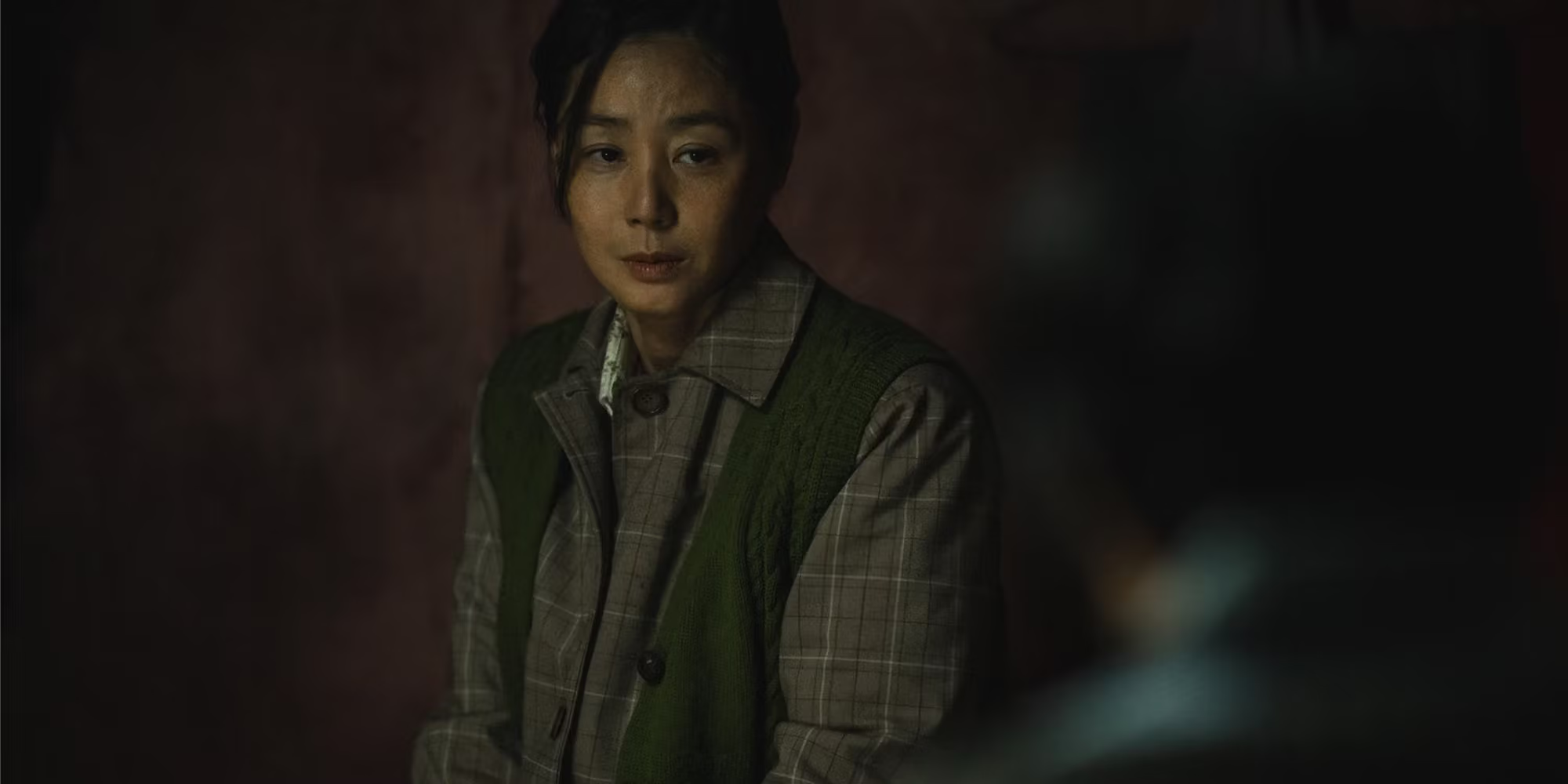
Though based on a fictional novel, Loh Kiwan’s story captures the real life experiences of many North Korean refugees. Whether it be the harrowing circumstances of his escape, the subsequent challenges Kiwan faces while applying for asylum, or even the emotional turmoil of contending with his trauma, My Name is Loh Kiwan derives its drama from reality when depicting the struggles of North Korean defectors.
Uprooted by an act of defiance that saves his friend’s life, Kiwan and his mother escape across the border to China and live there under constant threat of arrest and forced repatriation. With no legal status as refugees and no legal options for leaving the country without government approval, North Korean defectors in China are exceptionally vulnerable to trafficking and exploitation. They live in the shadows, concealing their identities as best they can, despite cultural and language barriers. If captured and returned to their home country, they are subject to brutal torture, imprisonment, and execution. Rather than face such inhumanity, many see suicide as a final escape and carry poison or razor blades with them, much like Kiwan and his mother.
It is ultimately his mother’s sacrifice that saves Kiwan from such a fate. Her death forces him into a position nearly every North Korean refugee recognizes–having to leave behind friends, family, and loved ones with aborted goodbyes for the sake of everyone’s safety and survival. Kiwan’s only material connection to his mother is a photo and a wallet full of blood. In reality, most leave with even less than that.
Not wanting to incriminate the people close to them if they are caught trying to escape, most North Korean refugees forgo any identifying documents or proof of their existence. They take only the bare essentials for survival, not knowing that their arrival in a new country is only the beginning of their journey, or even if they'll make it.
But this is not the narrative Liberty in North Korea believes in. No North Korean person should have to endure the struggles or celebrate the successes of resettlement alone. Much like the assistance Kiwan later receives from an advocacy group that offers legal support and a community of other North Koreans, LiNK walks with our North Korean friends on their journey to freedom. And when they begin new lives, we support their success, amplify their voices, cultivate more leaders and changemakers working on this issue together.
In this, Kiwan’s story reflects yet another reality of the North Korean people. Not only do they encounter extraordinary hardships, but also, they face them with extraordinary strength. Throughout the film, Kiwan persists in his pursuit of an earnest, honest life. Despite setbacks and situations where he’s forced into hurt or hiding, he stays true to his mother’s wish for him to live well, and in doing so, inspires the people around him to do the same.
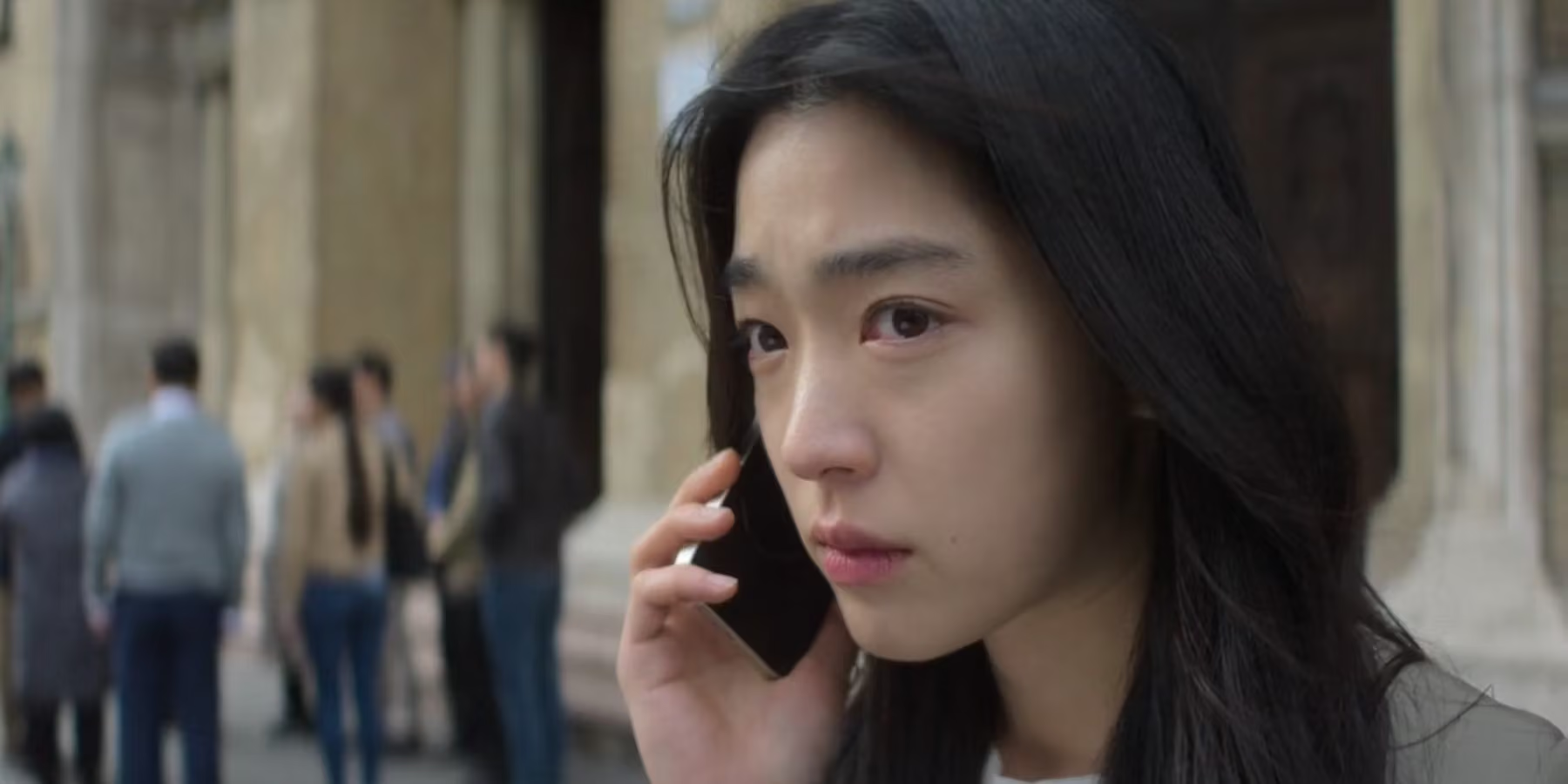
He finds hope, love, and freedom in others, but most importantly, in himself. When placed on trial to prove his identity before the court, Loh Kiwan proclaims the name his mother gave him.
Owning one’s identity as a North Korean person is not always easy. From the start of their escape, they are forced to hide. Once they reach freedom, the stigma and prejudice people hold towards their homeland pressures many to erase their accent or change their name–sometimes as a form of self-protection, other times as a way to fit in.
What Kiwan’s story shows, however, is that there is hope at the end of hiding. There is beauty in the simple, everyday life he longs for–a life where he can work for himself and share meals with friends, have a home, have a future, and have the choice to stay or go.
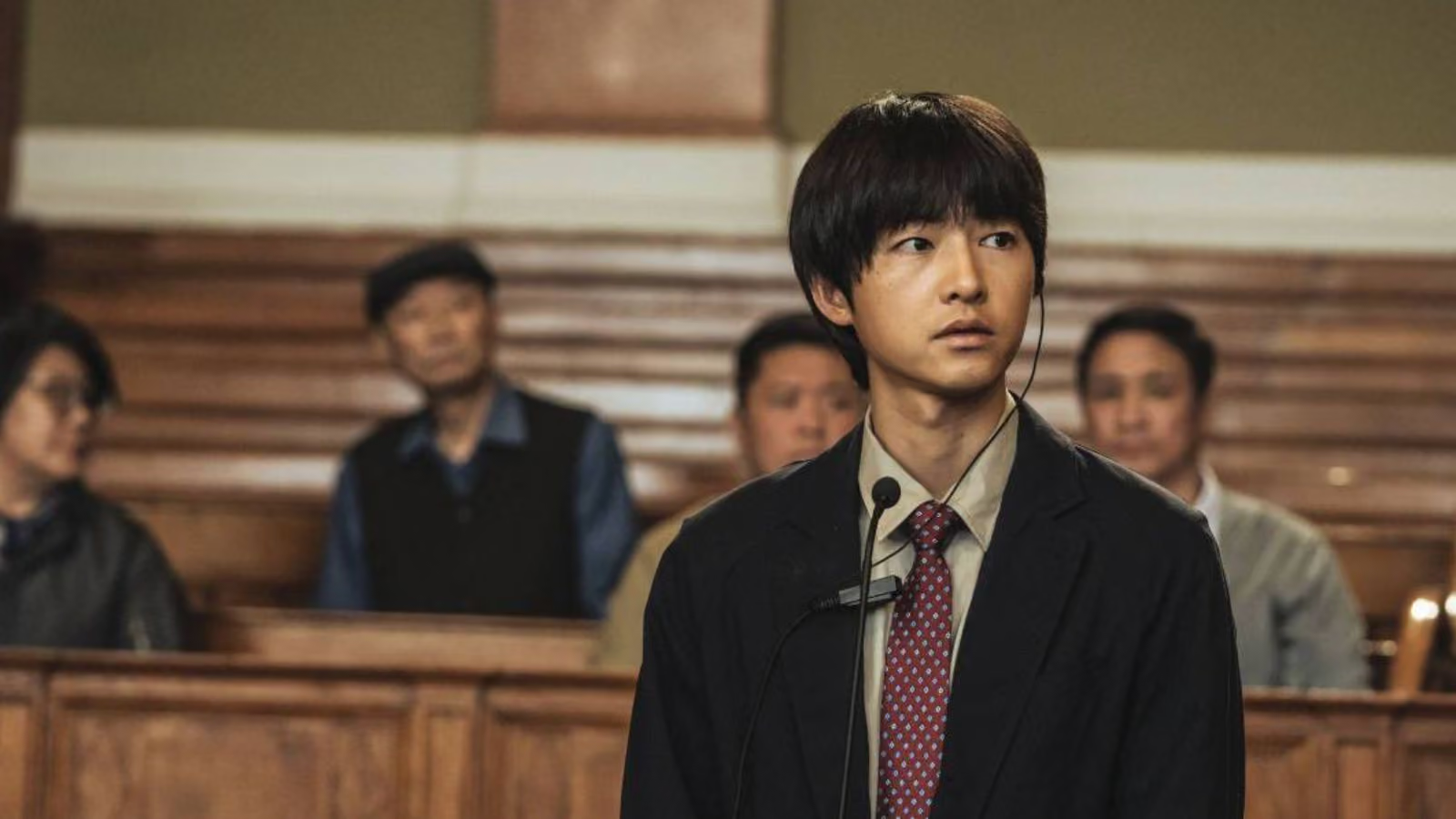
This is the life the North Korean people deserve, and every day, both within the country and without, they fight towards a better future. Their courage and indomitable spirit are not just figments of fiction. With your help, their freedom will become a reality.
Sign up below to learn how YOU can help support North Korean refugees today.










